


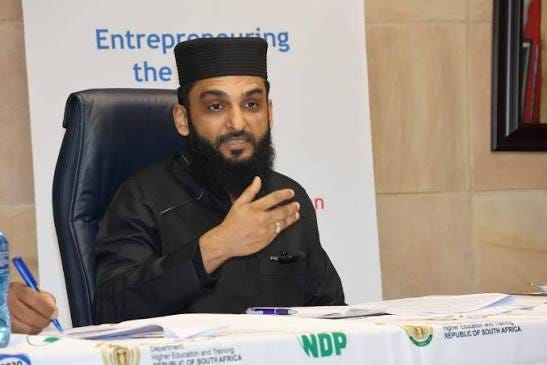
The funding crisis that left hundreds of Tshwane University of Technology (TUT) students without allowances has begun to ease, with 182 students having their NSFAS support fully restored following urgent intervention by Deputy Minister of Higher Education and Training Yusuf Cassim.
The students were incorrectly defunded under the N+ rule due to qualification code errors, a data issue that triggered widespread anxiety among affected students who suddenly found themselves without meals, transport or accommodation support.
After more than 300 cases were reported to the Deputy Minister’s Helpdesk, Cassim contacted TUT directly, prompting the institution and NSFAS to review the flagged records together.
The review confirmed that 182 students had been defunded due to incorrect qualification code updates. Once corrected, TUT restored their funding and paid out September allowances, bringing immediate relief to affected students.
Cassim visited TUT on 9 September, accompanied by officials from the Department of Higher Education and Training and NSFAS, to meet Vice‑Chancellor Professor Tinyiko Maluleke, senior management and SRC leaders. The engagement revealed further systemic issues: 1 212 students placed in accredited accommodation after the NSFAS portal closed had not been paid, while another 115 students approved after the portal closure faced the same predicament.
Cassim has written to the NSFAS Board requesting urgent investigation and immediate assistance for these students.
NSFAS also confirmed that it has processed payments for all successfully concluded GAP investigations — part of a broader national clean‑up. Across the country, funding has been reinstated for 2 476 TVET college students and 3 234 university students, with payments issued from 25 August for those with valid registrations.
Dual registrations remain another pressure point. NSFAS received 2 982 records showing students registered at more than one institution; it has confirmed 1 303 and is paying them. TUT identified 16 resolved dual‑registration cases where funding had still not been restored, prompting Cassim to urge NSFAS to prioritise the matter.
“Although these issues might seem administrative, for students they are highly personal,” Cassim said. “No student should miss academic time due to incorrect data or unresolved issues between the institution and NSFAS.”
As NSFAS continues its national data-correction process, Cassim has encouraged any student whose GAP investigation has been successfully concluded but who has not received their allowance to contact the Helpdesk for escalation, signalling a more hands-on approach to resolving funding failures that have long disrupted student learning.
©Higher Education Media Services.