


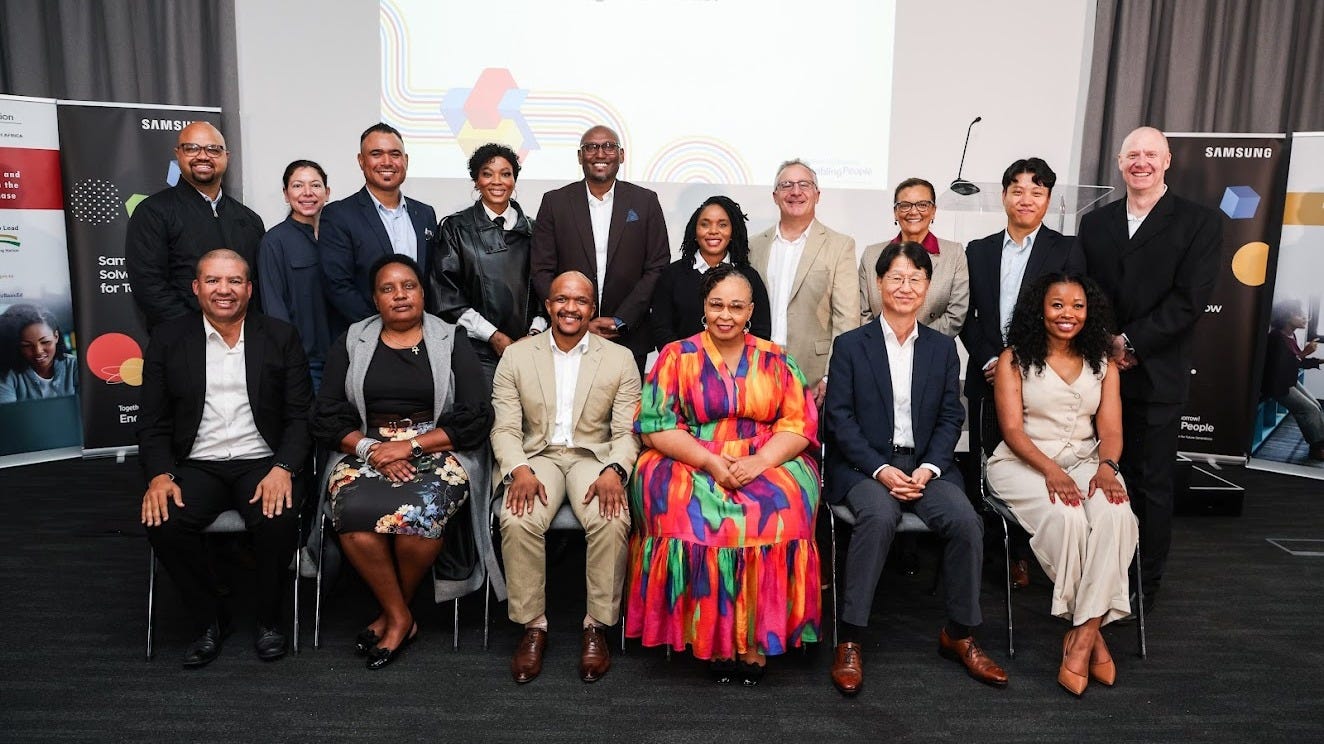
Samsung in partnership with the Department of Basic Education (DBE) announced the Top 20 schools that have been selected to advance to the next stages of the 2026 STEM-based (Science, Technology, Engineering and Mathematics) - Solve For Tomorrow (SFT) competition.
At the ceremony to announce the selection were Simon Lee, President and CEO of Samsung Africa with his management team and strategic partners including Elspeth Khembo, Director for Mathematics, Science and Technology (MST), Curriculum Innovation and E-Learning at the National Department of Basic Education (DBE); as well as Tlali Tlali, Director of Corporate Affairs at State Information Technology Agency (SITA).
The announcement marks the end of the initial application phase which ran until 06 March 2026.
This year’s participation has reached new heights, with over 143 submissions from public schools across the country – a remarkable growth from 47 entries last year. This is testament to the unwavering dedication of the country’s educators and learners as well as Samsung’s valued partners: DBE and SITA.
The notable increase in participation can also be credited to the major shift in the application process in this year’s SFT competition, which has now been opened to all public schools, including quintile 5 - making it more inclusive and nationally representative.
The competition has reached a stage where it moves beyond theoretical knowledge, towards an active, mentored development of the solutions stage designed to create a positive social impact in local communities.
This year’s global themes: Social Inclusion through Sports & Technology and Environmental Sustainability via Technology, reflect our shared responsibility to build an equitable, sustainable and inclusive future.
The themes which seek to foster innovation among high school learners from underprivileged backgrounds throughout South Africa - are encouraging critical thinking and problem solving for Gen Z to build sustainable solutions through STEM.
Lee shared his sentiments on the collaborative agreement between Samsung and DBE which has highlighted the direct alignment of the SFT’s objectives to the country’s national education priorities.
He added that the recent Memorandum of Understanding (MOU) between Samsung and DBE has been instrumental in driving this success, anchoring the company’s partnership in strengthening STEM education and equipping learners with critical skills for the digital economy.
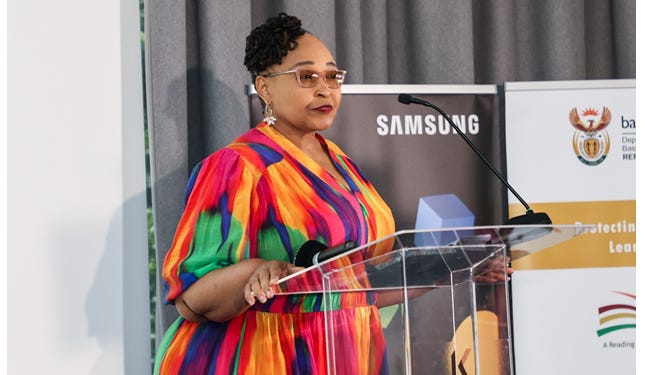
The Director for Mathematics, Science & Technology (MST), Curriculum Innovation & E-Learning at the National Department of Basic Education, Elspeth Khembo said by teaching learners to use digital tools, data and technology to develop innovative solutions, Samsung’s SFT competition advances the department’s ongoing efforts to strengthen STEM education, expand digital learning opportunities and cultivate future-ready skills among the country’s learners.
“All of this is in direct alignment with our national education priorities including fostering 4IR (Fourth Industrial Revolution) skills, critical thinking and equitable access to opportunities in an effort to build a capable, innovation-driven and inclusive economy,”
For these Grade 10 and 11 learners from selected public schools - making it to this stage of the competition is a significant milestone. Advancing to this next phase means that these Top 20 school learners will - through project-based learning – be equipped with the 4Cs which are Creativity, Critical Thinking, Collaboration and Communication. These skills are essential for solving real-world challenges.
SITA’s Tlali also said: “It gives us great joy to see the enthusiasm that’s evident in the significant increase in the number of schools from the country’s previously disadvantaged communities that participate in this unique, global initiative.
“Our goal of aligning with Samsung’s transformation goals and building a digital South Africa by improving educational and career prospects for our youth, remains intact.”
With the support of mentors, design thinking workshops, prototype funding and tablets for research and project execution, the learners will have the resources to turn their visions into reality.
This is complemented by the invaluable contributions from the judges and partners whose expertise and guidance is instrumental in nurturing this year’s young innovators.

Lefa Makgato, Corporate Social Responsibility Manager for Samsung Electronics in South Africa congratulated the Top 20 schools that made it to the next stage.
“We are very happy with the quality of the entries we received from various schools around the country and are appreciative of the interest and overwhelming participation in this year’s competition.
“We are also grateful to our partners: DBE and SITA, whose strategic priorities align perfectly with our mission to empower students with skills that transcend the classroom and are able to prepare them for the challenges of tomorrow.”
Themes for this year include the social change through sports and tech which focuses on how the power of sport as a unifying force in South Africa is recognised. When combined with technology - sport becomes a tool for inclusion, youth development, health and community building.
The sports theme encourages young innovators to use digital platforms, data and smart solutions to improve access to sports, develop talent, promote wellness and create safer, more connected communities. It’s about using technology to amplify the positive social impact of sport beyond the field.
The second theme focuses on Environmental sustainability through technology that addresses the urgent environmental challenges that the country faces, such as climate change, water scarcity, waste management and energy access.
Young people are invited to develop tech-driven solutions that protect natural resources, promote renewable energy and support sustainable living. It signifies a shift toward responsible innovation using technology not just for convenience, but to secure a healthier, more sustainable future for generations to come.
This challenge places Top 20 schools in the running to win substantial prizes, including up to R100,000 in STEM equipment for the winning school - with 2nd and 3rd place winning R50,000 and R30,000 respectively; plus Samsung devices for the top learners in the winning schools.
©Higher Education Media Services.