



Africa is standing at the edge of the AI technological revolution that could either deepen its dependence on countries like the USA and China, or create an unprecedented opportunity to build the continent’s digital, economic and intellectual future.
The keynote speaker, Nkemdilim Uwaje Begho, is one of Africa’s leading technology executives and AI strategists, CEO of Futuresoft and founding partner of AI CoLab Africa.
She said: “Africa must not be reduced to a consumer of AI developed elsewhere, nor allow our intellectual property and data to continually leave our shores. We need to start building our own house and decide what Africa wants AI to do for Africans.”
Our own house, she explained, includes creating our own AI development blueprint, data infrastructure, languages, intellectual property, businesses and benchmarks. It also includes retaining our talent.
She emphasised the AI revolution is already rapidly accelerating who makes decisions, how quickly businesses innovate, what constitutes skilled work in an era where businesses are partnering with AI agents in decision-making, and where economic power resides.
“Those who control data, AI systems and data centres are increasingly positioned to control economic value worldwide,” she explained. “And while AI can dramatically widen access to knowledge, essential services and employment, it can just as easily widen the economic divide and concentrate power in the hands of a relatively small number of companies and countries.”
To counter this, Africa needs its own datasets, data stewardship systems and benchmarks for assessing AI.
“We also need to ask who owns the data and who gets to decide what counts as knowledge. This is where AI sovereignty comes in. It requires retaining control over African data, building our own data infrastructure, advancing local talent, and creating African AI businesses. It also requires energy and water security as AI requires enormous computing infrastructure and data centres that use vast amounts of electricity and water.”
The African Union adopted a continental AI strategy in 2024, and investment in AI is already making positive impact across healthcare, agriculture and other sectors. But, Begho says, too many initiatives remain fragmented pilots rather than scalable systems capable of generating sustainable economic value.
Elaborating on this, Professor Muki Moeng, the Acting Vice-Chancellor of Nelson Mandela University said: “AI and data science present extraordinary opportunities for our continent, including new ways of addressing challenges in healthcare, education, agriculture, food security, environmental sustainability, entrepreneurship, governance and economic development.
“However, its transformative potential will only be realised if it meaningfully contributes to addressing our realities of inequality, poverty, unemployment, educational access, infrastructure constraints and digital exclusion. Inclusive digital transformation must create opportunities for young people, for rural communities, for women and girls, for persons with disabilities, and for those whose languages, cultures and lived experiences are too often absent from digital systems.”
Distinguished Professor of Information Technology and Director of the Centre for Community Technologies at Nelson Mandela University, Darelle van Greunen, said: “As universities, we have a responsibility to help shape how AI is understood, developed and used. This requires technical knowledge and transdisciplinary insights. It also addresses who benefits, and who might be excluded. At Mandela University our commitment to human-centred digital innovation through teaching, research, community engagement and initiatives such as the Virtual Academy and the AI Community of Practice, provides a foundation for this work.”
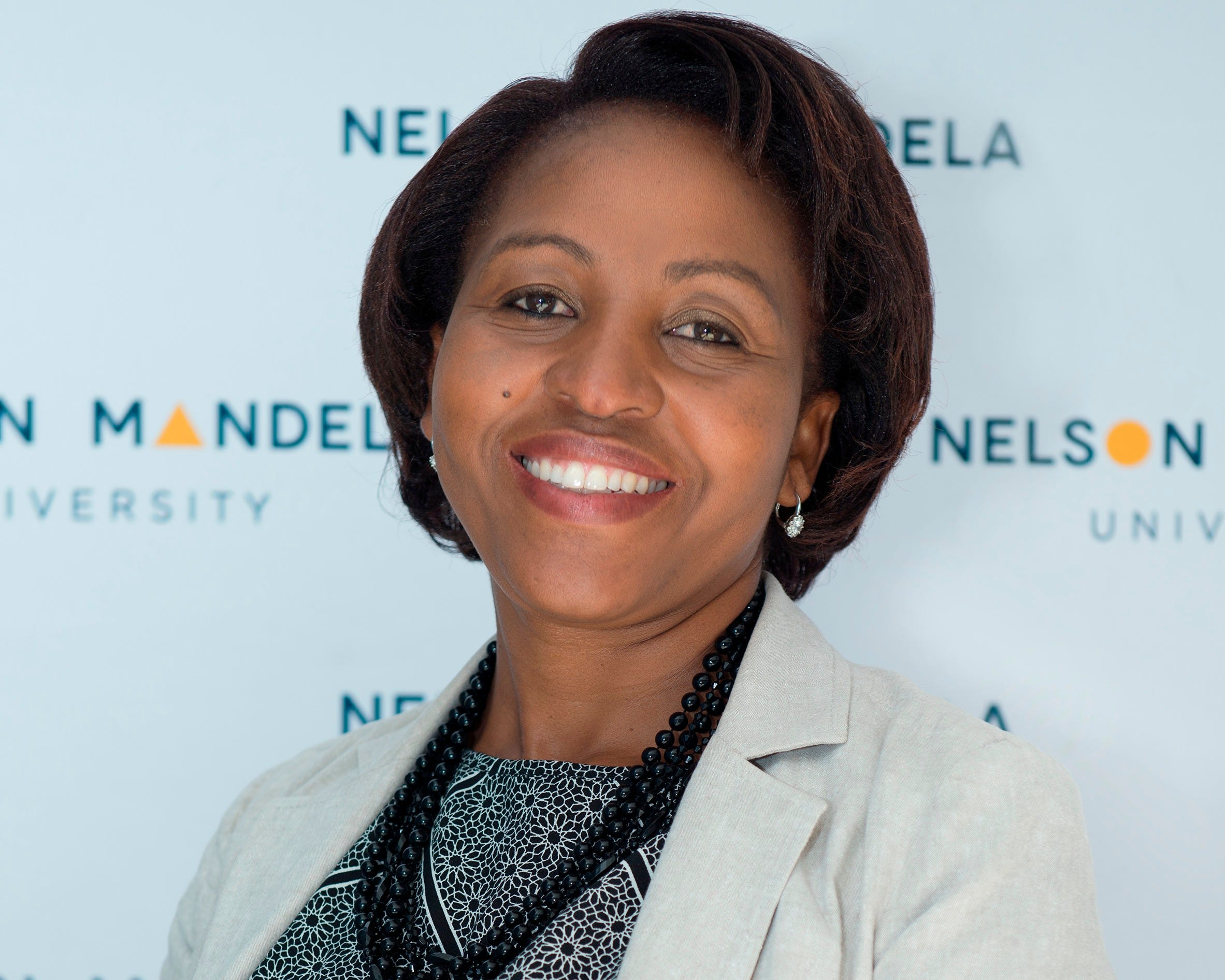
Professor Azwinndini Muronga, the Deputy Vice-Chancellor of Research, Innovation and Internationalisation said: “Universities need to bring together government, higher education, business, industry and civil society in Africa as it directly impacts education, employment and the future of Africa’s young and growing population. Our young people need to be meaningful participants in shaping technological development, and we need to enable them to achieve their full potential.”
Adding to this, universities have to teach students how to question AI.
“Students who rely uncritically on generative AI content risk weakening precisely the intellectual capacities that universities exist to develop: critical thinking, judgement and the ability to interrogate knowledge,” said Dr Mukhtar Raban, lecturer in the Faculty of Humanities and Institutional Lead for Humanising Pedagogy in the Office of the Deputy Vice-Chancellor of Learning and Teaching at Nelson Mandela University.
“AI systems trained on data without in-depth input from African societies can produce answers that appear authoritative but are profoundly wrong,” Raban explained. “Africa, for example, is home to more than 2 000 languages and associated cultures, yet much of the digital world is built around languages, datasets and assumptions generated elsewhere in the world.
“The danger is the reinforcement of existing inequalities - through algorithms that reproduce biases, exclude African knowledge and make decisions about Africa using datasets in which Africans are inadequately represented.”
The imperative is for universities to nurture new generations of graduate across all faculties; who are capable of developing AI systems and working with AI, without surrendering judgement to it. Essential graduate skills include curiosity, integrity and critical thinking.
Ajit Gopalakrishnan, who heads Odin Education, a division of Jendamark Automation and who is committed to democratising technology, added that many education systems are still preparing young people for a world that is already disappearing. “Young people ARE AI and they have different expectations of what technology can do,” he said.
He offered the example of his teenage son’s approach to studying for an examination. His son used AI to construct his own study guide, generate an exam he wrote and then got AI to identify his weaknesses. For him, AI is an engaging learning partner.
Gopalakrishnan said the future is looking good for our young people if AI scaling can scale human employment. “Africa does not have a talent problem. It has an access problem that we have to rectify,” he said, adding that a pivotal advantage of AI is that “it is the most distributable technology every created.”
His company is currently building a human oversight lens to figure out how to exponentially increase access to technology in Africa for Africa in a sustainable way.”
The real measure of inclusive and ethical digital transformation in Africa is whether it helps Africa create better opportunities, stronger economies, more equitable societies and greater human agency.
Begho challenged the conventional metrics of AI-driven productivity. “Instead of celebrating headcount reductions, Africa should be assessing how many new jobs can be created, what new roles can emerge and are those jobs providing decent livelihoods.
“Africa cannot simply import a model of automation designed for economies with fundamentally different demographic and employment realities. We must have metrics that are people first and not automation first. The real measure of AI in Africa, is African progress,” she concluded.
©Higher Education Media Services.