


Africa’s universities face perhaps the most important question in their modern history: will they lead the continent’s transformation, or struggle to keep pace with a future being designed elsewhere?
That challenge dominated discussions at the recent Africa Universities Week 2026, where higher education leaders, policymakers, researchers and development partners gathered to examine the future of African higher education in an age defined by artificial intelligence, climate disruption, digital transformation and a rapidly changing world of work.
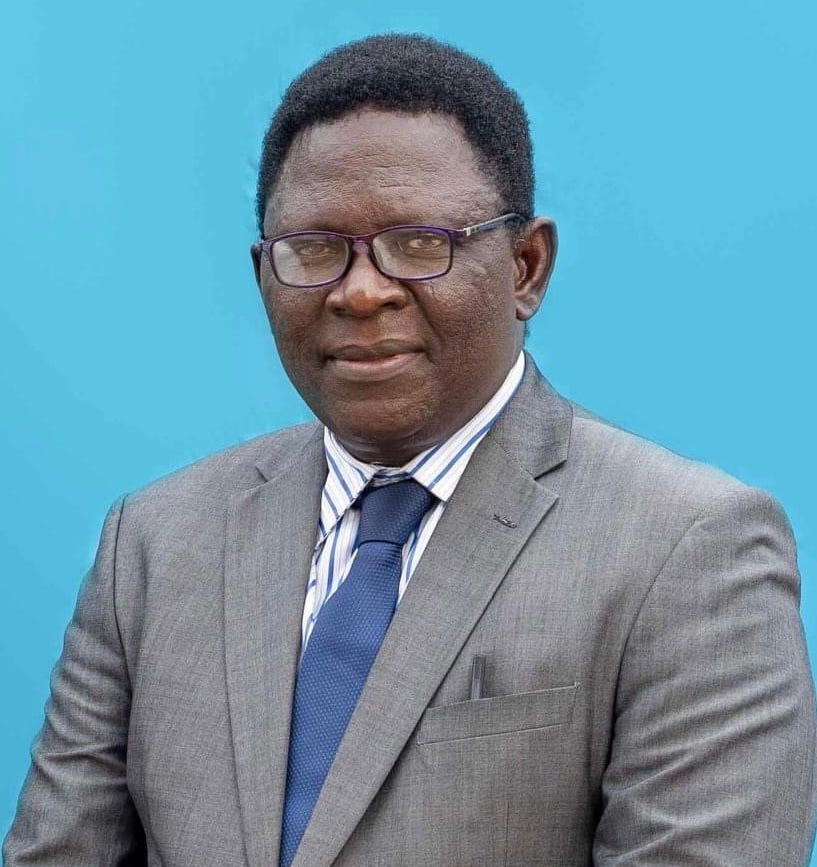
At the centre of the conversation was a powerful call to action from Professor Olusola Bandele Oyewole, Secretary-General of the Association of African Universities (AAU), who warned that incremental reform is no longer enough.
“Africa does not merely need universities that are ready for the future,” Oyewole told delegates. “Africa needs universities that are capable of creating the future.”
The statement became one of the defining messages of the conference, which took place from 9 to 13 November 2026, with the main Africa Universities’ Day celebration held on 12 November 2026.
For decades, universities have been regarded as institutions that preserve, transmit and expand knowledge. But according to Oyewole, the accelerating pace of global change now demands something much more ambitious.
“The future-ready African university must not simply prepare people for the future. It must develop the capacity to create the future,” he said.
Across the continent, universities face mounting pressures. Student enrolments are growing. Graduate unemployment remains stubbornly high. Public funding is under strain. Governments and employers increasingly want proof that universities are producing graduates equipped to solve real-world problems.
At the same time, technologies such as artificial intelligence are transforming how knowledge is created, accessed and applied.
“Are our universities preparing Africa for the future, or are they preparing Africa for a world that is already disappearing?” Oyewole asked.
The question resonated because the answer will help determine Africa’s competitiveness in the decades ahead.
The AI revolution cannot be ignored
Much of the conference focused on artificial intelligence and its implications for higher education.
While many institutions are still grappling with questions about AI-generated assignments and academic integrity, Oyewole argued that African universities need a far broader vision.
“Artificial intelligence is fundamentally changing how knowledge is generated, accessed, analysed and applied,” he said.
“The traditional relationship between the lecturer, the learner and knowledge is changing.”
Students today can access powerful AI tools, adaptive learning platforms and sophisticated research capabilities through devices that fit into their pockets. Entire sectors are being reshaped as automation, machine learning and data analytics become embedded in everyday life.
The challenge, Oyewole warned, is not simply introducing AI into classrooms.
“African universities must move beyond simply introducing AI tools into their classrooms,” he said.
“They must develop the capacity to educate students and staff to understand, use, evaluate and responsibly govern artificial intelligence.”
His comments touched on a growing concern across Africa’s higher education sector: technological dependence.
If African institutions focus only on consuming technologies developed elsewhere, they risk reinforcing existing inequalities in global knowledge production.
“We cannot afford to remain dependent on imported technologies, externally generated knowledge and externally controlled innovation systems,” Oyewole cautioned.
“Africa must not merely be a recipient of the global knowledge future. Africa must become one of its creators and architects.”
Rethinking what universities teach
The changing nature of work featured prominently throughout the week.
Many careers today’s students will enter are already evolving. Others may not yet exist.
For universities, this reality raises difficult questions about curriculum design and graduate preparedness.
“We cannot build future-ready universities by delivering yesterday’s education with tomorrow’s technology,” Oyewole said.
Instead, he argued, universities must move towards curricula that are interdisciplinary, competency-based and focused on solving real problems.
“The future curriculum must be interdisciplinary, competency-based, problem-centred and responsive to emerging knowledge and societal needs.”
This means breaking down traditional academic silos.
Future challenges such as food security, climate resilience, sustainable energy and public health cannot be solved by single disciplines working in isolation. They require collaboration between scientists, technologists, social scientists, entrepreneurs and policymakers.
Universities, delegates heard, must mirror this reality if graduates are to thrive in an increasingly interconnected world.
Research must leave the library
Another recurring theme was the need to redefine research excellence.
African universities have long measured success through publication outputs and citation indexes. While these remain important, leaders argued that the real test of research is its impact beyond academic journals.
“The volume of academic publications is important, but publication alone cannot define the value of university research,” Oyewole said.
“We must also examine the problems our research addresses, the technologies it generates, the policies it influences, the enterprises it creates and the improvements it brings to human life.”
The message comes as Africa confronts challenges ranging from youth unemployment and food insecurity to healthcare inequities and climate vulnerability.
The continent, participants noted, does not lack problems that require research-based solutions.
The question is whether universities can translate knowledge into innovation, policy and enterprise at a scale that changes lives.
Building a uniquely African future
One of the conference’s strongest themes was knowledge sovereignty.
Africa’s universities must engage with global knowledge systems, participants agreed, but they must also produce solutions rooted in African realities.
The goal is not isolation.
Rather, it is ensuring that African institutions have the capacity to shape global conversations while responding effectively to local needs.
Closing the conference, higher education leader Dr Sylvia Chindime Mkandawire reinforced the importance of collective action.
“Building future-ready African universities requires collective action and sustained commitment.”
She highlighted recurring themes that emerged throughout the week, including responsible AI integration, digital transformation, research and innovation, stronger pathways from education to employment and regional collaboration.
Her message reflected a growing consensus among delegates: no single institution can navigate the future alone.
The next phase of African higher education will depend increasingly on partnerships, academic mobility, shared research infrastructure and continental cooperation.
A moment of choice
The significance of Africa Universities Week 2026 lay not only in its discussions about technology, curriculum reform or research impact.
It highlighted a deeper reality.
Africa’s universities sit at the centre of the continent’s development ambitions.
They will help determine whether Africa becomes primarily a consumer of global innovation or an active producer of knowledge, technology and solutions.
The choices made by university leaders today will influence the graduates, industries and societies of tomorrow.
If the message from Nairobi is acted upon, African universities may move beyond simply adapting to change.
They may become institutions that drive it.
As Oyewole reminded delegates in the conference’s most memorable line:
“Let us build universities that anticipate the future rather than wait for it.”
That challenge may prove to be the defining higher education agenda for Africa in the decade ahead.
© Higher Education Media Services