


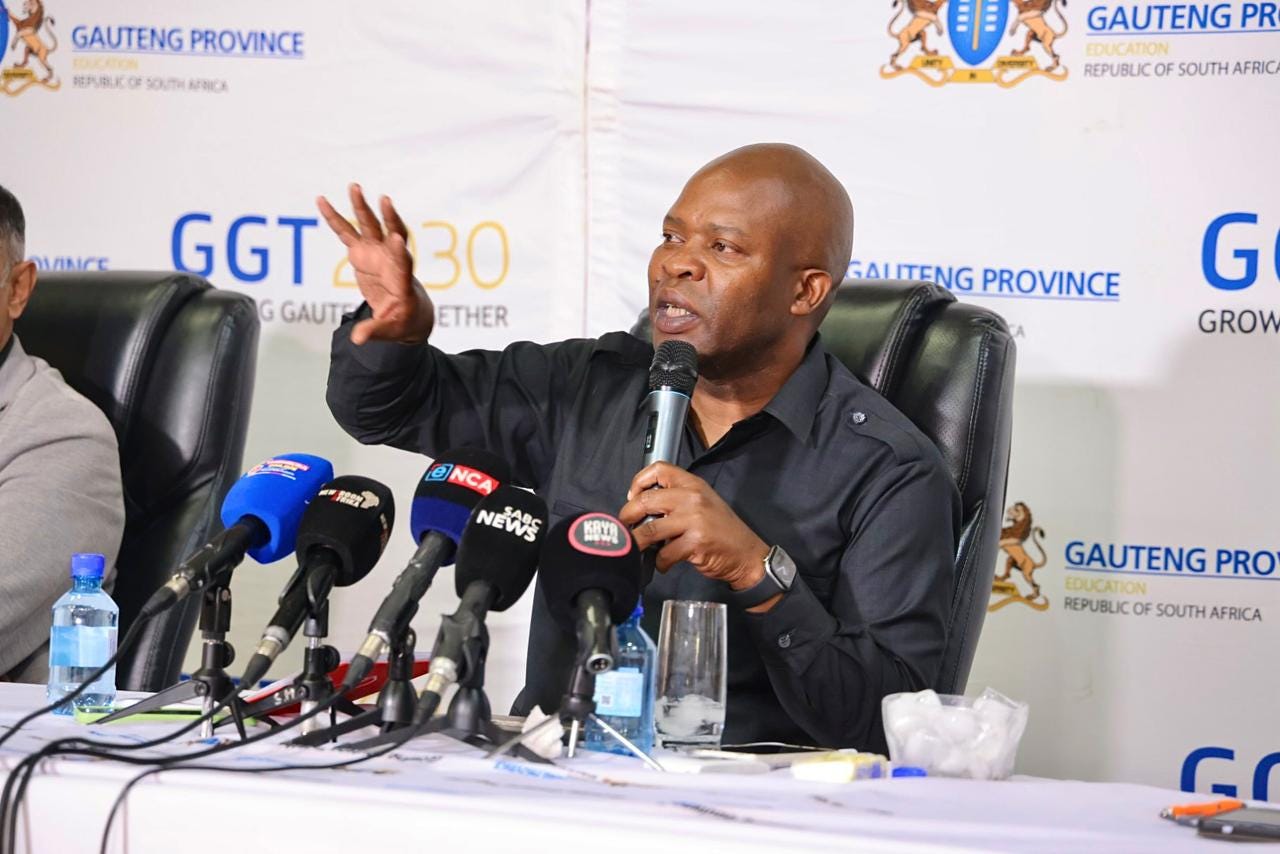
Lebogang Maile’s State of Education briefing in Bryanston, Fourways, lands at a moment when Gauteng’s schooling system is under intense strain from rapid population growth, infrastructure decay, and recurring safety incidents. The Education MEC’s address, signals a department trying to project responsiveness while grappling with long‑standing systemic pressures.
Overcrowding as the Central Crisis
Maile’s briefing is framed by escalating concerns about overcrowded classrooms — a problem repeatedly highlighted by parents, School Governing Bodies (SGBs), and media reports. Gauteng’s rapid urbanisation and inward migration continue to place extraordinary pressure on school capacity.
At Bovet Primary School, for example, classrooms reportedly hold up to 80 learners, with some children sitting on the floor or on their school bags due to lack of furniture and space. Parents say they have raised these concerns “several times without a response.”
Policy signal: Maile committed to addressing infrastructure challenges and the “general state of education” in the province, promising a detailed response at the briefing. This suggests an attempt to reclaim public confidence after visible failures in learner placement and infrastructure delivery.
Infrastructure Backlogs and Slow Recovery
The MEC’s address is also shaped by the province’s chronic infrastructure backlog — a problem made visible by the repeated fires at Riverlea Secondary School. Five classrooms, including a laboratory and library, were destroyed in the latest incident.
Maile’s comments reveal two key concerns:
Long delays in rebuilding: Some classrooms burnt in 2007 and 2025 still have not been renovated.
Systemic vulnerability: This is the third fire in 19 years, raising questions about school safety, maintenance, and community tensions.
He argued that repairing existing structures is more cost‑effective than bringing in mobile classrooms — a notable shift from the department’s past reliance on temporary units.
Strong Rhetoric on School Safety and Community Accountability
Maile’s strongest language was reserved for condemning the Riverlea fire. He called the act “criminal” and “unjustifiable,” urging communities to isolate and confront those responsible. Schools should become “sacred” spaces, he said.
His remarks also highlighted:
Active community involvement, including SGB members, local leaders, and the CPF.
A call for decisive action against individuals who damage school property.
Political reading: This rhetoric positions Maile as both tough on crime and aligned with community structures — a strategic stance given the political sensitivity of school safety in Gauteng.
Learner Placement and Systemic Pressure
The briefing context emphasises ongoing challenges with learner placement — a recurring annual crisis in Gauteng. The department acknowledges that the system is strained by population growth and migration, which outpaces school construction.
This structural pressure underpins nearly every issue Maile addressed:
Overcrowding
Infrastructure backlogs
Safety risks
Community frustration
The MEC’s address implicitly acknowledges that the province is struggling to keep pace with demand.
What the Address Suggests About the Department’s Direction
a) A reactive rather than proactive posture
Most of Maile’s commitments respond to crises already in the public eye — overcrowding complaints, school fires, and media scrutiny.
b) A shift toward community partnership
His emphasis on SGBs, parents, and local leaders suggests a recognition that the department cannot manage school safety and infrastructure alone.
c) A need for long‑term planning
The repeated fires at Riverlea and the chronic overcrowding at Bovet Primary point to deeper structural issues that cannot be solved through short‑term interventions.
d) Political positioning
Maile’s strong language and visible site visits signal a desire to project leadership and control in a politically sensitive portfolio.
Overall Assessment
Lebogang Maile’s State of Education address reflects a department under pressure but attempting to demonstrate responsiveness. His commitments to address overcrowding and infrastructure challenges are necessary, but the underlying issues — rapid population growth, slow infrastructure delivery, and school safety vulnerabilities — require long‑term, systemic solutions.
The MEC also used the word “inefficiencies” in the department and questioned whether his officials were “believable” around the over-crowding issue. But his address signals urgency. But whether it marks a turning point or another cycle of crisis‑response will depend on the department’s follow‑through in the months ahead. Action seemed to the be missing spark and Maile did not offer anything new!
©Higher Education Media Services.