


Climate change is no longer a distant threat. Rising temperatures, extreme weather events, water scarcity, and environmental degradation are already affecting communities, economies, and ecosystems worldwide.
As the world marks the International Day of Climate Action on 24 October, attention turns to the role of science and innovation in advancing sustainable solutions that support green economic growth while protecting the environment.
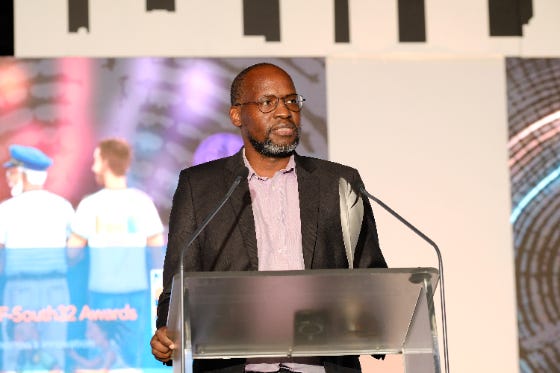
To mark this important day, the National Science and Technology Forum (NSTF) proudly honours Prof Fortune Ganda, recipient of the NSTF-TIA Green Economy Award at the 2026 NSTF-South32 Awards, known as the ‘Science Oscars’ of South Africa (SA).
Ganda is recognised for his role in research that identifies evidence-based strategies for sustainable finance and green economic transitions that decouple growth from environmental degradation in developing and emerging nations.
His Green Finance-Environment Nexus framework uses advanced econometrics to translate abstract environmental, social and governance (ESG) goals into measurable financial metrics, directly informing South Africa’s Carbon Tax and delivering green economy training to taxi operators and municipal finance staff. The Technology Innovation Agency (TIA) sponsors this award.
Ganda is a professor and head of the Department of Management Accounting and Finance at iYunivesithi Walter Sisulu (IWS). His work addresses the challenges facing many developing countries which need economic growth but remain highly vulnerable to climate change and biodiversity loss.
He develops evidence-based sustainable finance frameworks that bridge the gap between economic development and environmental sustainability. These frameworks provide practical pathways for reducing environmental impacts while supporting economic growth.
His research contributes to green economy initiatives in SA and other developing regions. It helps policymakers and businesses make informed decisions that support a just and green transition. He is passionate about expanding access to green finance and demonstrating that economic prosperity and environmental stewardship can go hand in hand.
Ganda’s work also focuses on education and skills development. He plays a leading role in integrating ESG principles into higher education programmes. Through curriculum development, teaching and postgraduate supervision, he equips future professionals and researchers with the skills needed to address sustainability challenges.
He is committed to developing a new generation of African scholars and practitioners who can lead the transition to a sustainable economy.
Beyond academia, he promotes the application of green finance principles in the public sector. His work contributes to training initiatives that strengthen sustainable financial management and governance practices.
By connecting research, education and capacity building, he helps strengthen institutions and support sustainable development at all levels of society. His research shows that economic growth and environmental sustainability are not competing goals. Rather, they can reinforce one another when supported by evidence-based policies and responsible financial practices.
Through his contributions to sustainable finance, environmental governance and human capital development, Prof Ganda is helping to build a greener, more resilient and more inclusive future for SA and the African continent.
One of the most exciting developments in his field is the growing use of technology to advance sustainable finance. His current work explores how data-driven tools can help businesses and institutions measure and manage their environmental impacts more effectively.
By making sustainability data more accessible, he aims to support informed decision-making and strengthen accountability in both the public and private sectors.
Ganda is also excited by efforts to strengthen education and skills development in the green economy. Through his work at IWS, he contributes to developing programmes that equip future finance professionals with expertise in both sustainability and financial management. He believes that building this capacity is essential for advancing climate action.
He says: “Innovatopm reqiors brealomg boundaries: The most pressing global challenges do not fit neatly into single disciplines.You must actively dismantle academic silos to create relevant, future-proof solutions”.
As climate challenges continue to grow, the need for science-based solutions has never been greater. The International Day of Climate Action highlights the importance of investing in research, innovation and sustainable development to create a greener future for generations to come.
©Higher Education Media Services.