

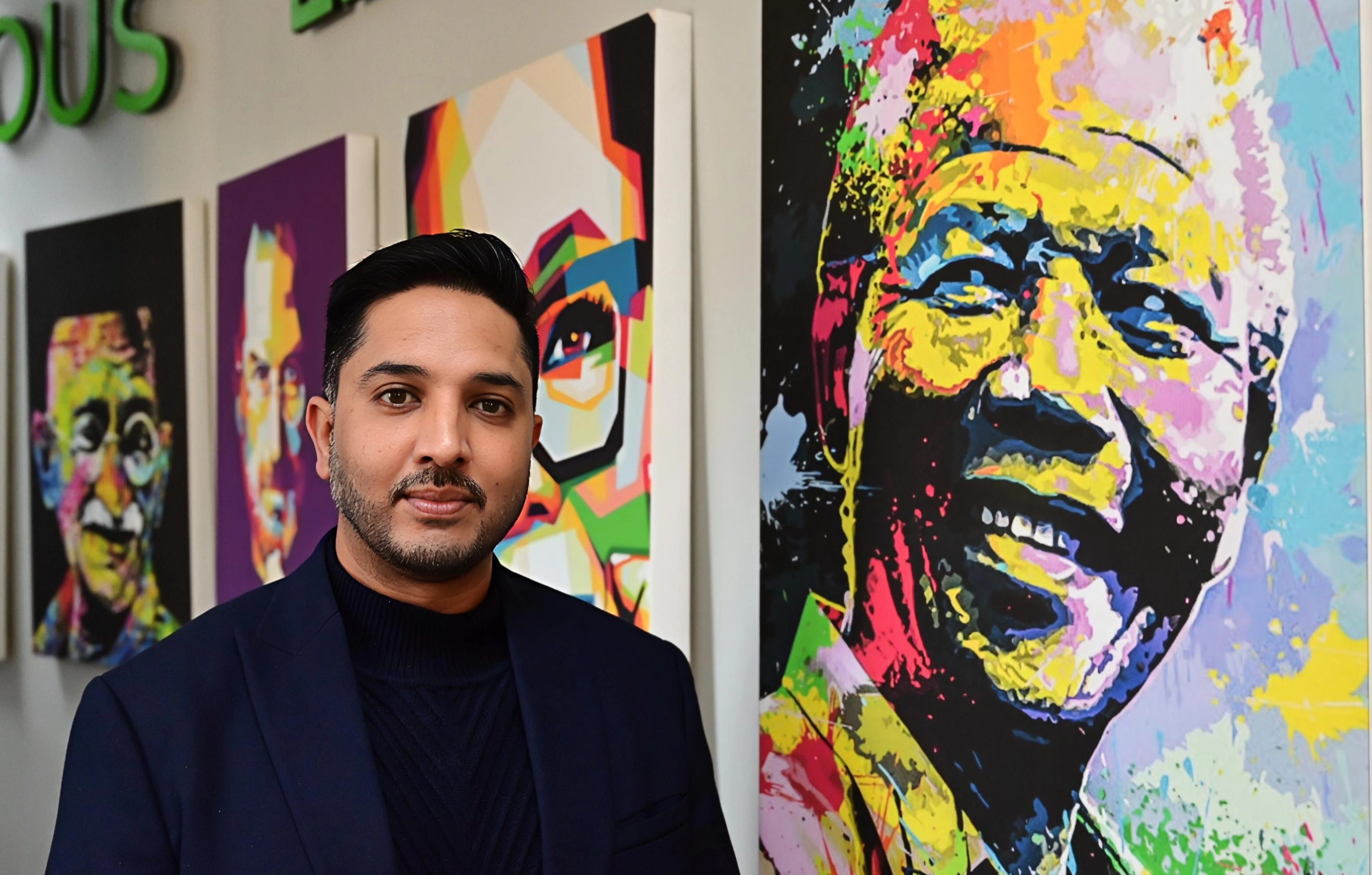
Kershen Pillay
Across Africa, the conversation about education is changing. For decades, a degree certificate has been regarded as the ultimate symbol of achievement — a passport to employment, opportunity, and upward mobility. While qualifications remain important, they are no longer enough in a world shaped by rapid technological advancement, economic uncertainty, and intensifying global competition.
Today, success depends not only on what graduates know, but also on what they can do with that knowledge. The future belongs to those who can adapt, innovate, collaborate, and lead. Higher education must therefore move beyond the degree and embrace the development of future skills as the new currency of success.
The Changing Currency of Education
A qualification demonstrates knowledge; future skills demonstrate capability.
As a leading provider of quality financial services training across South Africa, GIFS has seen firsthand how employer expectations are evolving. Organisations across sectors are increasingly looking for individuals who can think critically, solve complex problems, communicate effectively, and work across disciplines. Adaptability, creativity, resilience, and emotional intelligence are now as valuable as technical expertise.
This shift reflects a fundamental reality: education must anticipate the future, not simply respond to the present. If universities remain focused solely on traditional curricula, they risk producing graduates who are academically qualified but inadequately prepared for the challenges of a rapidly changing workplace.
The question is no longer whether graduates possess a degree, but whether they can thrive in environments defined by constant change and continuous learning.
Developing Future-Ready Leaders for Africa
Africa’s greatest asset is its people. With one of the youngest populations in the world, the continent has an unprecedented opportunity to become a global centre of innovation, entrepreneurship, and economic growth.
Realising that potential, however, will require a new approach to higher education — one that prioritises the development of future-ready leaders.
Future-ready leadership is not about memorising theories or mastering a fixed body of knowledge. It is about cultivating the ability to navigate uncertainty, make sound decisions in complex environments, inspire collaboration, and drive meaningful change. These capabilities are becoming increasingly critical as societies and industries confront disruption on an unprecedented scale.
The leaders who will shape Africa’s future are those who can combine technical expertise with adaptability, strategic thinking, and a deep understanding of people. These are not optional skills; they are essential capabilities that will determine whether Africa leads in the future economy or struggles to keep pace.
Closing the Gap Between Education and Industry
Achieving this transformation requires stronger collaboration between higher education institutions and industry.
Universities cannot prepare students for the future in isolation. Employers, academic institutions, and professional bodies must work together to ensure that graduates develop the skills required not only today, but also for the jobs and industries of tomorrow.
This means integrating real-world learning experiences into the educational journey through internships, workplace exposure, industry projects, mentorship programmes, and cross-sector partnerships. Such initiatives help bridge the gap between theory and practice, ensuring that students graduate with both academic knowledge and practical experience.
More importantly, they create graduates who can contribute meaningfully from day one — not only within their organisations, but also within their communities and broader society.
Technology as an Enabler, Not a Replacement
Artificial intelligence and digital technologies are transforming every aspect of work and society. While these innovations will continue to reshape industries, they should be viewed as tools that enhance human potential rather than replace it.
The real opportunity lies in combining technological proficiency with distinctly human capabilities such as creativity, empathy, ethical judgement, and critical thinking.
As automation takes over routine tasks, these human-centred skills will become even more valuable. The graduates who succeed will not simply be those who understand technology, but those who can use it responsibly, strategically, and creatively to solve real-world problems.
By balancing digital fluency with human insight, Africa can develop a workforce that is both globally competitive and socially conscious.
A Strategic Imperative for Africa’s Future
The urgency of this challenge cannot be overstated. Africa cannot afford to wait while the world evolves around it. The decisions made today about education and skills development will shape the continent’s competitiveness for decades to come.
This requires a commitment to reimagining curricula, embedding lifelong learning into educational systems, and prioritising leadership development at every level. It also demands a mindset shift — one that recognises learning as a continuous journey rather than a destination reached upon graduation.
By embracing this approach, higher education institutions will produce more than graduates with qualifications. They will develop leaders with vision, resilience, and the capacity to shape Africa’s future.
The degree will always hold value, but it can no longer be the sole measure of readiness. Adaptability, collaboration, leadership, critical thinking, and technological fluency have become the new currency of success.
For Africa, the stakes could not be higher. By moving beyond qualifications and investing in the development of future-ready graduates, we can unlock the continent’s greatest asset: its people.
This is more than an educational imperative; it is a strategic necessity.
It is also my clarion call whenever I am given a platform: to urge education leaders, policymakers, institutions, and influencers to use the power of their voices and their mediums to help shape the Africa we want to leave behind as our legacy. Together, we can prepare today’s students and tomorrow’s leaders to build a future defined not by limitations, but by possibility.
Dr Kershen Pillay is the chief executive officer of the Graduate Institute of Financial Services (GIFS).
©Higher Education Media Services.