


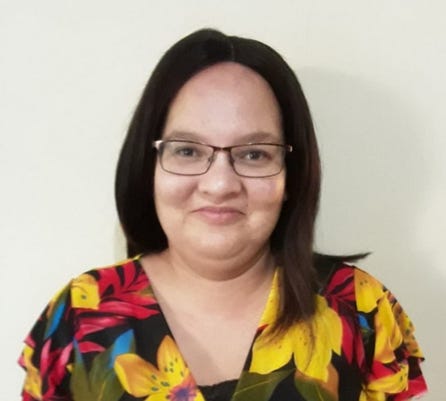
For Dr Amanda Ismail, helping people has never been just a job. It is a calling.
Raised in Sarepta, Kuils River, in the Western Cape by hardworking parents who nurtured a love of learning and reading, Ismail followed her passion for service into social work.
Today, she holds a PhD in Social Work from the University of the Western Cape and serves as Coordinator of the Disability Unit at the Cape Peninsula University of Technology (CPUT), where she advocates for and supports students with disabilities across the institution.
Along the way, she has overcome challenges, earned academic recognition and remained committed to ensuring that vulnerable people have the opportunity to thrive. From volunteering in community outreach programmes to helping students realise their academic potential, Ismail’s journey demonstrates the power of compassion, perseverance and education.
As South Africa celebrates National Women’s Month, ednews.africa continues its series profiling women whose careers are making a real difference in the lives of others. Their stories are intended to inspire young girls and women to explore study and career opportunities they may never have considered.
She shares her journey from a young girl in Cape Town to becoming a respected social work professional and higher education leader, while offering practical advice to young people considering a career dedicated to changing lives.
Beginnings
Where were you born and raised?
Sarepta, Kuils River-Cape Town, Western Cape.
Which primary and high schools did you attend?
Sarepta Primary and Secondary School.
Describe life growing up?
Life was good. My parents worked hard to provide for us. My mother instilled the love of reading in me from a very young age and made sure that I visit the library regularly.
Where did you study after school and what did you study?
I studied at UWC (The University of the Western Cape). I studied social work. The Highest Degree I have is PhD in Social work, from UWC.
Are you married? Do you have children?
I am married to my high school sweetheart, Carlo Ismail, since the year 2000. We don’t have children.
What are your hobbies and how do you relax?
I am a nature loving person. My hobbies include walking and hiking. I knit and crochet as well. I volunteer in children and outreach programs as well.
How do you keep up with trends in your field?
I’m belong to many forums and committees. I regularly attend relevant trainings and workshops as well.
When did you first “start” your career and what was that moment like?
I consulted one of my mentors for career guidance and he steered me in the right direction. I started first as a social worker in 2007 with the Deaf Community of Cape Town (DCCT). It was an amazing experience. I was new to social work and new within the Disability field.
Career
What is your current job title?
Coordinator: Disability Unit
How long have you been in this role?
5 years
Briefly describe what your job involves day‑to‑day.
Lead, coordinate, advocate and ensure that students with disabilities receive support services daily.
Where are you based?
CPUT, I work on all campuses.
What do you love most about your job?
I love seeing students with disabilities achieve their full academic potential.
How did you get into this line of work?
I went to consult one of my mentors. He steered me in the right direction.
Was this always your dream career?
I always wanted to help people.
What have been some highlights so far?
Completing my PhD and being a Golden Key recipient in 2025.
What are the best parts of the job?
Helping students with disabilities achieve their dreams.
What are some of the challenges?
Financial and resource challenges.
What type of personality suits this career?
A person that is compassionate and has boundaries. Someone that is empathetic, firm, practical and hopeful.
Is it well‑paying? Are there good benefits?
For me, it is.
Can you work in other countries with this qualification?
Yes
What education or training is needed?
Bachelors, Masters and PHD is recommended in Social work or related field to become a Coordinator or Head of Department.
Which matric subjects help?
Home languages, additional language, mathematics or mathematics literacy, life orientation as well as computer applications.
How long does training take, and is it expensive?
Social work training takes 4 years and then you can further your education. It is expensive but it is a huge investment in your career.
Do you need ongoing training throughout your career?
Yes, ongoing training is needed to stay abreast with developments in the field.
Are bursaries, loans or scholarships available?
Yes. NSFAS and other bursaries.
Where can one study for this career?
To become a Social Worker, you need a Bachelor of Social Work-BSW, it’s a 4-year degree. You can study this at any University that offers this course.
What should a young person do first if they want to follow this path?
They should start in high school/matric, they should choose the correct subjects, obtain a bachelors pass, volunteer, get relevant exposure, then after school apply for a BSW Degree, apply for funding, if necessary and then register with SACSSP at the appropriate time.
Advice for the young at heart
What advice would you give someone thinking about this career?
This career is not easy but it’s one of the most meaningful.
Is there a shortage of people in this field (in SA or globally)?
Yes
What other similar jobs exist in your industry?
Occupational therapist, psychologist, community development worker.
Looking back, what would you have done differently?
Nothing. My past shaped me into becoming the person I am today.
Tell us about a teacher or mentor who inspired your journey.
Mr. Henry de Grass, he is the mentor that steered me in the right direction where my career is concerned.
Dr. Marcel Londt, my PHD supervisor. She believed in me and encouraged/supported me to achieve my academic goals.
Where can one study?
University of Cape Town (UCT)
University of the Witwatersrand (Wits)
University of Pretoria (UP).
Stellenbosch University (SU)
University of KwaZulu-Natal (UKZN)
Tshwane University of Technology (TUT).
University of Limpopo (UL)
University of South Africa (UNISA).
University of Western Cape (UWC)
©Higher Education Media Services.