


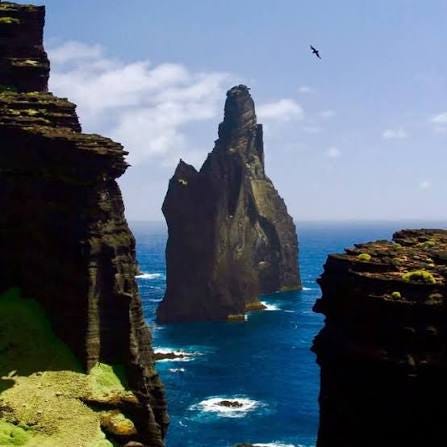
When scientists investigate how climate change is reshaping ecosystems, temperature and rainfall usually dominate the conversation. But on a remote island in the Southern Ocean, University of Pretoria (UP) researchers are combining ecology and engineering to investigate an often-overlooked element of climate change – wind. Their research suggests that changes in everyday wind conditions could have important consequences for plants, ecosystems and even the survival of seabirds.
Marion Island lies in the latitudes known as the “Roaring Forties” and is one of the windiest environments in the world. Here, gale-force winds are part of everyday life, which makes the roughly 290km² sub-Antarctic island an extraordinary natural laboratory for understanding what persistent wind does to an ecosystem, from where plants grow to how birds fly.
“Temperature and rainfall are fundamental to understanding climate change, but they are not the whole climate system,” says Professor Peter le Roux of UP’s Department of Plant and Soil Sciences. “Our work on Marion Island is showing that wind can influence ecological patterns at a remarkably fine scale. If wind regimes change as the climate changes, we need to understand what that could mean for the organisms already living at the limits of what they can tolerate.”
The research brings together scientists from UP’s departments of Plant and Soil Sciences and Mechanical and Aeronautical Engineering, combining ecological fieldwork with sophisticated engineering modelling.
Researchers began by installing wind-logging stations across Marion Island, with equipment and field teams having to endure freezing temperatures and gale-force winds. Mechanical and aeronautical engineering master’s student Kyle Goddard then used computational fluid dynamics to simulate wind flowing across the entire island. The model simulated wind from 16 different directions and generated information from just 0.2m above the surface to 800m high. Importantly for ecologists, it produced estimates of wind speed and direction at a horizontal resolution of about 30m.
“Engineering allows us to make the invisible visible,” says Prof Ken Craig of the Department of Mechanical and Aeronautical Engineering. “We cannot put a weather station on every few metres of an island; computational fluid dynamics allows us to investigate how the terrain shapes wind across that landscape. What makes this project particularly powerful is that those engineering insights can then be connected to biological observations on the ground.”
That connection has revealed striking ecological effects.
Research by Dr Mia Momberg showed that wind strongly affects fine-scale vegetation patterns on Marion Island, with wind speed having a greater influence than temperature in some cases. Wind variation was also associated with the distribution of plant communities and with where wandering albatrosses, the world’s largest seabirds, choose to nest.
For Dr Janine Schoombie of the Department of Mechanical and Aeronautical Engineering, the focus was another of Marion Island’s remarkable inhabitants: the grey-headed albatross. She investigated how winds around a breeding site affect the birds’ ability to fly and how local wind conditions may contribute to the mortality of breeding adults.
“By modelling the airflow around breeding areas, we can start asking much more precise questions about where flying becomes energetically demanding or potentially dangerous,” Dr Schoombie says. “That gives us a different way of thinking about how environmental change could affect these birds.”
The same wind dataset is helping UP researchers answer questions about plants that might otherwise seem counterintuitive.
Master’s student Nompilo Mazibuko combined the wind simulations with a mechanistic dispersal model and information about seed characteristics to investigate how alien and indigenous plants spread across Marion Island.
Despite the island’s famously strong winds, the research showed that the low-growing nature of its sub-Antarctic vegetation generally restricts windblown seeds to relatively short dispersal distances. In other words, living in an exceptionally windy environment does not necessarily mean seeds travel exceptionally far.
Research by master’s student Sinethemba Msibi is examining whether Marion Island’s strongly directional winds influence the growth and mortality of one of its most widespread plants. Preliminary findings suggest that wind patterns can drive uneven growth and die-back, and may even alter how the species interacts with neighbouring plants.
Honours student Nicola Marneweck approached the question at an even smaller scale by comparing vegetation growing on the exposed and sheltered sides of natural windbreaks such as large boulders. Plants in more exposed locations were significantly shorter, although many other plant characteristics showed surprisingly limited responses to increased wind exposure.
Together, the studies demonstrate why simply knowing the average wind speed recorded at a weather station may not be enough to understand what an organism experiences. A ridge, slope, cliff or boulder can radically alter airflow over a relatively short distance. Those local differences can matter to a nesting bird, low-growing plant or wind-carried seed.
The researchers are continuing to build a long-term record of wind conditions across Marion Island and around important geographical features. These measurements allow scientists to examine how climate change-driven shifts in wind patterns are altering this relatively undisturbed ecosystem over time.
“Climate change projections ultimately need to tell us something about the conditions organisms actually experience,” Prof Le Roux says. “This work shows what becomes possible when ecologists and engineers approach the same environmental problem from different directions. Neither discipline could have produced this picture on its own.”
The team has also made its wind observations and island-scale simulations available to other researchers, allowing them to test new questions using the data and helping to inform planning and logistics on the Prince Edward Islands.
Prof Craig says the project illustrates why complex environmental problems increasingly require researchers to cross traditional disciplinary boundaries.
“We began with different questions and different methods, but the physics of the atmosphere and the biology of an ecosystem do not exist separately in the real world,” he says. “Bringing those perspectives together gives us a much richer understanding of what is happening.”
For the UP team, Marion Island’s relentless winds may carry a much broader message: if scientists want to understand how ecosystems will respond to a changing climate, they may need to look beyond how hot and wet the future becomes, and ask how windy it will be too.
- Author Prof Peter Le Roux, Dr Janine Schoombie, Prof Ken Craig.
©Higher Education Media Services.