

My Comrade and Supervisor - Mondli Hlatshwayo
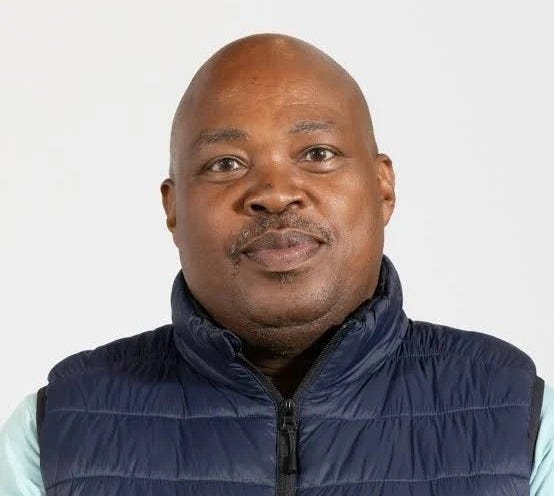
Molo Qabane (Dear Comrade),
Our first meeting took place at the Workers’ Museum and Library in Newtown in 2000. Together with other comrades, we were engaged in the struggle to defend and advance the history and heritage of the working class—a class that continues to be under sustained economic, political, and social attack amid our present political disorder.
From the outset, I was drawn to your activism and scholarship. There was something familiar and grounding in your story—something that reminded me deeply of my uncles from the rural Eastern Cape who worked on the mines. Like them, your life trajectory is rooted in working-class struggle.
Your father was a mineworker. From that rural Eastern Cape background, you went on to become a teacher, an underground African National Congress activist, and later a student at the University of Cape Town. These are not merely biographical achievements; they are the making of a cadre.
In the 1980s at UCT, you met our mutual friend and comrade, David Cooper. You later joined the International Labour Research and Information Group (ILRIG), established in 1983, before being recruited by the Paper, Printing, Wood and Allied Workers’ Union (PPWAWU). From 1991 to 1992, you served as PPWAWU’s Deputy Secretary General, dedicating yourself to workers’ struggles.
Between 1992 and 1994, you worked for the Congress of South African Trade Unions—then a formidable and principled force—as a writer for The Shop Steward magazine of the largest trade union federation in the country.
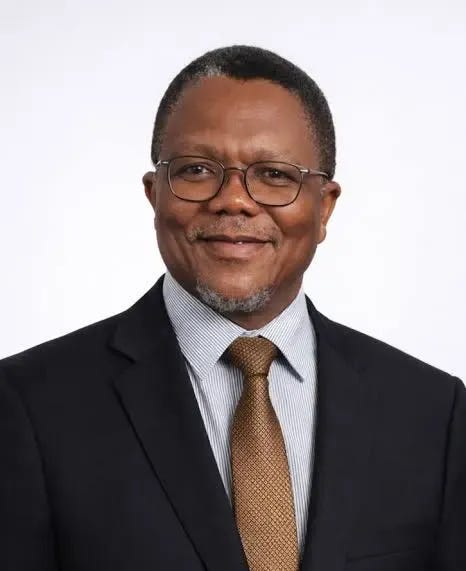
In 1996, you entered academia as a lecturer and worked closely with the late Eddie Webster—a towering figure in labour studies. You came to Wits University not as a novice, but as an academic shaped by activism and union work. This is why you were able to learn from Eddie Webster, even as you also taught him.
Eddie once shared with me a story that speaks powerfully to your character and courage. In 2007, after the South African Sociological Association (SASA) conference at North-West University’s Potchefstroom Campus, you were driving behind Eddie Webster and Luli Callinicos. Their car hit an obstacle and could not continue. As you were changing their tyre, the three of you were attacked by armed thugs wielding knives.
Armed only with a wheel spanner, you defended yourself, Luli, and Eddie. You emerged from the ordeal with a broken finger and were nearly killed. Your life was saved by a small steel Zam-Buk container in the left pocket of your shirt. You fought back until the attackers fled. Luli often recounts the incident and says, “Sakhela is my hero.” Eddie once exclaimed, “That is Sakhela—he does not retreat. Those chaps at Fort Hare do not know Sakhela.”
When I approached you in 2001 to supervise my Master’s degree, you were already a respected academic and researcher. Choosing a supervisor is never easy, but for me it was an obvious decision. While many students understandably gravitated towards Eddie Webster, I chose you. Beyond your intellectual rigour, there was something familiar and grounding—again reminding me of the men from the Eastern Cape I grew up admiring.
I completed my Master’s degree under your supervision. When you moved from Wits to UJ, I followed, and there I completed my doctoral thesis. I followed you because your supervision style was unique. You allowed me the freedom to write from within hard-core Marxism—to express radical politics and justified rage—but you never let me settle for ideology without scholarship. You asked piercing, difficult questions that forced me to revise, deepen, and engage Marxism with intellectual discipline and academic honesty.
You did not limit your role to commenting on drafts. You actively ensured that I had access to funding and institutional support so that I could complete my studies with dignity. Even after you moved on to the University of Pretoria and later the University of Cape Town, we remained in close contact and collaborated academically.
On 9 November 2016, the University of Fort Hare formally appointed you as Vice-Chancellor and Principal. We attended your inauguration in Alice on 3 May 2017. The ceremony was disrupted by noise and protest—an early sign that Fort Hare had become deeply contested and, frankly, hostile terrain.
In the years since, I have heard and witnessed painful stories from Alice. There were credible threats against your life. On one occasion, enemies allegedly planned to attack you at a meeting, and you were saved only by the courage of colleagues who intervened. Like a seasoned cadre, you withdrew—not out of fear, but to fight another day. As Bob Marley reminds us, “He who fights and runs away lives to fight another day.”
Security concerns soon made it difficult to visit you. I remember meeting you in Alice inside a safe house, while the late Mr. Mboneli Vesele—a true soldier—stood guard outside. On another occasion, I met you in East London, where Mr. Vesele and his armed team escorted me to your makeshift office at the library. Even casual moments revealed the severity of the threat.
Your enemies murdered Mr. Vesele on 6 January 2023. They assassinated Petrus Roets in May 2022. There were multiple attempts on your life, and your family was deliberately targeted. Listening to you pay tribute to Mr. Vesele made it painfully clear to all of us: Fort Hare had become a war zone. Now, in a cruel irony, those same forces have suspended you on flimsy grounds.
Your family has paid an immense psychological and financial price. Your partner, Dr Beata Buhlungu, and your children were forced to live under constant threat—like hunted beings. They had to learn security protocols, threat detection, and survival in an environment poisoned by intimidation and political malice.
Why would anyone endure this? Knowing you, the answer is clear. You are a cadre committed to confronting corruption and greed head-on. You are part of a rare generation that values principle above comfort, and integrity above position. The organisation of Oliver Tambo has, in many spaces, degenerated into a den of thieves. Having looted the state and its agencies, corrupt networks have now set their sights on universities through tender corruption and political interference.
Jonathan Jansen has written extensively about this crisis. What is especially alarming is how corruption and party-political meddling increasingly shape appointments of vice-chancellors, deputies, deans, directors, and professors. Mediocrity has become normalised. Scraping the bottom of the barrel is no longer an exception; it is becoming standard practice.
You, Comrade Sakhela, stand in direct opposition to this decay. You represent ethical leadership, merit, and excellence. That is precisely why your enemies want you removed. You are stubborn when it comes to principle. You value principle more than life itself. That is Sakhela Buhlungu.
As you approach retirement, I hope that we will reconnect—not just to reminisce, but to reflect critically on struggle, sacrifice, and what it truly means to serve.
Ndiyabulela, qabane.
(Thank you, comrade.)
Mondli Hlatshwayo
Associate Professor (Labour Studies and Worker Education)
Centre for Education Rights and Transformation
University of Johannesburg
This letter does not represent the views of the University of Johannesburg. These are the principled views of the writer.
©Higher Education Media Services.
https://www.academicjobs.com/higher-education-news/south-africa-dysfunctional-universities-crisis-cut-ul-mut-peril-or-academicjobs-13684