


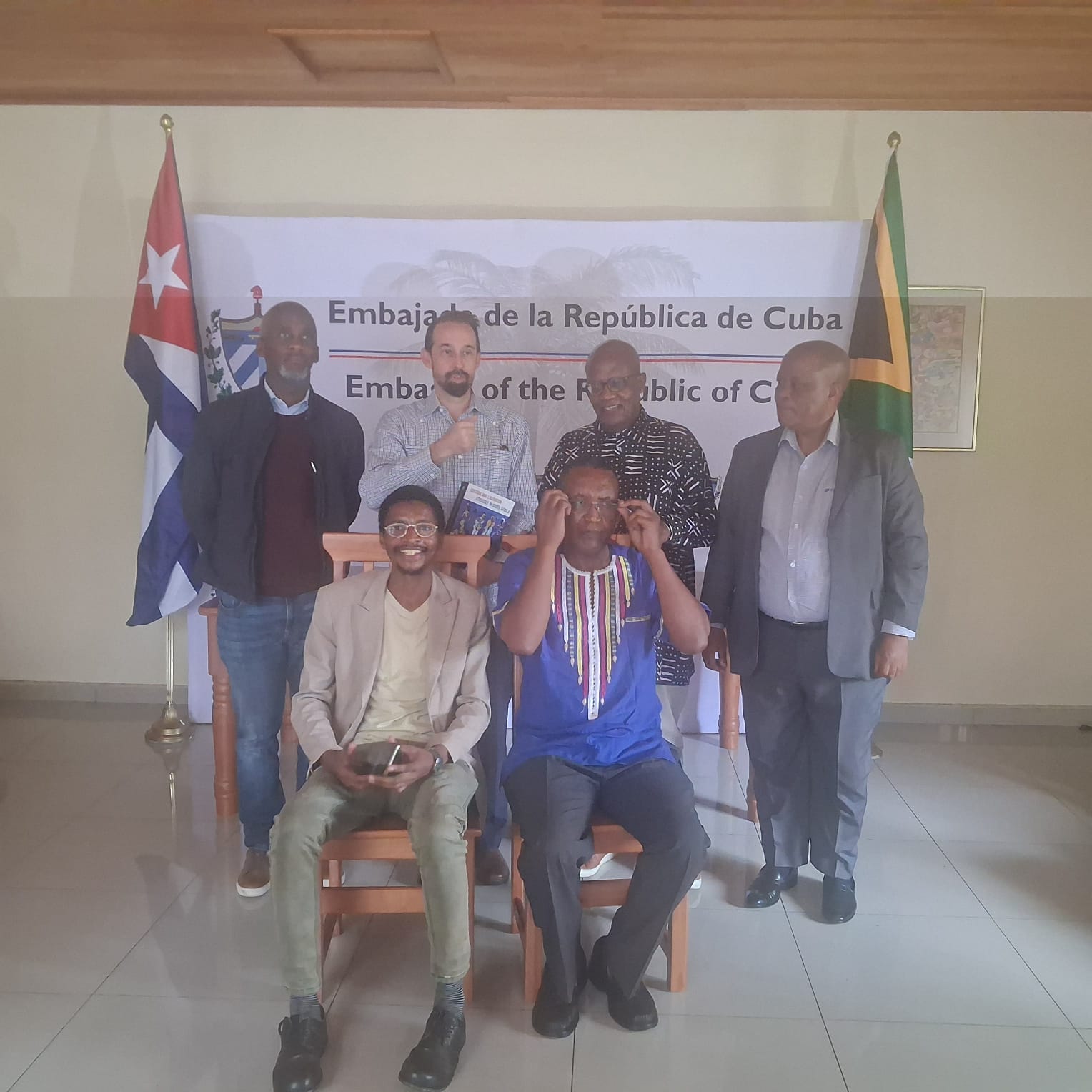
The National Writers Association of South Africa (NWASA), with the Department of International Relations and Cooperation (DIRCO) serving as a supporter and observer, on Tuesday 5 May 2026 signed a Cultural Partnership Agreement with the Union of Writers and Artists of Cuba (UNEAC).
The Cultural Partnership Agreement establishes a framework for bilateral cooperation in the development and promotion of literature, grounded in shared values of cultural diversity, human dignity, freedom of expression, and international solidarity between the Republic of Cuba and South Africa.
The agreement also affirms the role of writers as interpreters of social reality and custodians of collective memory, while promoting non-partisan engagement with global issues affecting literature and humanity.
The high-level meeting was held at the Cuban Embassy in Pretoria with the Ambassador Rodriguez Pineli in attendance, together with the Dirco delegation consisting of BJ Erasmus (Deputy Director: Sub-directorate: Caribbean; Directorate Mexico, Central America and the Caribbean) and L Sekhasimbe a senior foreign officer.
The NWASA delegation who attended the ceremony was Molaodi wa Sekake (NWASA acting president), Dr. Lebogang Lance Nawa (NWASA secretary-general), Dr. Mongane Wally Serote, Mothobi Mutloatse and Professor. Kwesi Prah - all members of NWASA’s Council of Elders.
The meeting marks a significant milestone in strengthening cultural diplomacy and literary cooperation between South Africa and Cuba. Central to the engagement is the formal signing of a Cultural Partnership Agreement between NWASA and the Union of Writers and Artists of Cuba (UNEAC).
The signing is the culmination of a deliberate and steadily evolving relationship between NWASA and Cuban literary institutions, dating back to early engagements in South Africa.
On 21 June 2023, NWASA leadership held a foundational meeting with Lauren Luis Acosta, former Diplomatic Attaché for Press and Cultural Affairs at the Cuban Embassy in Pretoria. This engagement was aimed at fostering relations with Cuban writers and followed NWASA’s principled public stance in defence of Afro-Cuban poet Nancy Morejón against the unceremonious exclusion a month earlier from France’s poetry festival, le Marché de la Poésie, otherwise also known as the Poetry Market,
At the meeting, NWASA and the Cuban Embassy laid the groundwork for formal cooperation, with both parties expressing commitment to institutionalising relations between organised writers in Cuba and South Africa, including prospects for joint literary projects and exchanges.
This early diplomatic-cultural interface was followed by a landmark engagement in Havana, Cuba, on 22 February 2025, where NWASA Acting President Molaodi wa Sekake met with UNEAC President Mairely Ramón Delgado (Dazra Novak) at UNEAC headquarters.
Held on the sidelines of the 33rd Havana International Book Fair – where South Africa was the guest of honour and over 40 countries were represented – the meeting advanced concrete areas of collaboration, including translation of literary works, exchange programmes, and sustained intellectual engagement between writers of both nations.
The engagements are rooted in a deeper historical and political solidarity between South Africa and Cuba, extending between the late 1980s and early 1990s into literary formations such as NWASA’s predecessor, the Congress of South African Writers (COSAW), and expressed through ongoing acts of mutual support within global cultural platforms.
And also reflects a deepening of historic ties between South Africa and Cuba, anchored in solidarity, shared struggles and a mutual commitment to cultural and intellectual exchange. It affirms the growing importance of public and cultural diplomacy as instruments for fostering mutual understanding between nations.
NWASA views this partnership as a strategic platform to elevate South African literature globally, expand access to new audiences, and build enduring relationships with writers and cultural institutions across the world, the association said in a statement.
©Higher Education Media Services.