


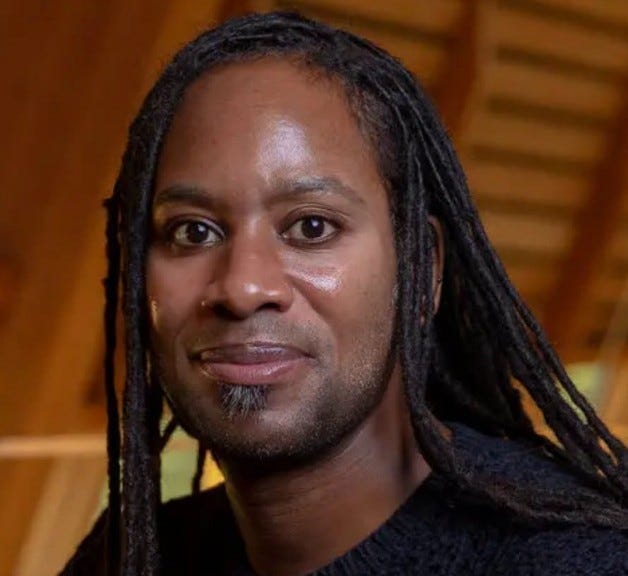
Jason Arday, the former University of Cambridge professor whose career recently became the focus of a high-profile plagiarism controversy, has died at the age of 41.
Emergency services were called to an address in Battersea, south London, on Friday where a man was found unresponsive, according to the BBC. The Metropolitan Police said the death is being treated as unexpected but is not believed to be suspicious.
Arday’s family said they were “in shock” at the loss of a man they described as an “amazing father, partner, brother, uncle and son”. In a statement, they said the intense public scrutiny and misinformation surrounding recent allegations had taken a heavy toll on him.
His death comes just days after he resigned from his position as Professor of Sociology of Education at Cambridge University following allegations of plagiarism and questions about aspects of his academic record. Arday consistently denied plagiarism claims, although he acknowledged errors in some of his earlier academic work.
The controversy began when Nathan Cofnas, a former Cambridge academic, publicly alleged that Arday’s scholarship contained multiple instances of plagiarism. Arday maintained that some citation mistakes stemmed from challenges linked to his autism, explaining that he had relied on mimicry during his early academic development.
Liverpool John Moores University, which awarded his PhD in 2015, previously investigated allegations relating to his doctoral work and found no evidence of plagiarism.
In announcing his resignation last week, Arday said the sustained scrutiny had come at a significant personal cost.
“While criticism is an inevitable part of academic life, what I have experienced has gone far beyond scholarly disagreement,” he said.
Cambridge University Vice-Chancellor Professor Deborah Prentice said the institution was “desperately saddened” by the news and extended condolences to Arday’s family and friends. Education Secretary Lucy Powell also expressed shock and sadness, urging the public to remember that those involved in such controversies are real people with families and loved ones.
Arday’s appointment in 2023 as Cambridge’s youngest Black professor was widely celebrated as a landmark moment in British higher education. Having overcome significant childhood challenges, including being non-verbal until age 11, he rose from a career as a physical education teacher to become one of the UK’s most prominent academics.
His death has prompted renewed debate about media scrutiny, academic accountability and the pressures faced by public figures in higher education. Friends and colleagues described him as a compassionate scholar who had become increasingly distressed in recent weeks.
Arday had recently completed a memoir chronicling his remarkable journey, from childhood adversity to academic prominence, a story that inspired many across the UK and beyond.
©Higher Education Media Services. – www.ednews.africa
Nothing or no one should drive a person to this .