


South Africa’s public finances have reached a turning point, with government declaring that years of difficult fiscal consolidation have finally stabilised the country’s debt burden and created room for targeted spending aimed at supporting growth, infrastructure development and the fight against crime and gender-based violence.
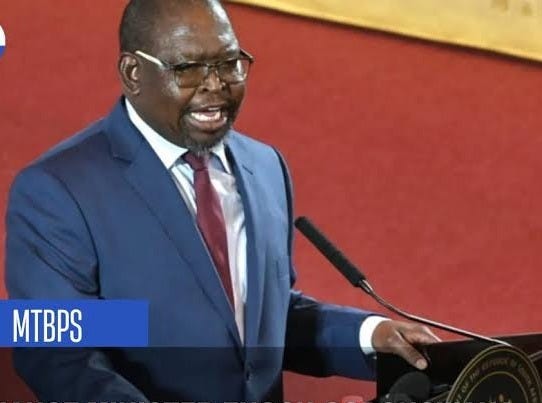
Tabling the 2026 Medium-Term Budget Policy Statement (MTBPS), Finance Minister Enoch Godongwana argued that the country had moved away from the fiscal fragility that followed years of State Capture, weak economic growth, rising debt and the economic devastation wrought by the Covid-19 pandemic.
Godongwana said the government had deliberately taken tough decisions over the past five years by limiting bailouts to state-owned entities, controlling expenditure and prioritising investment over consumption.
Those measures, he said, were now beginning to deliver results.
“For the first time in nearly two decades, our debt-to-GDP ratio has stabilised,” he told Parliament.
National Treasury expects gross government debt to peak at 78.4% of GDP in 2025/26 before beginning a gradual decline, a milestone government has repeatedly identified as critical to restoring investor confidence and protecting public finances.
The improved fiscal outlook has been helped by stronger-than-expected tax collections, particularly from corporate income tax, VAT and dividends tax. Treasury revised this year’s revenue estimate upwards by R17.1 billion, although it warned that part of the increase stemmed from temporary gains linked to higher commodity prices.
Gross tax revenue is projected to grow from R2.14 trillion in the current financial year to R2.53 trillion by 2029/30.
The improved revenue position has enabled government to increase expenditure by R45.5 billion compared with projections made in the February Budget.
Treasury said the additional spending would be directed largely towards service delivery, disaster relief, infrastructure development and law-enforcement interventions.
Among the allocations announced was R823 million for the South African National Defence Force to support police operations combating gang violence and illegal mining, while R516 million has been set aside for the Madlanga, Khampepe and Nkabinde commissions of inquiry.
Additional funding will also strengthen the Border Management Authority and the South African Revenue Service, with SARS receiving resources to accelerate modernisation and improve cyber resilience.
Government has further allocated R150 million towards development of the MyMzansi application, a digital platform intended to give citizens access to government services through a single portal.
The MTBPS comes against the backdrop of a deteriorating global economic environment.
Treasury said geopolitical tensions, including conflict involving Iran, Israel and the United States, had disrupted oil supply routes and pushed up global energy prices. The closure of the Strait of Hormuz had triggered fuel price increases and heightened inflationary pressures worldwide.
Global economic growth is now forecast at 3.1% in 2026, down from earlier projections of 3.3%.
South Africa’s growth forecast has similarly been revised downward.
Treasury now projects the domestic economy will grow by only 1.2% in 2026, compared with the 1.6% estimated in February.
Growth is expected to improve gradually to 1.6% in 2027 and reach 2% by 2029.
Even so, government maintains that structural reforms already under way could eventually lift economic growth above 3% annually.
The minister reiterated that the country’s economic strategy remains focused on four pillars: maintaining macroeconomic stability, implementing structural reforms, building state capacity and expanding infrastructure investment.
Particular attention is being given to reforms in the water and electricity sectors.
Government said the National Water Action Plan aims to address deteriorating infrastructure, weak municipal capacity, water losses and poor governance that continue to undermine service delivery.
In the electricity sector, the restructuring of Eskom and the creation of an independent transmission operator are intended to create a more competitive market, attract investment and accelerate grid expansion.
Infrastructure spending remains one of government’s principal growth strategies.
Treasury has placed increasing emphasis on ensuring that public investment delivers measurable economic returns while also attracting private capital.
A key development highlighted in the MTBPS is the operational launch of the Infrastructure Finance and Implementation Support Agency (IFISA), which began work in April.
The agency consolidates project preparation, financial structuring and advisory services under a single institution to reduce delays and improve project execution.
Treasury said IFISA is already supporting projects worth more than R217 billion across all spheres of government.
Government is also accelerating the use of public-private partnerships, particularly at municipal level where service delivery challenges remain acute.
Of the 68 projects currently in the public-private partnership pipeline, 31 are municipal projects.
Treasury said amended municipal PPP regulations have now been submitted to Parliament and would simplify approval processes while making it easier for municipalities to partner with private investors.
Another major initiative is the Credit Guarantee Vehicle, designed to mobilise private funding for infrastructure projects by reducing investor risk.
The vehicle was formally incorporated in August and has already secured conditional commitments of $553 million from development partners, including the World Bank.
It is expected to become operational in 2027.
Treasury also disclosed the findings of a review into infrastructure conditional grants.
Between 2017/18 and 2023/24, national government transferred R887 billion to provinces and municipalities through such grants.
While most of the money was spent, the review found that projects were frequently delayed, left incomplete or failed to deliver intended outcomes.
Government plans to reform the grant system to strengthen planning, oversight and accountability.
A key policy announcement contained in the MTBPS is the introduction of a new fiscal anchor.
Draft legislation released for public comment would embed fiscal sustainability principles into the Public Finance Management Act.
Rather than imposing fixed numerical debt targets, the proposed framework would require each administration to set its own fiscal objectives and report publicly on progress.
The Financial and Fiscal Commission would also be given enhanced powers to independently evaluate whether fiscal frameworks remain aligned with long-term sustainability goals.
Treasury argues that the approach balances accountability with flexibility during changing economic conditions.
The MTBPS also contains a package aimed at easing pressure on consumers facing higher fuel costs.
A temporary reduction in the fuel levy will take effect from November.
Diesel users will receive relief of R3 per litre and petrol users R1.50 per litre until 1 December 2026. Reduced relief measures will remain in place until January 2027.
The intervention is expected to cost the fiscus R10 billion in foregone revenue.
Treasury said the programme will be funded by returning R10 billion previously allocated to the Central Energy Fund back to the National Revenue Fund.
The minister described the measure as targeted support designed to cushion households and businesses against rising living costs without undermining fiscal sustainability.
Government also outlined efforts to improve spending efficiency.
An additional R38.1 billion in savings has been identified over the medium term, on top of R12 billion announced earlier this year.
Savings will come from reducing duplication in government programmes, tackling fraud in social grants, improving performance in housing programmes and utilising surpluses within public entities.
The largest saving, R13 billion, is expected from anti-fraud measures in the social grant system.
Despite efforts to contain spending, Treasury emphasised that social programmes remain central to government policy.
Social wage spending accounts for approximately 60% of non-interest expenditure and includes education, healthcare, housing, municipal services and social grants.
Government provides free basic services to more than 11 million households and supports over 18 million social grant beneficiaries.
The MTBPS also introduces additional spending aimed at tackling child malnutrition and strengthening agricultural extension services.
A total of R1.6 billion has been allocated to early childhood interventions focused on nutrition during pregnancy and the first thousand days of a child’s life.
Another R1.5 billion will support agricultural extension officers assisting farming communities.
Addressing crime and gender-based violence featured prominently in the budget statement.
Government announced R3.8 billion to employ more than 3,500 social workers to strengthen prevention and response measures.
An additional R186 million will go towards forensic and investigative capacity.
Treasury also confirmed plans to expand specialised sexual offences courts from 55 to 101 and increase the number of Thuthuzela Care Centres from 72 to 80 by the 2028/29 financial year.
The Department of Women, Youth and Persons with Disabilities will receive an extra R157.4 million to improve coordination of government’s response to gender-based violence and femicide.
Broader law-enforcement interventions include R810 million to recapitalise the South African Police Service vehicle fleet, while R2.2 billion has been allocated over the medium term to strengthen judicial independence.
Government said these interventions form part of wider efforts to combat organised crime, corruption and illicit economic activity.
In line with preparations for a Financial Action Task Force evaluation process, authorities will continue strengthening anti-money laundering systems and improving investigations, prosecutions and asset forfeitures.
Further measures are planned to improve border management and address immigration-related challenges.
On the local government front, Treasury announced substantial increases in transfers to municipalities.
An additional R21.8 billion has been allocated through the local government equitable share to help cover rising costs associated with free basic services.
Provincial governments will receive an additional R20.5 billion to assist with growing expenditure pressures in healthcare and education.
Despite increased funding, Treasury signalled a tougher stance toward underperforming municipalities.
The minister revealed that transfers to 69 municipalities had been suspended after persistent failures to pay creditors.
By July, 37 of those municipalities had reached repayment agreements, resulting in R4.2 billion being paid to creditors.
Government is also investing a further R3.5 billion in smart metering programmes to improve municipal revenue collection and reduce losses.
Concluding the MTBPS, Godongwana said South Africa’s fiscal position had improved significantly, but warned that sustaining progress would require continued discipline and reform.
With debt stabilising, borrowing costs easing and infrastructure investment gaining momentum, Treasury believes the foundations have been laid for stronger and more inclusive growth.
The challenge now, the minister said, is translating fiscal stability into faster economic expansion, improved service delivery and sustainable job creation.
©Higher Education Media Services.