


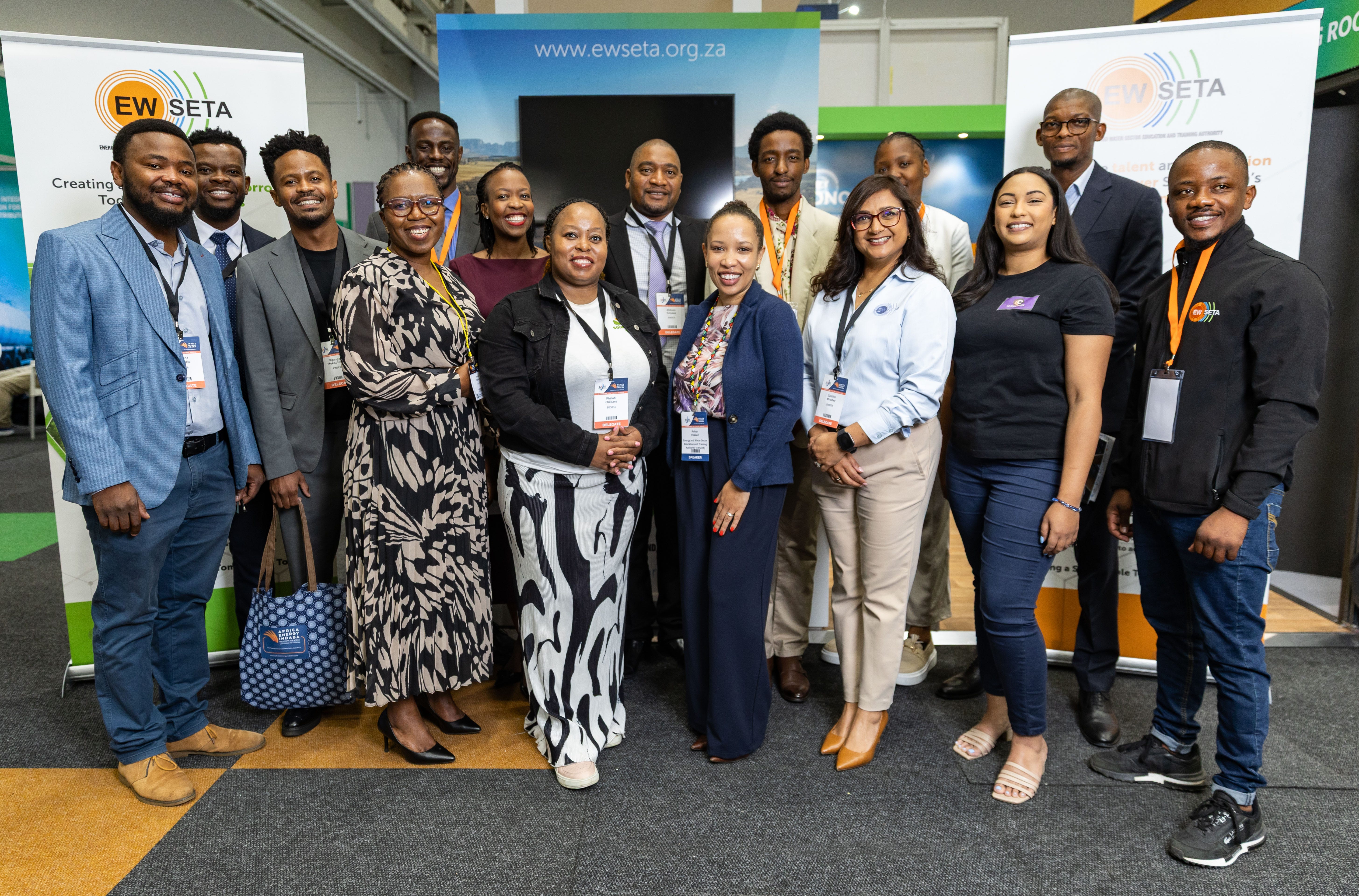
The Energy and Water Sector Education and Training Authority (EWSETA) has responded to the government’s promise of an estimated R2.5 billion to support more than 180 000 small and medium enterprises by sponsoring several SMME’s to be part of Africa Energy Indaba 2026 where they showcased their energy solutions.
The initiative forms part of the Energy Industry Support Programme implemented in partnership with the Council for Scientific and Industrial Research (CSIR).
Participation in the Africa Energy Indaba, also highlighted how skills development and enterprise support are contributing to South Africa’s Just Energy Transition, EWSETA said in a statement.
EWSETA said it has been estimated that if each of these SMME’s employed just one additional person, up to three million new jobs could be created
This national focus aligns with EWSETA’s work to place new entrants in SMMEs, strengthening their skills capacity and participation in the energy economy, it said.
“By sponsoring these enterprises to attend the Africa Energy Indaba, EWSETA created an opportunity for them to present their technologies, connect with potential clients and investors, and engage with government and industry stakeholders who play an important role in enterprise growth”.
The enterprises that participated are:
Sol4Africa, represented by Pheladi Chiloane, which developed the SolaGeyzer, a portable solar thermal water heating solution designed for communities where conventional solar geysers cannot be installed.
LC Dynamics, represented by Lisa Von Benecke, showcased its solar blinds technology, a building-integrated photovoltaic solution designed to generate electricity while improving energy efficiency in commercial buildings.
Empower Sustainable Energy, represented by Ayanda Nkomo, who focuses on delivering renewable energy access in underserved and off-grid communities through microgrids, storage systems and smart energy solutions.
Lamo Solar, represented by Tshibvumo Sikhwivhilu. The business is a black-owned Engineering, Procurement and Construction (EPC) firm delivering solar and storage solutions across residential, commercial and industrial markets
EWSETA also contributed to the conference programme through a deep dive session titled Empowering Energy SMMEs for South Africa’s Just Energy Transition: Innovation, Market Access and Skills for Scale.
The session was facilitated by Candice Moodley, Corporate Services Executive at EWSETA, and explored how technical validation, skills pipelines and market access can help energy SMMEs scale their innovations.
EWSETA’s leadership played an active role in shaping critical discussions at the African Energy Indaba contributing insights on workforce development and the skills required to support Africa’s evolving energy landscape.
EWSETA Acting CEO, Robyn Vilakazi, participated in a panel discussion titled “Tapping into the Human Resource to Support the Energy Sector Transition.” During the session, she emphasised the importance of coordinated partnerships to ensure that the workforce is equipped for the opportunities emerging from the continent’s energy transition.
“As the energy transition unfolds, we continue to drive collaboration between industry, government, communities and training institutions to ensure that South Africans – and the broader African workforce – can participate meaningfully in the opportunities emerging across the sector,” said Vilakazi.
EWSETA’s Planning, Monitoring and Evaluation Executive, Teslim Mohammed Yusuf, also contributed to discussions through his participation in the Nuclear Forum panel “Driving Nuclear Safety, Localisation and Workforce Development for Nuclear Build Programmes in Africa”.
“He highlighted the transformative impact that South Africa’s planned nuclear build programme can have on both energy security and skills development.
“A nuclear build programme represents not only an energy investment, but a major economic and human capital transformation. Ensuring a specialised skills pipeline – particularly for nuclear mechanical and electrical artisans, as well as graduates in nuclear science and engineering, will be critical to supporting future nuclear projects across the continent,” said Yusuf.
EWSETA’s collaboration with the CSIR continues to strengthen this ecosystem. The partnership recently received additional support through a €2 million investment from the European Union aimed at strengthening South Africa’s capacity to align skills development, technology innovation and enterprise growth within the energy transition.
The funding will support a national initiative focused on advancing beneficiation as a key objective, by aligning vocational training with real employment opportunities across mining, mineral processing and battery value chains, with EWSETA playing a central role in embedding these interventions within the national skills system.
“EWSETA’s support in enabling Lamo Solar to participate in the Africa Energy Indaba created an important platform for us to engage with leaders shaping Africa’s energy future. As a South African renewable energy SMME working to expand clean and reliable power solutions, opportunities like this help us build strategic partnerships, share innovation and accelerate progress toward universal energy access.
“We commend EWSETA for empowering local enterprises to actively contribute to the country’s energy transition,” said Tshibvumo Sikhwivhilu, a representative from Lamo Solar.
EWSETA remains committed to strengthening SMME participation across the energy value chain while developing the technical skills needed to support sustainable growth in South Africa’s energy sector.
©Higher Education Media Services