


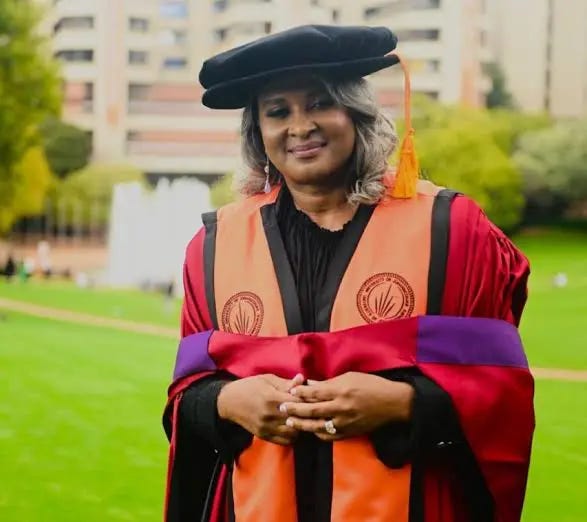
Analysis in the New England Journal of Medicine – co-authored by experts including Nobel laureate Joseph Stiglitz, leading epidemiologist Professor Sir Michael Marmot, and Chairperson of the One Economy Foundation and former First Lady of Namibia Monica Geingos – finds economic inequality, not conventional preparedness, has been the clearest predictor of how countries fared against pandemics, upending traditional assumptions about what actions governments need to take for health security.
The new research from the Global Council on Inequality, AIDS and Pandemics finds that while technical capacity remains necessary, it is not sufficient. To respond to and prepare for pandemics effectively, governments need to include efforts to address inequality.
Call for “Inequality-Informed Pandemic Preparedness and Response”
Conventional understandings of what countries need to do to be ready to face pandemics are incomplete and need to be re-thought, the research shows.
Many of the countries that score highest on standard measures of pandemic preparedness—based on technical abilities like laboratory, supply chain, or emergency response capabilities—have seen some of the highest rates of infection and death during both the COVID-19 and AIDS pandemics.
Countries like the United States or United Kingdom have topped official preparedness lists, but the research findings show no association between these traditional understandings of preparedness and success in the real world. Policies that only ensure technical capability are not enough.
Inequality, on the other hand, is the clearest predictor of how a country fares when a pandemic strikes, with more unequal countries less successfully responding than their more equitable peers.
The research shows that the prevailing conception of pandemic preparedness as synonymous with technical capacities leads governments give too little attention to addressing the sources of inequality that shape the use of those capacities. The analysis demonstrates how proven, practical approaches can enable countries to overcome the inequalities which undermine public health.
This includes addressing the social determinants of health within countries—the unequal conditions in which people are born, grow, live, work and age—as well as between-country inequalities in the global financial system. Countries could be mounting inequality-informed pandemic preparedness and response today – but they are not.
Four ways governments can break the cycle
The research sets out proven, practical and affordable policies to address the inequalities driving pandemic risk, so that countries can respond more effectively to HIV, tuberculosis, Ebola and other pandemics. The actions governments need to take include:
Protecting people during outbreaks: surge social protection such as paid sick leave, cash transfers and unemployment support, so no one has to choose between following health advice and feeding their family – alongside long-term investment in housing, education and secure work to build resilience before the next crisis.
Governing across society, not health alone: multi-sectoral planning that brings in finance, labour and education ministries, and embeds community-led organisations in the response, drawing on hard-won lessons from the AIDS pandemic.
Fixing the global financial rules: a debt-standstill mechanism for countries facing emergencies, the automatic release of emergency international financing when a pandemic is declared, and expanded pandemic lending so that every country has the means to respond.
Sharing life-saving science: open licensing of publicly funded research, a global prize fund that rewards innovators while allowing medicines and vaccines to be produced anywhere, and expanded regional manufacturing of the treatments and vaccines needed to stop today’s and tomorrow’s pandemics.
Expert call
The analysis and call to action is outlined in the latest edition of the New England Journal of Medicine by Nobel Laureate Joseph Stiglitz, leading epidemiologist Sir Michael Marmot, Chairperson of the One Economy Foundation and former First Lady of Namibia Monica Geingos, UNAIDS Executive Director Winnie Byanyima, and incoming Chair of the Department of Global Health and Director of the Center for Global Health Policy & Politics at Georgetown University Matthew Kavanagh.
“For decades the world judged how ready a country is for a pandemic by counting its laboratories, stockpiles and response plans,” said Joseph Stiglitz, Nobel Laureate in Economics and Co-Chair of the Global Council.
“This research shows that this is not enough. High economic inequality can leave even wealthy, well-equipped nations dangerously exposed. The encouraging news is that inequality is not inevitable – it is the result of policy choices, and we know how to change them. Reducing inequality is now one of the smartest investments any government can make.”
“Inequality is the ground in which pandemics take root – and this research proves it,” said Winnie Byanyima, Executive Director of UNAIDS, which convenes the Global Council. “It also shows leaders exactly where to act. By tackling the inequalities within our societies, we can end AIDS as a public health threat and make the world safer from the next pandemic. When we address inequality, everyone thrives.”
The research is being published just ahead of a special panel discussion taking place at AIDS 2026 in Rio de Janeiro – the biennial gathering of the leaders of the international HIV response. The panel, at 10:30am Rio time on 30th July, will include Joseph Stiglitz, Winnie Byanyima and Matthew Kavanagh alongside Nísia Trindade, Former Minister of Health of Brazil, Javier Padilla Bernáldez, Secretary of State for Health of Spain, and Richard Lusimbo, Director General of The Uganda Key Populations Consortium.
Pandemic emergency
The AIDS pandemic, the largest disease of the last century, has killed at least 44 million people globally since the early 1980s. Approximately 40.8 million people are living with HIV globally, while over 9 million are not on treatment because of inequalities obstructing access, putting them at risk of dying of AIDS-related illnesses. COVID-19 and AIDS have caused far more deaths combined than all the wars over the last half-century.
The new analysis tested why some countries have more effectively tackled COVID-19 and AIDS than others. It found that a country’s level of economic inequality consistently predicted death and infection rates – while conventional preparedness rankings and levels of poverty did not.
Some of the countries rated most prepared before COVID-19, including the United States, went on to record death rates far above the global average, while lower-ranked countries such as Vietnam and Ethiopia fared far better.
The reason, the researchers set out, is that inequality shapes whether a country can actually mobilise the tools it has: who can afford to stay at home, who trusts public institutions, and who is reached by health services. This makes tackling inequality an essential part of enabling true preparedness.
There is a clear and consistent association between inequality and less effective response. The numbers are stark. Using the Gini coefficient – the standard 0–100 measure of income inequality – the researchers found that every one-point rise in a country’s inequality was associated with around 12.5 additional COVID-19 deaths for every 100,000 people.
This pattern held for AIDS deaths and new infections as well. The pattern held across the countries studied and remained just as strong when poverty and conventional measures of preparedness were taken into account.
Economic inequalities intersect with other social determinants of health. Key populations, including men who have sex with men, transgender people, sex workers, people who inject drugs, and incarcerated people, face barriers in accessing vital services, exacerbating their risk of HIV infection. Girls in Africa face higher risk of HIV than boys. These inequalities are not inevitable and can be overcome through effective public policies.
Inequality and pandemics reinforce one another. Inequality leaves societies more exposed when outbreaks hit, and pandemics in turn widen existing gaps both within and between countries, deepening the very conditions that make future outbreaks harder to control. An International Monetary Fund analysis of past outbreaks found income inequality kept rising for around five years after each one. Breaking this cycle, the authors argue, is now essential to global health security.
As the world confronts multiple pandemics and the rising risk of new ones, the Global Council is calling on world leaders to place inequality at the centre of pandemic preparedness and response to avert another crisis of COVID-19 proportions or worse. More than 90% of the global population now lives in a country with high income inequality – levels not seen since the industrial revolution – leaving the world more exposed than ever.
“Health is not distributed by chance – it follows the conditions in which people are born, grow, live, work, and age, and those conditions are deeply unequal,” said Professor Sir Michael Marmot, Director of the UCL Institute of Health Equity and Co-Chair of the Global Council. “The inequalities that damage health in ordinary times are the same ones that leave whole societies exposed when a pandemic strikes. Creating fairer conditions of daily life is not a nice-to-have – it is the foundation of health security.”
“The evidence is clear: out-of-control inequality is bad for everyone’s health. Effective pandemic preparedness includes taking practical action to tackle the inequalities which drive them,” said Monica Geingos, Chairperson of the One Economy Foundation, former First Lady of Namibia, and Co-Chair of the Global Council.
“This is about political choices,” said Matthew Kavanagh, incoming Chair of the Department of Global Health and Director of the Center for Global Health Policy & Politics at Georgetown University, and Member of the Global Council. “Investing in tackling inequality will keep people safe.”
©Higher Education Media Services.