


For South Africans, it does not rain, it pours!
The government has declared a national disaster due to severe weather affecting several provinces across the country, the Western Cape, Eastern Cape, Northern Cape, North West, Free State and Mpumalanga.
The National Disaster Management Centre declared the severe weather event a National Disaster following days of relentless rainfall.
Since 4 May, flooding, thunderstorms, damaging winds and snowfall have hit large parts of the country, according to the Head of the National Disaster Management Centre, Bongani Elias Sithole.
He said in a statement that the scale and severity of the weather system forced authorities to escalate the response to a national level.
Sithole said the decision followed consultations with various organs of state and provincial disaster management centres after assessing the “magnitude and severity” of the disaster affecting the country.
The declaration means government structures across all spheres are now intensifying coordinated disaster response, relief and recovery operations to assist affected communities and restore damaged infrastructure.
Funding will be directed towards infrastructure repairs and recovery efforts, although access to the funds remains subject to strict processes.
The inclement weather coincided with a political storm over the future of President Cyril Ramaphosa amid what has been termed the Phala Phala saga, involving the 2020 theft of more than US$500,000 in cash hidden in a sofa at President Cyril Ramaphosa’s Limpopo game farm. Accusations of money laundering and a cover-up emerged, leading an independent panel to find prima facie evidence of misconduct. While prosecutors did not charge him in 2024, a May 2026 Constitutional Court ruling found that Parliament improperly set aside this panel report, putting the matter back under scrutiny.
With South Africa drowning in a crisis of confidence over its embattled president, Parliament has confirmed it will establish an impeachment committee to probe the allegations, in accordance with the court order.
The ANC has called an emergency National Executive Committee (NEC) meeting to discuss the crisis.
Opposition parties like the EFF are demanding that the inquiry proceed immediately. Some label Ramaphosa a dead man walking, or a lame-duck president.
With the ANC losing ground as its leadership in 32 years of democracy drowns in a deluge of corruption claims and weak leadership, the weather will not necessarily steal the thunder from the political tsunami brewing.
The Western Cape, particularly the Garden Route region, has emerged as one of the hardest-hit areas, with heavy rain and flooding continuing to wreak havoc across towns and transport routes.

The South African Weather Service has issued another level 8 severe storm warning ahead of a powerful cold front expected to hit the Western Cape until Tuesday, 12 May.
According to the weather service, the warning signals the likelihood of disruptive rainfall, strong winds and damaging waves, with the Western Cape expected to bear the brunt of the storm system.
Southern parts of the Northern Cape are also expected to experience severe weather conditions.
Emergency services remain on high alert. Authorities warned that the heavy rainfall could result in widespread flooding of roads, homes and settlements, including both formal and informal residential areas.
Dangerous driving conditions and major disruptions along key transport routes are also expected. At least 45 roads have reportedly been closed o the Garden Route, with several communities cut off due to flooding and storm damage. Authorities said road closure updates will continue as damage assessments and clearance operations progress.
The impact of the storms is also being felt in the Eastern Cape, where parts of Nelson Mandela Bay remain without stable water and electricity services days after severe flooding damaged infrastructure in the metro.
Residents in several areas are still dealing with low water pressure, intermittent water supply and ongoing electricity outages as municipal teams attempt to stabilise services and repair storm-related damage.
The national disaster declaration comes as authorities brace for further severe weather conditions this week.
Emergency services and disaster management teams are remaining on high alert as the latest cold front moves across the country.
While South Africans battle the harsh weather conditions, President Ramaphosa will be frozen out if an Impeachment Committee investigates serious misconduct and submits a report to Parliament’s National Assembly, which will then vote, with a two-thirds majority required to put him out in the cold for good.
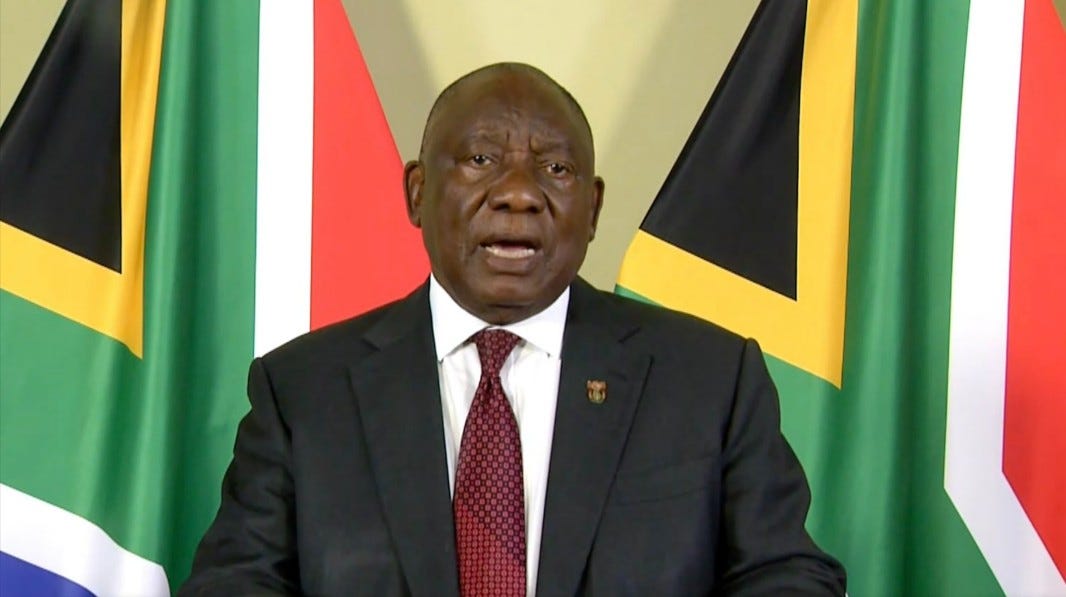
On Monday, the President insisted that he would not resign but would fulfil his mandate, emphasising his commitment to the rule of law, strengthening democratic institutions, and striving for the country’s economic revival.
©Higher Education Media Services.