


Ford South Africa has added a new powerplant to the Ranger line-up. This isn’t an entirely unfamiliar engine either. Enthusiasts may remember it from vehicles such as the Ford Focus RS and the previous-generation Ford Mustang. If you decided to forgo the V8-powered beast, you’d opt for this more docile and quieter motor instead.
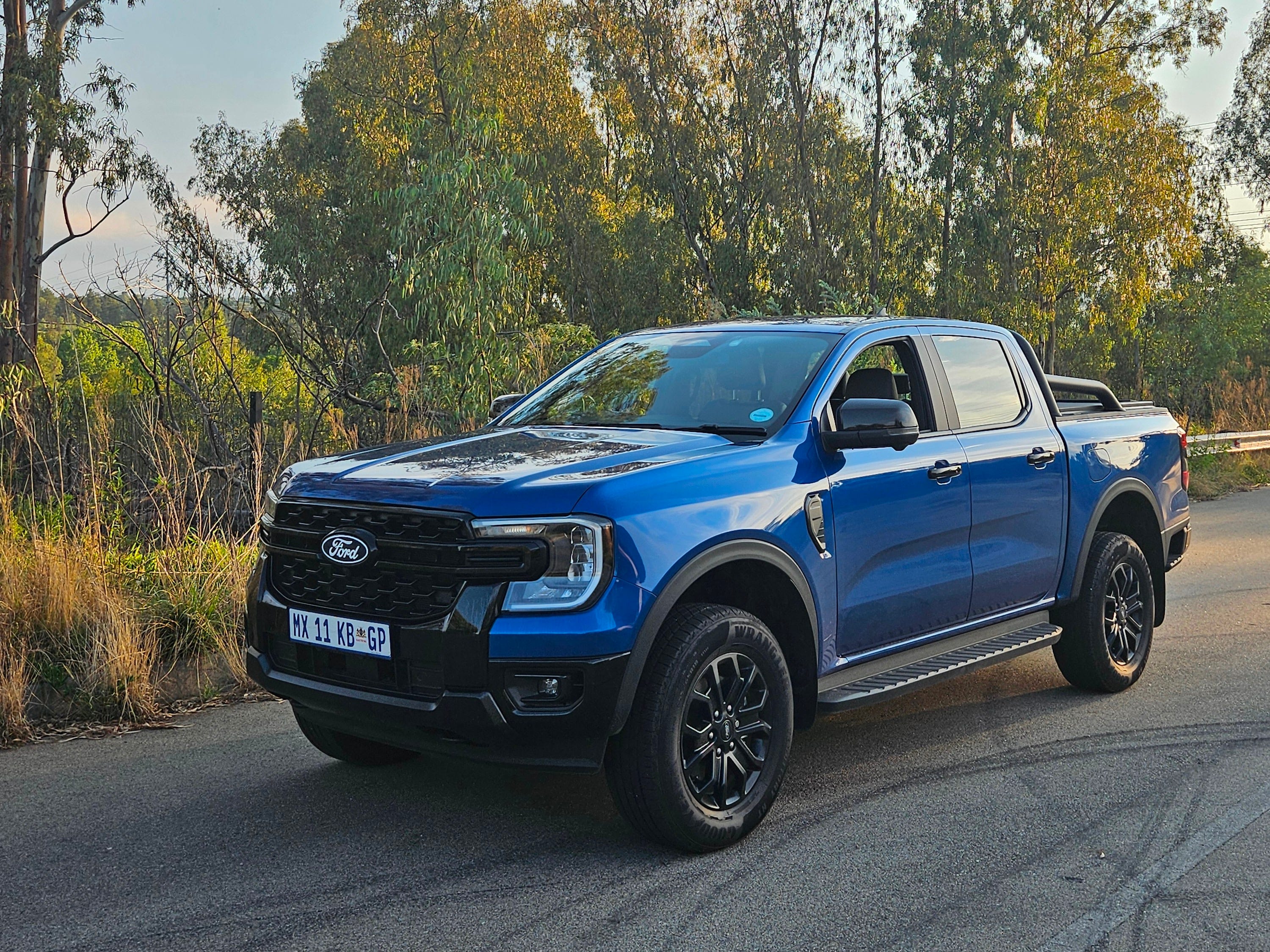
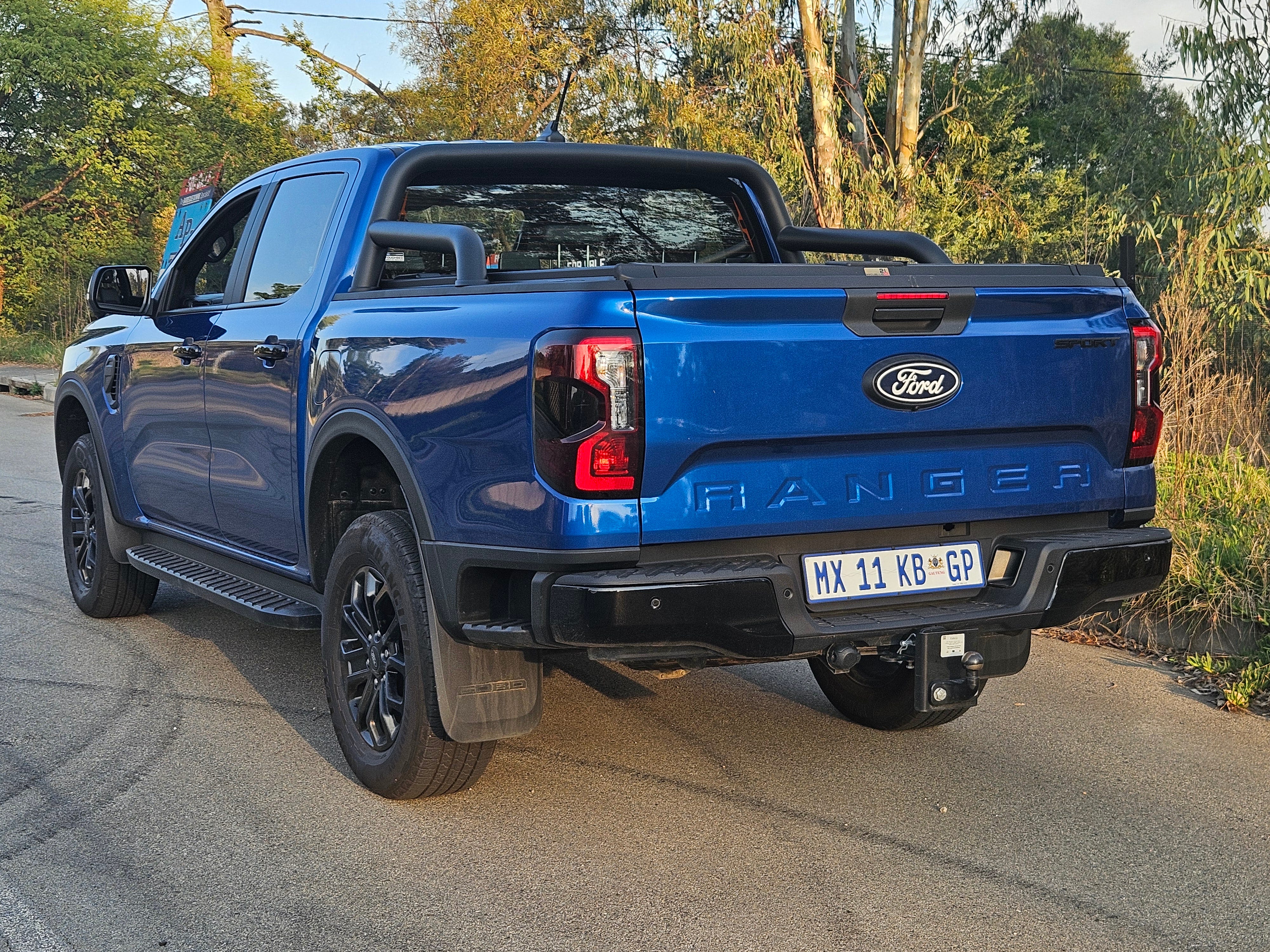
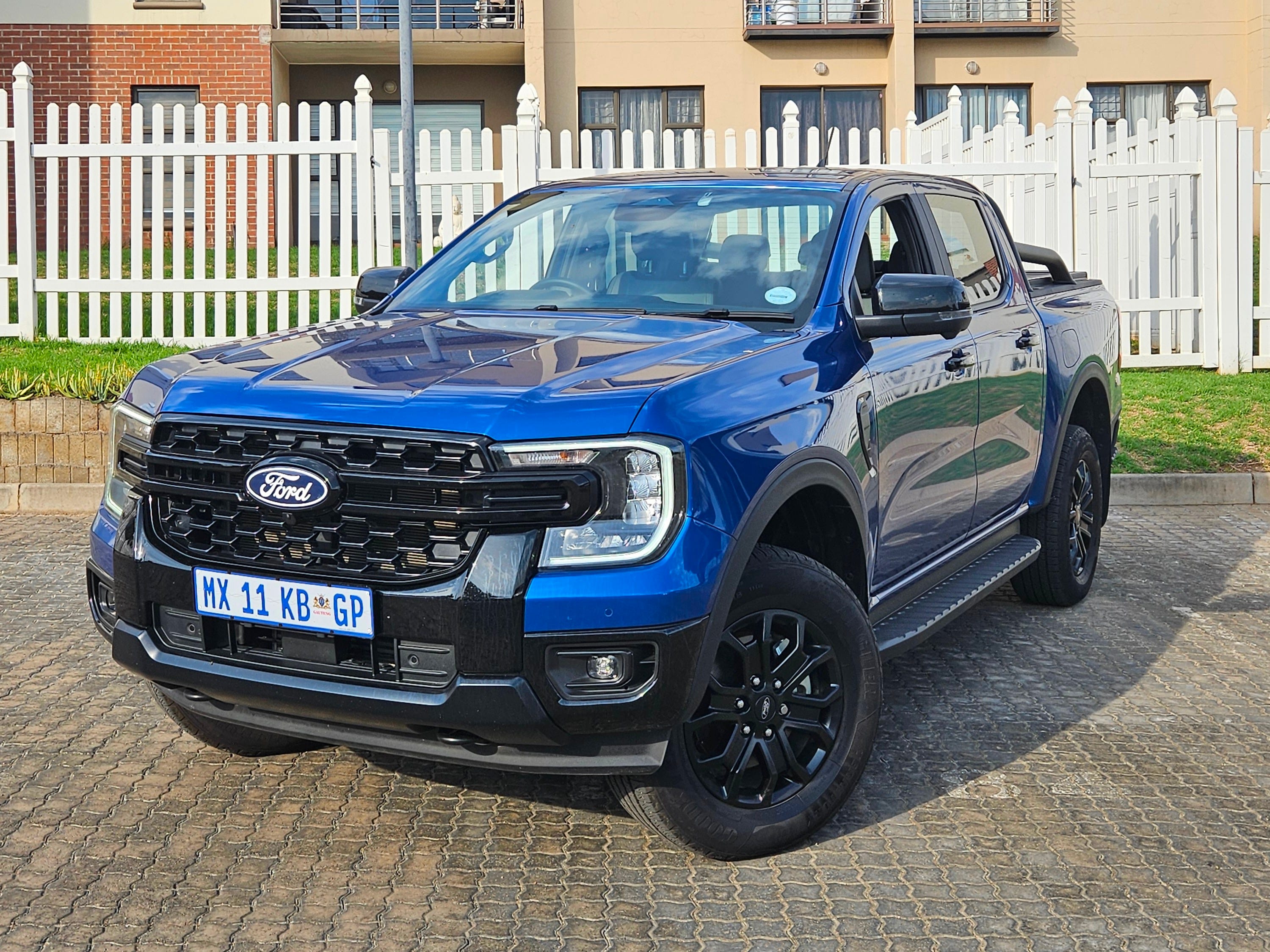
Fast forward to today and we welcome the Ranger Sport. It wears the trim well too. Blacked-out wheels wrapped in thick rubber, darkened mirror caps, a black grille and Sport badging at the rear give it a purposeful look. Finished in Lightning Blue, this double-cab bakkie looks like it means business.
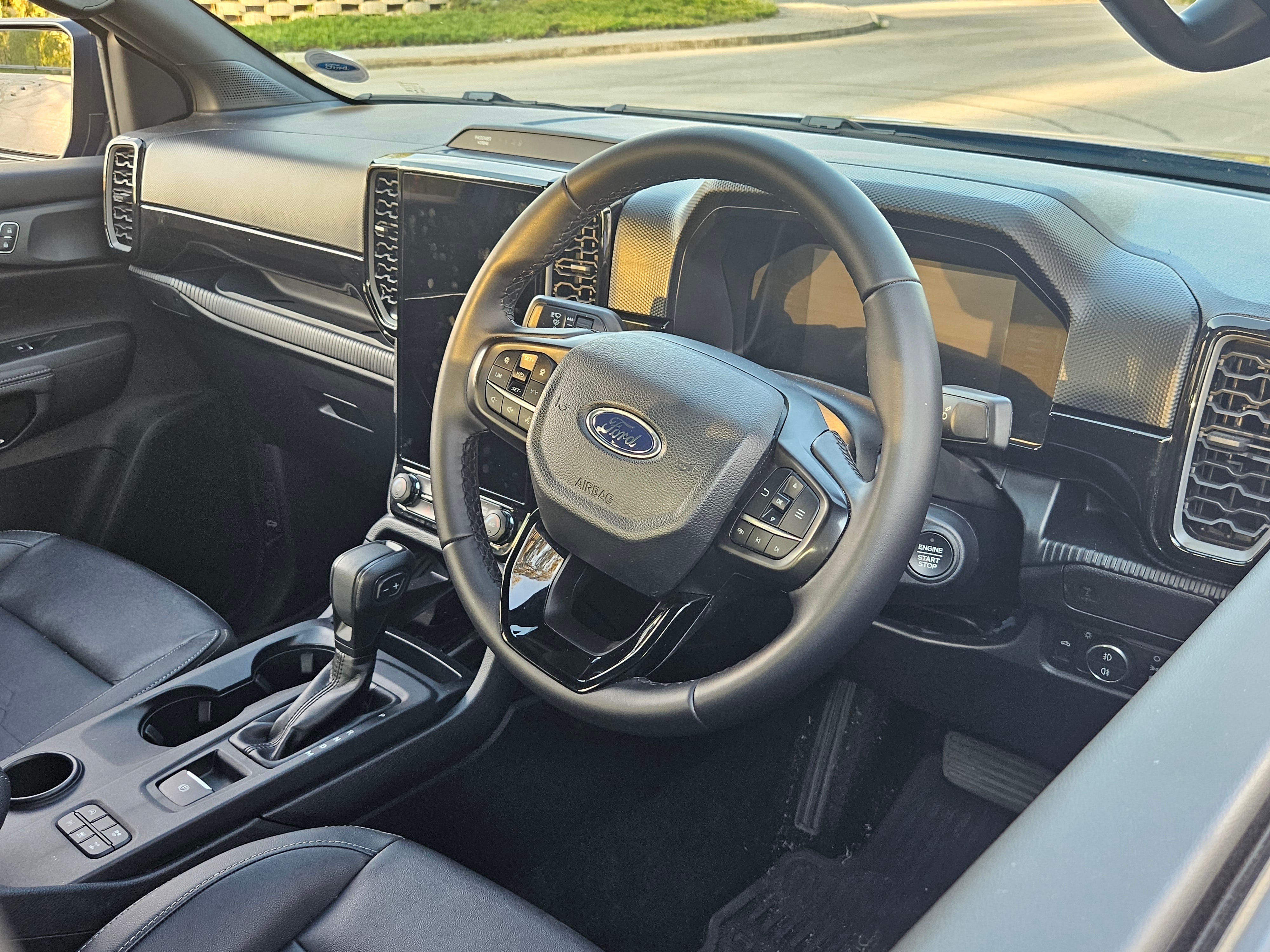
From a cabin perspective, the Ranger continues to win praise for its modern, premium feel and comfort levels, especially compared with more rugged rivals such as the Isuzu D-Max and Toyota Hilux. Our Sport derivative didn’t come with all the luxury amenities you’d find in the Platinum.
Instead, it gave off a more hard-wearing, durable vibe. Rubberised floor mats, leather seats, a smaller infotainment touchscreen, and a crisp driver display create a practical cabin that's still pleasant to spend time in. From a driver’s perspective, it ticks all the boxes.
Our test unit came in at R869,000, including options such as the manual roller shutter and sports bar hoop mounted in the load bin.
Out on the road, the Ranger Sport moves with grace. It’s a comfort-driven set of wheels and errs on the side of feeling car-like in its driving manners.
Some may call it a “Raptor Lite.” No, it doesn’t have the trick suspension or hardcore off-road credentials of its bigger brother, but it scratches that itch. It hustles when asked and packs a punch.
While Ford hasn’t officially quoted a 0-100km/h figure for the Ranger Sport, Volkswagen tested the same 2.3-litre petrol powerplant in the Amarok and recorded a brisk 7.2-second sprint. It’s quick, no doubt.
Urban driving saw fuel consumption settle at around 12.4L/100km, which was largely what I expected, especially when you’re regularly dipping into all 222kW and 452Nm. The performance is addictive, but that pace comes at a price at the fuel pumps.
This wasn’t my first encounter with the powertrain, either. I previously sampled it in the Volkswagen Amarok PanAmericana during a road trip from Johannesburg to the South Coast.
We all know Ford and Volkswagen partnered on this venture, so there is no real comparison to be made, as the two vehicles are siblings beneath the skin.
During that journey, I managed to bring fuel consumption closer to 10L/100km from memory, although I still stopped at the pumps more often than I would’ve liked.
For that reason, I’d still recommend either the 3.0-litre V6 turbodiesel or the 2.0-litre single-turbo diesel powerplants. The bi-turbo diesel has since been discontinued following concerns surrounding the wet timing belt design.
As far as comfort goes, however, the Ranger continues to deliver the goods.
Rivals include:
Toyota Hilux Legend V6 4x4 Auto (R999,000)
Isuzu D-Max 3.0 DDI V-Cross Auto (R920,000)
GWM P500 HEV Ultra Luxury 4x4 (R999,900)
BYD Shark 6 AWD Plug-in Hybrid (R959,900)
Kia Tasman X-Line 4x4 (R879,995)
© Higher Education Media