


Amid the noise of South Africa’s immigration debate, one statement cuts through the confusion. It comes not from a politician or activist, but from a Nigerian podcaster responding to footage of a Kenyan repatriated recently for being in the country illegally.
The Kenyan, arrested and deported, blamed South Africa’s “weak justice system” for allowing him to flood back into the country. He admitted he bribes police whenever arrested, only to be released back onto the streets. The Nigerian’s response was blunt:
“If you commit crime by entering a country illegally, what does that say about you as a person? You are a criminal and you should be treated as such. Full stop.”
This piercing observation exposes the hypocrisy at the heart of our immigration debate. Illegal entry is framed as “economic migration,” deserving of sympathy. Yet millions of South Africans are hungry too. Why are their cries ignored while outsiders are defended?
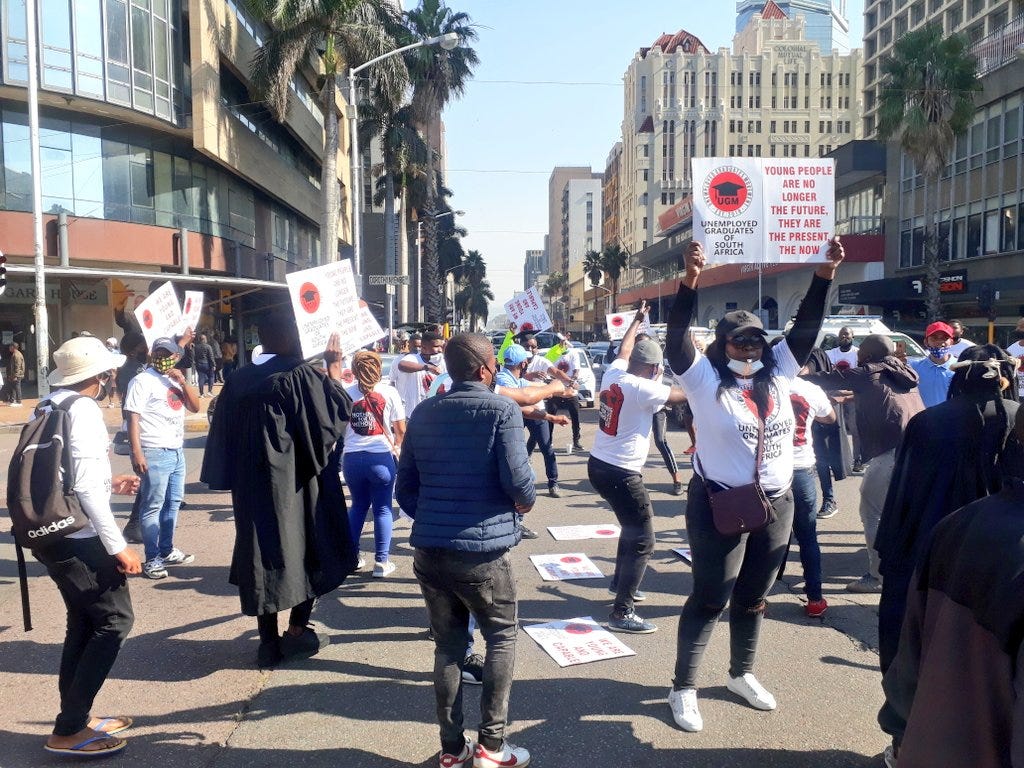
When South Africans raise concerns about unemployment, poverty, and the competition for meagre resources, the government shrugs, pointing to billions spent on grants while ignoring systemic neglect. As if an adult can survive on R370 alone.
South Africa is governed by two sets of rules: one for the poor, policed with iron fists, and another for illegal immigrants, tolerated because they serve the interests of elites. Until this hypocrisy is confronted, the cycle of lawlessness and decay will continue.
Education and the “Scarce Skills” Narrative
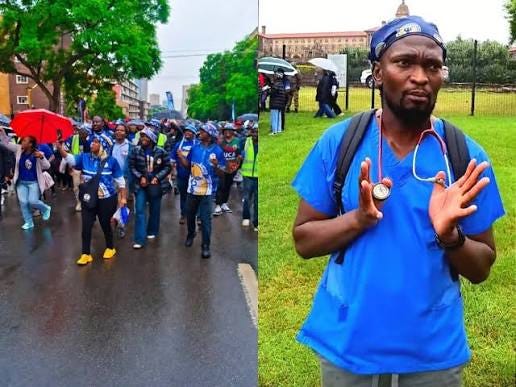
Universities defend hiring foreign academics under the “scarce skills” narrative, leaving local graduates unemployed. But how do we vet qualifications from broken states like Zimbabwe or Nigeria, where systems are compromised and fake credentials abound?
Why do we assume foreign PhDs are unimpeachable, while truck drivers and gardeners are arrested daily and accused of forging documents? If government systems are corrupt - and we all agree they are - why would higher education be immune?
The assertion that foreign academics have raised post-1994 standards is repeated often. Where is the data? What metrics show our PhD output or university rankings improved because of diaspora hiring? Without statistics, it is narrative, not fact.
Education, meant to be the engine of national development, is instead another arena where corruption and double standards thrive. If bogus doctors can infiltrate health institutions, why should we believe universities are immune to fraudulent appointments?
The illegal immigration debate exposes a deeper hypocrisy. If we accept that the government is systemically corrupt - and arrests, commissions, and public testimony say we should - then we must accept that everything it has touched since 1994 needs auditing.
That includes business permits, academic appointments, ID issuance, and naturalisation. You cannot claim “the police are rotten” but “the professor vetting was flawless.” You cannot say “Home Affairs sells IDs” but “only to Guptas.” Corruption does not compartmentalise.
The Cost of Indifference
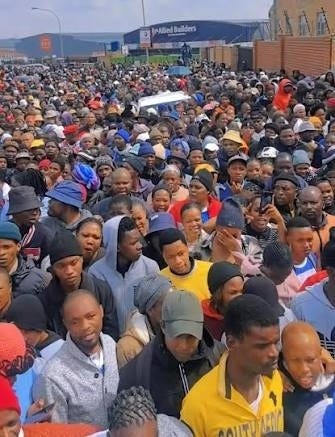
The facts are stark. Stats SA puts expanded unemployment at 42.9% as of Q1 2025. More than 18 million people rely on social grants, and food insecurity is widespread.
Yet when domestic unrest looms - when looting seems possible because people are barely surviving - resources materialise instantly. In July 2021, the state deployed 25,000 soldiers and private security firms mobilised at scale to protect assets.
By contrast, the response to cross-border lawbreaking is muted. Deportation budgets are constrained. Home Affairs’ border control management is under-resourced.
The message is clear: threats to private capital trigger a R600-million response; threats to poor communities don’t.
The poor are left to navigate broken systems. Nyaope addiction devastates townships. Illicit alcohol like “Ngombion” kills black youth, yet authorities turn a blind eye. In 2024, thirty children died after consuming snacks allegedly bought from unregulated, foreign-owned spaza shops.
There was no outrage, no budget to find culprits, and no arrests. One set of standards applies to local criminals, another to foreigners who commit crimes while here illegally.
Raise these issues and the word “xenophobia” follows - often used to shut down debate rather than engage it. The government fears that public anger over immigration could spark unrest akin to the Arab Spring, and threaten the cosy arrangement between the White Monopoly Capitalists, the Globalists and the political elites - so silencing the masses is safer.
But shutting down debate suits those with assets to protect and foreign criminals thriving at the expense of community safety. It does not suit the poor, who absorb the costs. Communities are not keeping quiet when their human rights are violated. They have learned they are alone in this fight.
Public trust in immigration management is low, and not without reason. In 2018, the Public Protector found that Gigaba abused his powers in granting early naturalisation to the Guptas. We forget that they never came alone. Their case is public record but whole else and from where did Gigaba naturalise?
Home Affairs corruption is well documented - from fraudulent IDs to visas-for-cash schemes. Rank-and-file officials saw principals doing it. A culture followed and spread across police, universities, municipalities, health facilities, and housing.
Somali and Pakistani nationals now dominate township spaza shops. Some have been shown on social meda brandishing green ID books and ANC colours, claiming they donate to the party and “aren’t leaving.”
Under which minister were these IDs issued, and on what basis? Is running a spaza shop a “scarce skill”? Or is this another case of political protection overriding regulation? Who naturalised the racist British national Phil Craig, “who moved from the UK 20 years ago but feels his chosen country no longer resembles the one he came to, describing it as “if not a failed state, then a failing one”?
Why is his citizenship not revoked when he is mobilising against a democratic dispensation as the ruling elites like to remind us of? What is government scared of? We all know the answer to that.
So far, the response from all parties to the issue of illegal immigration, including from the DA now in the GNU, suggests continuity, not overhaul. While people are marching for jobs, South Africa has not attracted the best in business, academia, or governance. It has attracted the best-connected be it from Europe or Africa.
Until we apply one standard of law - to the hungry local and the undocumented foreigner, to the professor and the spaza owner, to the minister and the constable - we will have two countries. One with rules, and one with excuses.
Illegal immigration is not just about borders; it is about standards. If corruption has infected every institution, then universities, schools, and research bodies are not exempt.
We must demand transparency in academic hiring, rigorous vetting of foreign qualifications, and equal opportunity for local graduates. Otherwise, education becomes another casualty of systemic rot.
South Africa’s future depends on whether we confront these double standards. If we fail, our institutions - from classrooms to courts - will collapse under the weight of corruption and hypocrisy.
Zingisa Mkhuma is Editor - ednews.africa
©Higher Education Media Services.