


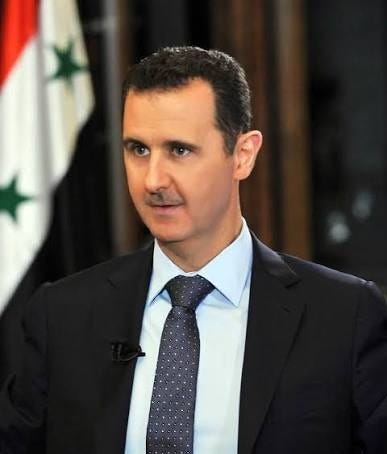
In a landmark ruling, a Syrian court in Damascus has sentenced former president Bashar al-Assad to death in absentia, convicting him of crimes committed during Syria’s brutal civil war. His younger brother, Maher al-Assad, was handed the same sentence.
The court found Assad guilty of premeditated killings, torture, arbitrary arrests, and crimes against humanity. The verdict marks the most dramatic step yet in Syria’s effort to pursue transitional justice following the collapse of Assad’s decades-long family rule in December 2024.
Assad was not present in court. He fled Syria after his government fell and has since been living in Russia. The ruling, delivered in absentia, means Assad is unlikely to face immediate execution. His return to Syria would depend on Russia agreeing to extradite him - a prospect analysts say is highly uncertain.
Legal experts note that while the verdict is symbolically powerful, enforcing a death sentence against a former head of state living under Moscow’s protection presents immense diplomatic and legal challenges. The case underscores the tension between Syria’s new judiciary and the realities of international politics.
Syria’s civil war began in 2011, part of the wave of uprisings known as the Arab Spring. What started as peaceful protests against Assad’s rule quickly spiraled into one of the world’s worst humanitarian disasters. Over 500,000 people were killed, and millions were displaced internally and abroad.
Assad’s government was accused of systematic abuses: widespread torture, indiscriminate bombings, chemical weapons attacks, and mass arrests. These allegations drew global condemnation, though Assad remained in power for more than a decade, backed by allies including Russia and Iran.
The Assad family had ruled Syria since 1971, when Bashar’s father, Hafez al-Assad, seized power. Bashar inherited the presidency in 2000, promising reforms that never materialised. Instead, his rule became synonymous with repression and war.
The verdict is being hailed by some Syrians as a turning point - a symbolic break with decades of authoritarian rule. Human rights advocates argue it represents an attempt to hold former regime officials accountable for atrocities.
Yet questions remain: Can Syria’s new justice system deliver fair trials? Will sentencing leaders in absentia achieve genuine accountability, or merely serve as political theater? And most pressing, will Russia shield Assad from facing justice?
For Syrians, the ruling is both cathartic and complicated. It acknowledges the suffering endured during years of war, but also highlights the daunting task of rebuilding a justice system capable of prosecuting crimes at the highest level. Whether Assad ever faces the sentence remains uncertain, but the verdict itself marks a historic moment in Syria’s long struggle for justice.
©Higher Education Media Services.