


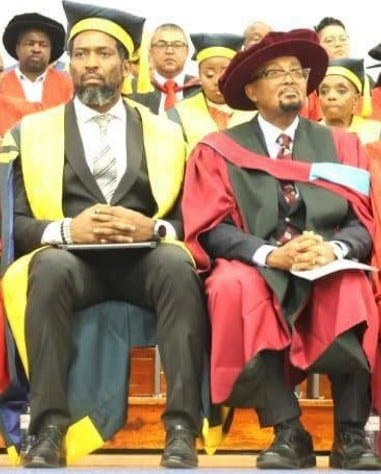
The University of Fort Hare’s governance turmoil has deepened with the resignation of two senior council members, adding fresh instability to a campus already rattled by months of conflict, contested disciplinary processes, and political undercurrents stretching into the national higher‑education sphere.
Kuselwa Marala, former Interim Chair of Council, and Judy Favish, former Interim Deputy Chair, tendered their resignations on 30 July after being served with disciplinary charges they describe as unjustified, procedurally flawed, and politically influenced. Their departure follows a series of governance flashpoints that ednews.africa has tracked since 30 March, including the suspension of vice-chancellor Professor Sakhela Buhlungu and senior officials, disputed council decisions, and growing concerns about external interference.
Charges they say were “foregone”
The pair were charged over two incidents:
a 2025 letter to the Minister of Higher Education and Training sent before full Executive Committee sign‑off, and
a 2026 letter they asked the Registrar to circulate to senior management, referencing discussions from a closed Council meeting.
They argue the first matter was resolved in November 2025, when Favish apologised for not circulating the draft. The added information, relating to a potential conflict of interest, was “factually correct” and aligned with Exco’s decision.
The second charge stems from the fraught process around the appointment of two Executive Directors without the required consultation with Senate and Counciltitutional Forum. Once the breach was acknowledged, Council launched legal and forensic investigations. A closed meeting later voted, by majority, to place Buhlungu on precautionary suspension.
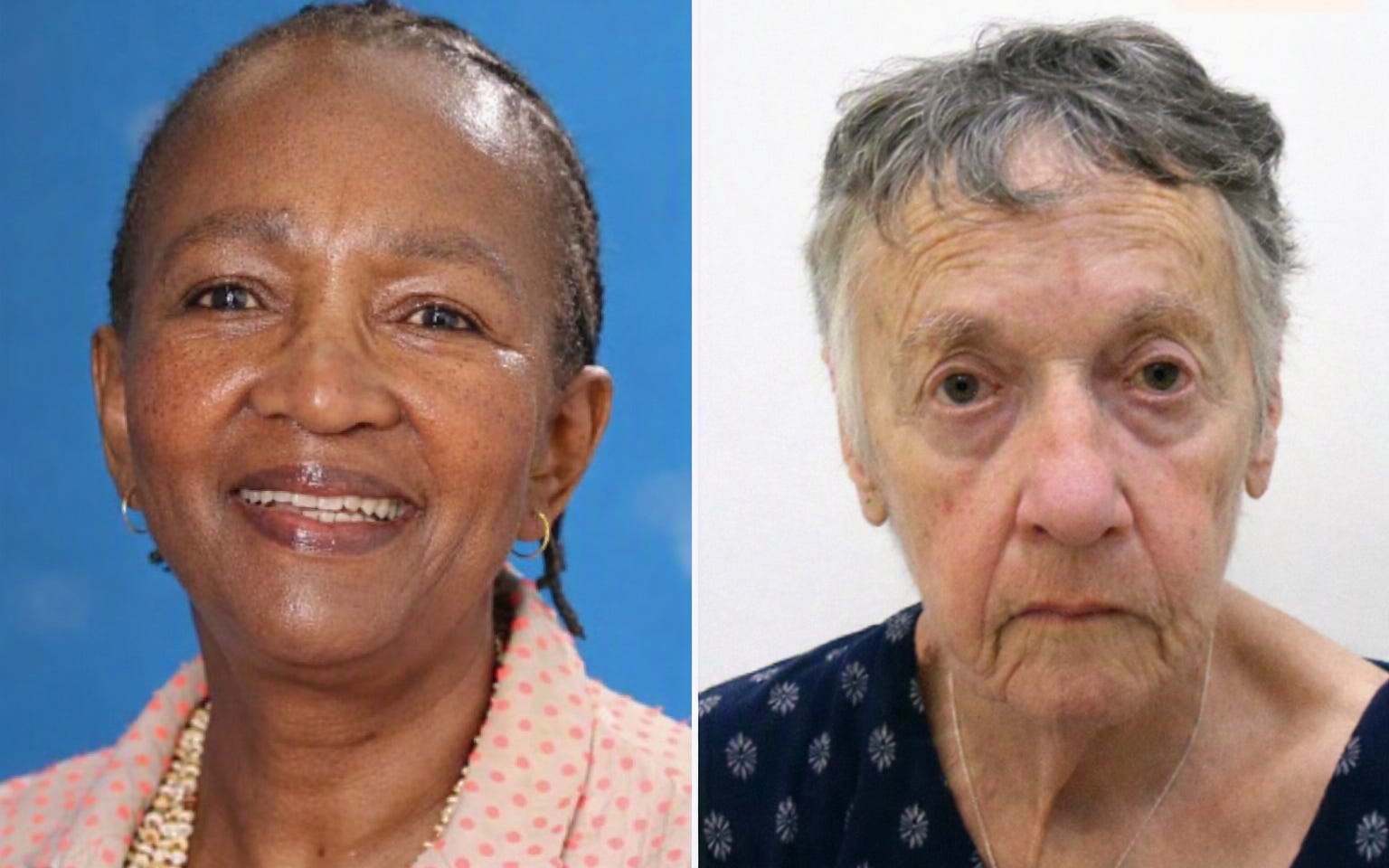
Marala and Favish say their attempts to record a minority position were blocked. “The refusal to entertain a counter‑proposal… and the refusal to record that the decision was taken by majority vote rather than consensus was extremely upsetting,” they write. They argue that the Chair’s communication to the university created a false impression of unanimity.
They maintain that sharing their concerns with senior management was an act of good‑faith governance, citing UFH’s own Rules of Engagement requiring in‑camera minutes to include “any formal objections raised by members.”
A council they describe as factionalised and increasingly hostile to dissent.
The resignation letter paints a picture of a Council in which dissenting voices are sidelined, voting procedures ignored, and disciplinary processes used where dialogue would be more appropriate. They accuse the Chair of assuming powers that legally reside with Council, particularly in relation to additional disciplinary charges against the Vice‑Chancellor that Council never approved.
They warn that academic freedom is being constrained and that the University’s hard‑won governance improvements are at risk.
The national backdrop: Manamela–Sishi fallout intensifies instability
Fort Hare’s internal battles are unfolding amid a broader rupture inside the Department of Higher Education and Training (DHET) between Deputy Minister Buti Manamela and Director‑General Nkosinathi Sishi. Their breakdown in relations, acknowledged privately by senior DHET officials, has created parallel lines of authority, slowed decision‑making, and intensified factional alignments within the department, according to the Sunday Times.
Fort Hare has felt this instability acutely.
Council members have referenced inconsistent communication from DHET, unclear guidance on statutory processes, and political pressure around the vice‑chancellor’s disciplinary matters. Insiders argue that the Manamela–Sishi fallout has emboldened competing factions within Fort Hare’s Council, each claiming alignment with different power centres in Pretoria.
While Marala and Favish do not name individuals nationally, senior Fort Hare figures say the DHET tensions have created an environment where University governance disputes are more easily weaponised.
A University once on the mend now back in crisis
The pair reflect on their six‑year tenure, describing the University’s turnaround under the Vice‑Chancellor: improved audits, strengthened governance systems, increased research output, and the lifting of DHET restrictions on new programmes and enrolments. They warn that recent developments threaten this progress.
With the Vice‑Chancellor, Registrar, SRC President, and now two former Council leaders facing or having faced disciplinary action, Fort Hare’s governance crisis shows no sign of abating.
Marala and Favish conclude their letter with regret:
“We have concluded that we are not able to perform effectively the role required of members of Council.”
Their exit raises further questions about stability at one of South Africa’s most historically significant universities — and about the future of its leadership at a time when Fort Hare can least afford internal fracture.
DHET and Manamela silence over UNISA a concern, say academics
The University of South Africa (UNISA) has also been embroiled in controversy over its decision last year to axe markers and e-tutors, placing a heavy burden on academics. The engagement of 850 Adjunct Academics has not managed to alleviate the workload, resulting in pressure on academic staff.
Senior lecturer in the Department of English, Dr Mary Madileng, died on 11 June; IT specialist John Mboweni, on 15 June; and law lecturer Unathi Poyo, who had been on contract for ten years, died on 19 June. Another nine staff members have been hospitalised as the marking crisis escalated, resulting in scores of students taking to social media to ask why they had not received their marked assignments.
Sibongile Poyo-Hadebe, the sister of law lecturer Poyo, said Unathi was deprived of a good quality of life. “Had she been a permanent employee with medical aid, she would have had access to better healthcare options. We could have taken her to a private hospital, and perhaps she would not have suffered the stress, anxiety, depression and burnout that I believe contributed to her declining health.”
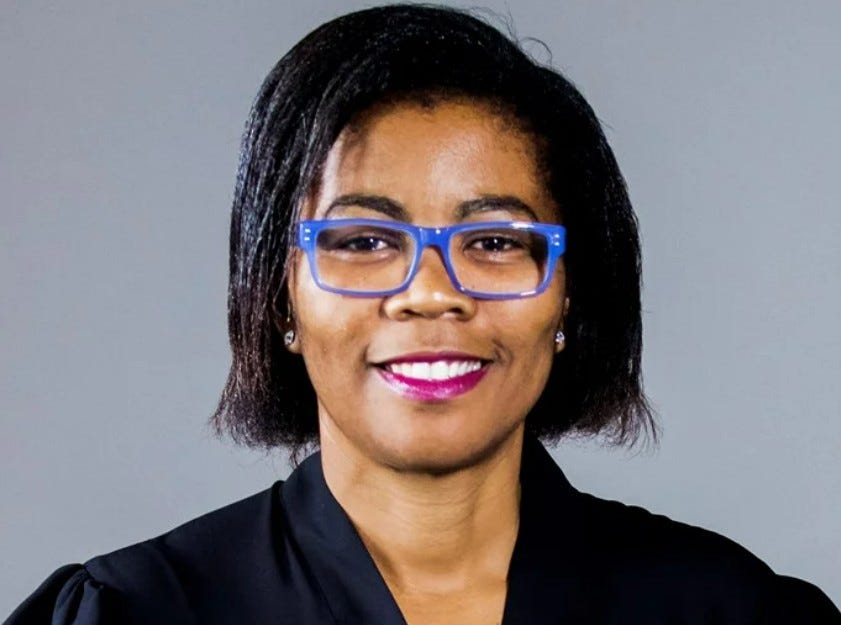
Vice-Chancellor Puleng LenkaBula said she was busy and would not respond to “disrespectful” media enquiries on the growing troubles under her watch. Her spokesperson, UNISA Executive Director of Institutional Advancement, Professor Boitumelo Ben Senokoane, also did not respond to several requests for comment. When Senokoane commented previously, he said journalists “such as yourself” should be asking about the positive aspects of UNISA.
Council Chair Dr Dan Mosia, the Chief Commercial Officer at the Wits Health Consortium, referred enquiries to UNISA management but would not say why he and Council had ignored an explosive dossier from Nehawu on the potential impact on staff on the implications of cutting down on the markers. On average, one academic has to mark up to 20 000 assignments for only one assessment. Some modules have two to six assessments per semester. It is a non-stop marking process for months, raising concerns about teaching time and the quality of qualifications.
“They (UNISA Councilent) claim that the markers replaced by Adjunct Academics had been approved and everyone had been consulted. But when consulted, our concerns were ignored. When concerns were raised at Senate, staff were rudely silenced by the vice-chancellor,” said a staff member.
Another professor described the vice-chancellor as a “bully”. He was not the only person who made the claim. Amid threats to staff, it has emerged, according to a source, that LenkaBula’s spokesperson, Senokoane, was asked during a council meeting last Thursday to explore using Artificial Intelligence to find out who had spoken to the media about the goings-on at UNISA.
Last week UNISA cut access to ednews.africa website via its WI-FI and also threatened action against staff and the publication. Following the attempted clampdown on ednews.africa and crackdown on staff, many current and former UNISA staff members have since come forward in droves with new information on how they have been treated, bullied and victimised by LenkaBula and her management team.
Amid growing concerns, trade union Solidarity is conducting a working conditions and wellness survey among UNISA staff which closes on Monday.
In May 2023, a 309-page report by Independent Assessor, Professor Themba Mosia, was critical of LenkaBula, in particular, the performance of both management and the council, financial management, upgrades to the vice-chancellor’s home, claims of intimidation and bullying, relations with the labour movement, and the leaking of confidential reports.
Former Minister Blade Nzimande was asked by Mosia to consider proposals for the dismissal of the vice-chancellor and the entire council – which would have resulted in an administrator being put in place. Mosia recommended that Nzimande place Unisa under full administration, in line with section 49F(1) of the Higher Education Act.
Another recommendation was that Nzimande should consider changing legislation so that institutions of higher learning are subject to the provisions of the Public Finance Management Act. This, Mosia said, was because of financial irregularities and supply chain management problems, including fruitless and wasteful expenditure under LenkaBula’s tenure.
In addition to council challenges at Fort Hare, Manamela’s bulging in-box has to squeeze the UNISA dossier, which includes details on a bossy vice-chancellor and another weak council. Insiders point out that, notwithstanding the crisis over the scrapping of assignment markers, worsened by the academic staff deaths and multiple hospitalisations, it drew silence from UNISA communicators. But earlier on Sunday they sang for their supper, taking to social media to wish their boss a happy birthday.

One hopes LenkaBula’s attitude does not echo Marie Antoinette’s infamous and out‑of‑touch quip: “Let them eat cake!”
This story will be updated with comments from Fort Hare and UNISA.
©Higher Education Media Services.