


For thousands of young South Africans, failing matric Mathematics or Physical Sciences can feel like the end of the road. Without the required marks, opportunities for further study and employment narrow considerably.
Many try again, only to encounter the same difficulties that prevented them from succeeding the first time.
But what if the problem isn’t a lack of ability? What if learners have simply never been given the opportunity to develop the foundations, confidence and skills they need to learn effectively?
This is the thinking behind Winning Teams, a South African organisation that has developed an alternative approach to learning, drawing on the principles of sport, teamwork and self-directed discovery.
“We’re only into learning. We’re not into teaching,” says Denzil Hollis, CEO of Winning Teams.
It’s a distinction that sits at the heart of an approach designed to give young people a second chance, not simply at passing examinations, but at building a better future.
Starting where learners really are
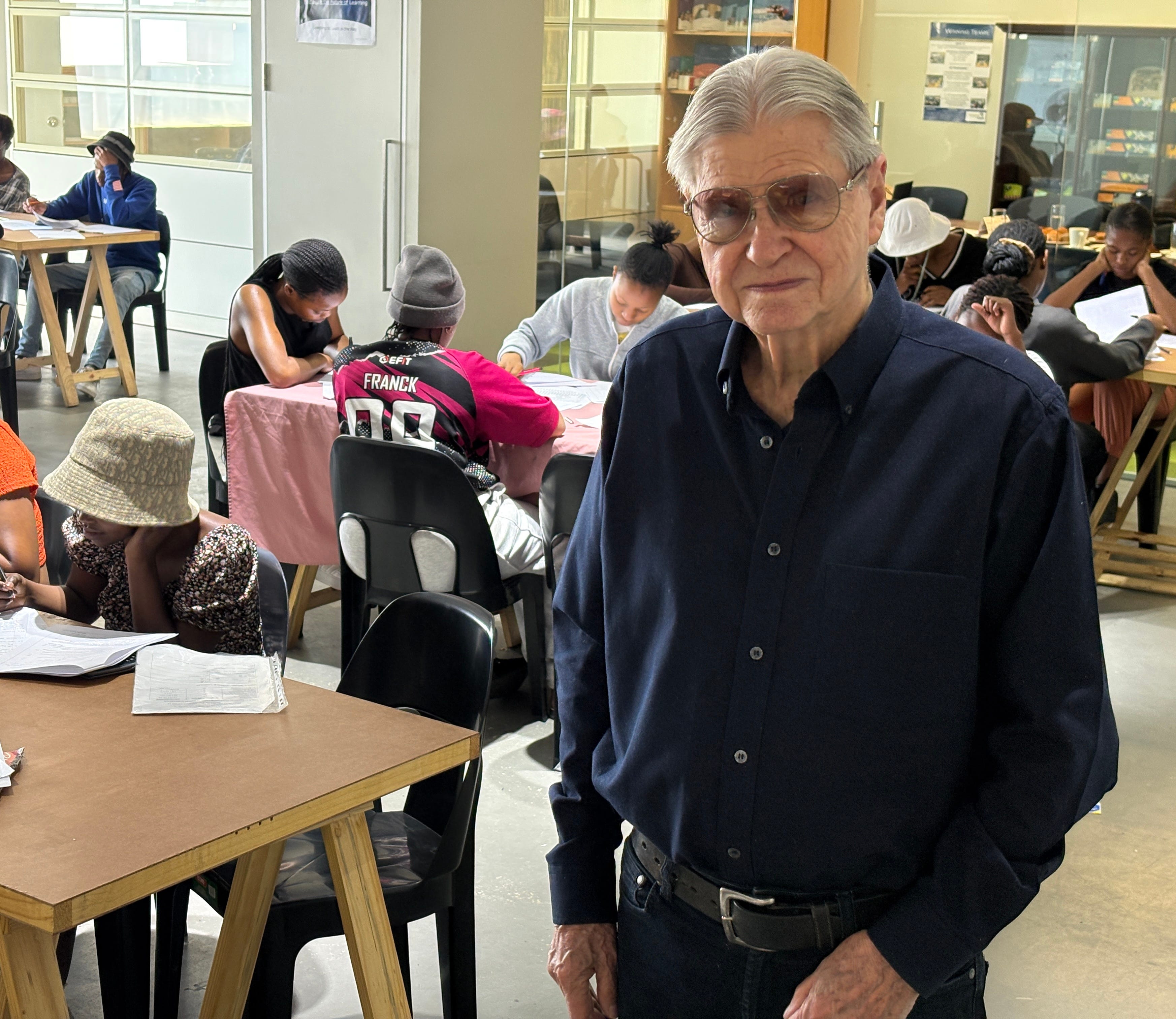
One of the biggest challenges facing young people who have failed matric Mathematics is that their difficulties often began years before Grade 12. At Winning Teams’ Learning to Learn Centre in Alexandra, Johannesburg, learners undergo an initial assessment to establish what they actually know. The findings can be sobering.
Hollis explains that some learners who have completed their schooling are operating at a Grade 7 or Grade 8 level in Mathematics. Moving straight into Grade 12 revision does little to address the underlying problem. Instead, Winning Teams takes learners back to the point where their understanding broke down and helps them rebuild their knowledge systematically.
This requires patience.
“A learner with substantial gaps in foundational knowledge may need 15 months or longer to reach the required standard,” says Hollis. “Others, who narrowly missed the pass mark, may progress more quickly.
“The important thing is that learners work towards achievable goals based on their individual starting points.”
Turning learning into a team sport
The Winning Teams methodology draws on something familiar to young South Africans: sport.
“A successful sports team doesn’t improve simply by listening to a coach explain the rules,” says Hollis. “Players practise, make mistakes, learn from one another, compete, measure their progress and celebrate improvement.
“Winning Teams applies these principles to education.”
Learners work in small groups, using structured activities and games to explore Mathematics and Physical Sciences concepts. They test their understanding, discuss solutions, help one another and gradually take responsibility for their own progress.
The process is built around three principles: learning on their own, learning with others and learning from others.
“Competition provides motivation, but collaboration is equally important,” says Hollis. “Learners discover that they can contribute to a team’s success, even when they are still struggling with particular concepts. The emphasis shifts from passively receiving information to actively making sense of it.”
Facilitators, not traditional teachers
Another distinctive feature is the role of the facilitator. Rather than relying exclusively on qualified subject teachers, Winning Teams recruits young people from the communities it serves and trains them to facilitate the learning process. They are supported by subject specialists and structured learning materials.
Their job is not simply to provide answers. It is to create an environment in which learners feel comfortable asking questions, exploring ideas and finding solutions themselves.
This is particularly important for learners who have experienced repeated academic setbacks.
Many arrive with little confidence and considerable anxiety about Mathematics. The programme therefore begins by helping them relax, participate and feel part of a team before introducing more demanding academic work.
“As learners begin to experience success, their relationship with the subject changes,” says Hollis. “They become more willing to ask questions, explain their thinking and tackle unfamiliar problems. Skills such as communication, teamwork, problem-solving and independent learning develop alongside their academic knowledge.”
Results that open doors
The approach is producing measurable results at the Royal Bafokeng Institute, where Winning Teams helped establish a learning centre using its methodology.
An analysis of 47 learners who participated in the institute’s matric enhancement programme and wrote National Senior Certificate Mathematics examinations in 2025 and 2026 shows that 44, or 94%, improved their previous marks.
“These figures matter because an improved Mathematics result can change the options available to a young person,” Hollis points out. “Someone previously limited to basic skills training may now qualify for vocational study, while another may gain access to university-level opportunities.”
The results demonstrate the value of addressing foundational learning gaps rather than simply repeating the same curriculum.
Preparing learners for life beyond matric
For Winning Teams, improved examination marks are only part of the objective. The organisation also helps learners understand the opportunities available to them and make informed decisions about their futures.
Hollis explains that young people sometimes arrive with career ambitions that bear little relationship to their academic results or their understanding of what particular professions involve. Rather than dismissing those ambitions, the programme introduces learners to a wider range of possibilities, including vocational education and practical careers.
At Royal Bafokeng, for example, learners have been taken to colleges to explore fields such as plumbing, electrical work and other trades.
“The intention is to help them identify realistic and rewarding pathways, while recognising that academic success is not the only route to a fulfilling career,” explains Hollis.
This broader approach reflects Winning Teams’ belief that learning should equip young people with skills they can use throughout their lives.
Winning Teams has also demonstrated the effectiveness of its methodology beyond South Africa. In Sierra Leone, the organisation participated in the UK Aid-funded Leh Wi Lan education programme, using curriculum-based learning games and collaborative study groups to help pupils improve their Mathematics skills, even in schools facing shortages of qualified teachers.
The results were encouraging: 80% of surveyed pupils said the programme had helped them learn Mathematics content considerably, while 91% reported a substantial improvement in their confidence. Evaluations also recorded improvements in test scores, providing further evidence of the potential of self-directed, team-based learning.
A second chance that means something
South Africa’s education challenges cannot be solved through examination preparation alone. Young people who have fallen behind need time, appropriate support and opportunities to rebuild their confidence as well as their knowledge.
Winning Teams offers a model in which learners are active participants in their own development, supported by their peers and encouraged to recognise what they are capable of achieving.
For Hollis, the potential is already there.
“They have the ability,” he says. “All they need is somebody to lift them up and say, ‘You can do it.’”
The results achieved over the past 12 years suggest that, given the right environment and learning support, many young people can do considerably more than their previous examination marks might suggest.
And that is what makes a second chance meaningful: not simply another opportunity to write an examination, but a genuine opportunity to learn, grow and move forward.
©Higher Education Media Services.