


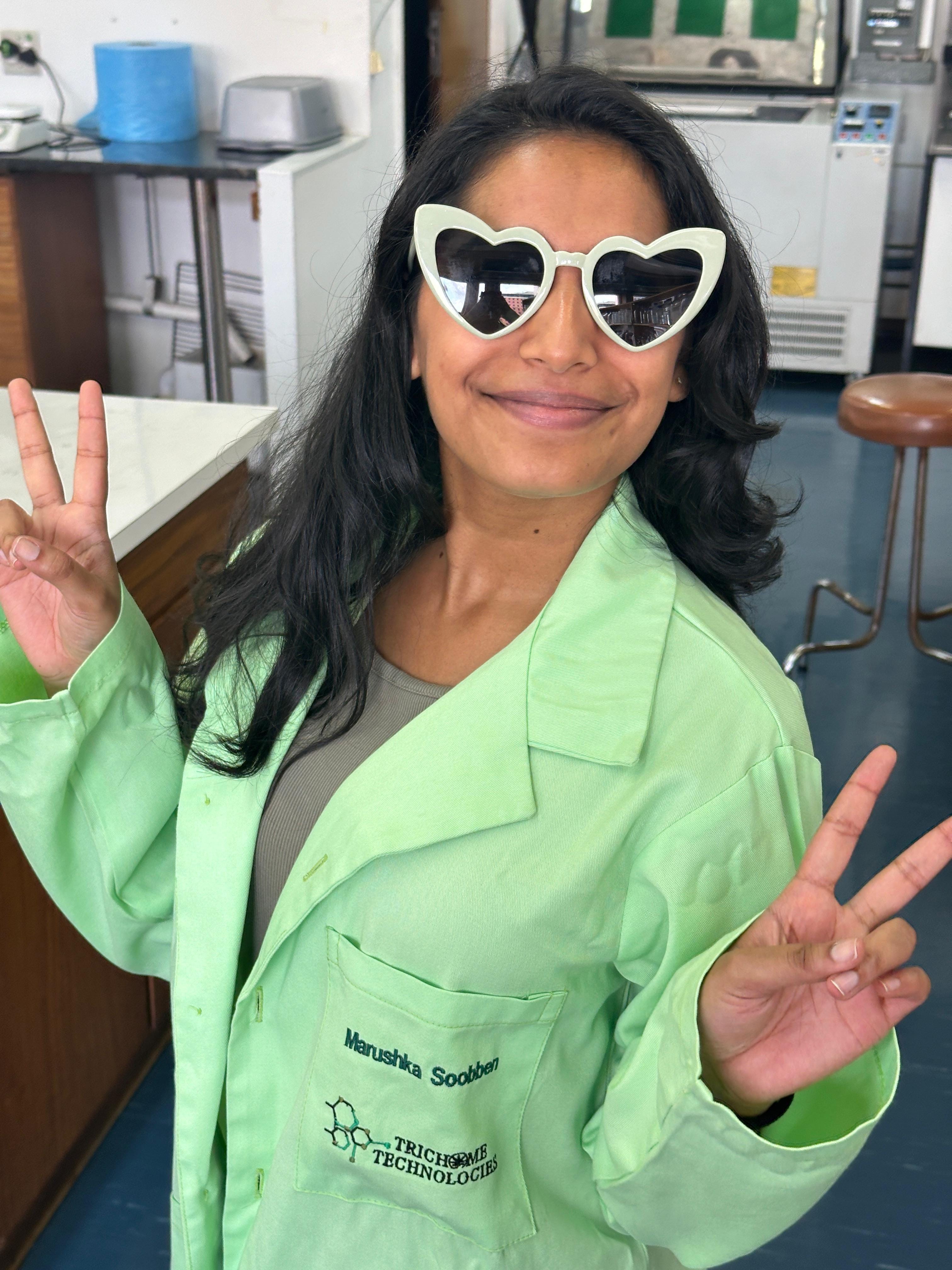
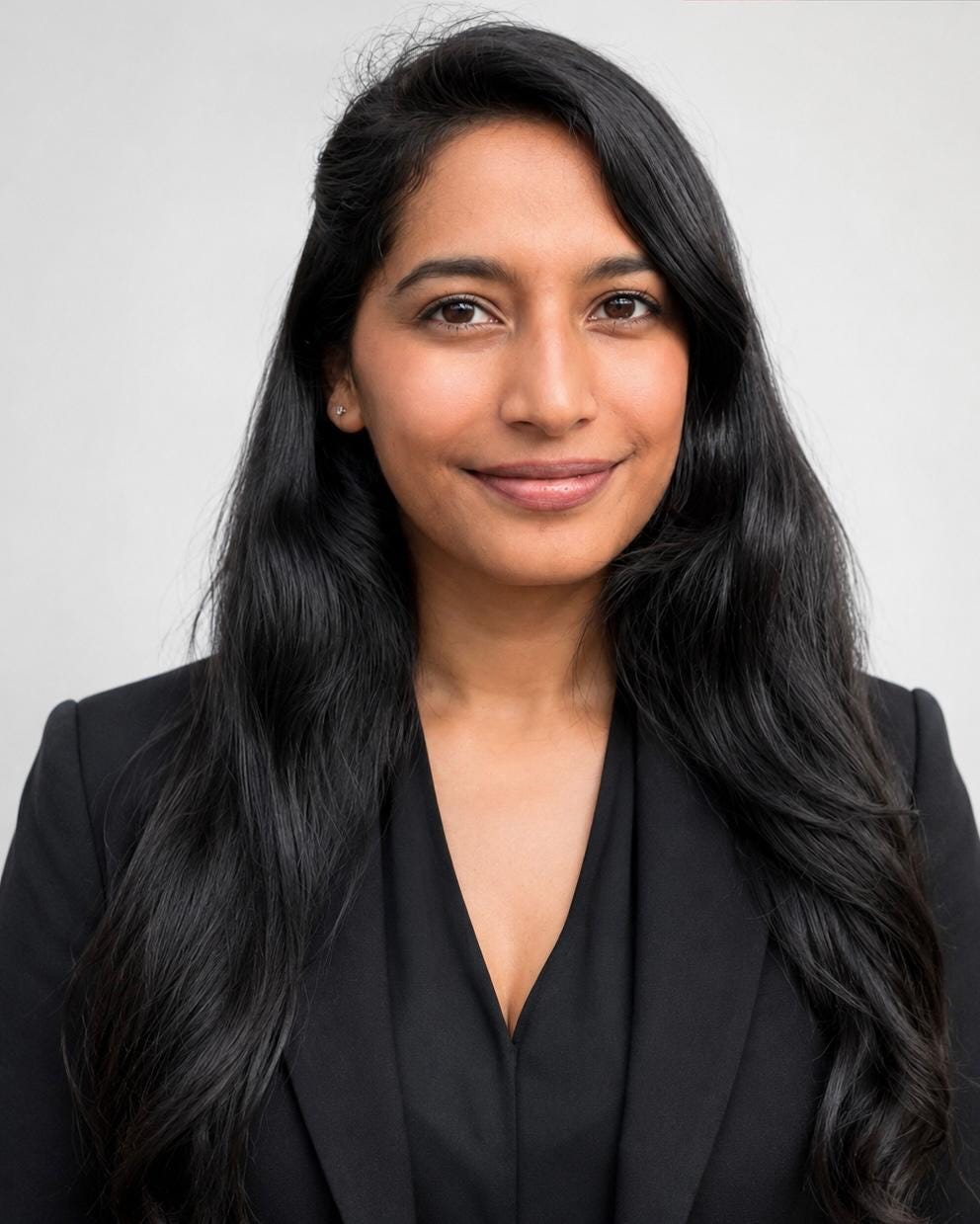
Some stories don’t begin with a straight line — they begin with a crossing. For this young scientist, the first crossing happened before she could spell her own name: born on the island of Mauritius, raised in the restless energy of Johannesburg, shaped by two cultures that taught her how to adapt, observe and reinvent. That dual identity, island quiet and Joburg grit, became the foundation of a woman who would later move through laboratories, lecture halls and boardrooms with equal confidence.
At Buccleuch Primary and Parktown High School for Girls, Marushka Soobben was the child who dismantled gadgets just to understand their secrets, the teenager who realised curiosity wasn’t a flaw but a compass.
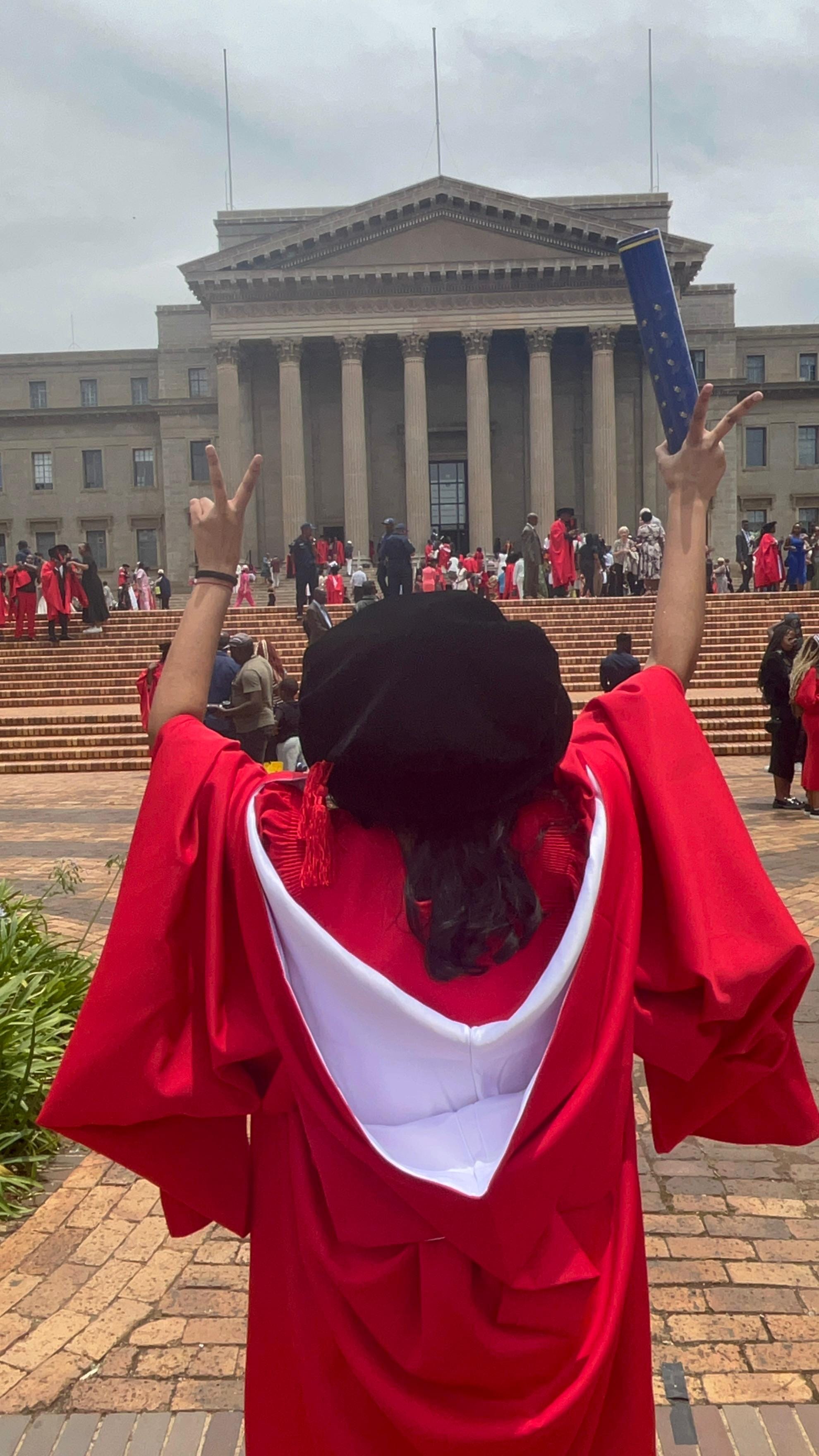
That compass carried her to Wits University, where she stayed for nearly a decade, earning a BSc, Honours, Master’s, and finally a PhD in Biochemistry, and where she discovered that science wasn’t just a discipline; it was a language she could speak fluently.
Today she is a Postdoctoral Research Fellow, a founder, a director, a scientist, a communicator, and an entrepreneur, often all before lunch. Her days stretch between lab benches and strategy meetings, between mentoring students and building STEM Scholars, the education company she created because she refused to accept that the next generation should inherit a watered‑down version of science. She wanted learners to see the real thing: the messy, thrilling, world‑shaping version.
Her journey is not romanticised: she speaks openly about burnout, long days, and the emotional weight of doing work that matters. But she also speaks about impact: the spark in a learner’s eyes, the possibility of a discovery that could change a life, the privilege of building something that didn’t exist before she imagined it.
This Women’s Month, her story reminds girls that brilliance isn’t born in perfect conditions. It grows in curiosity, in resilience, in the courage to build what you wish existed.
She is proof that science is not a distant world — it is a place where young women belong, lead, innovate and transform.
Her journey, marked by curiosity, resilience, burnout, breakthroughs and impact, is a powerful reminder that young women can shape science, education and innovation on their own terms.
Q & A
Beginnings
Where were you born and raised?
I was born on the island of Mauritius, then transplanted to South Africa as a kid. I’ve always had one foot in island life and one in Joburg hustle.
Which primary and high schools did you attend?
Buccleuch Primary School (class of 2009), then Parktown High School for Girls (class of 2014).
What was life like growing up?
It was a bit of a tug-of-war between two identities, Mauritian at home and South African everywhere else. I think that constant adapting is exactly what made me comfortable being the odd one out later, whether that was in a lab or starting a company nobody asked me to start. I was the curious kid taking things apart to see how they worked, long before I knew that curiosity had a career attached to it.
Where did you study after school, and what did you study?
I basically never left Wits since starting in 2015. BSc in Molecular and Cell Biology, BSc Honours in Microbiology and Biotechnology, MSc in Microbiology, Biotechnology and Chemistry, and finally a PhD in Biochemistry.
Are you married? Do you have children?
No and no. Right now my “children” are a PhD, a startup and a to-do list that never sleeps (neither do I).
What are your hobbies and how do you relax?
Walks, gym, art, music, dancing, and sleep.
How do you keep up with trends in your field?
LinkedIn, Instagram, university mailing lists, and talking to my network. Science moves fast enough that if you’re not plugged in somewhere, you fall behind quickly.
When did you first “start” in this career and what was that moment like?
The itch started long before I had a title for it. I kept looking at what we were taught in STEM at school and thinking, this isn’t what science actually looks like out here. That frustration is why STEM Scholars exists. I wanted learners to see the real, messy, exciting version of STEM, not the textbook one I grew up with.
Career
What is your current job title?
Postdoctoral Research Fellow by day, Founder and Director of my own company by, well, also day. There isn’t much of a line between the two.
How long have you been in this role?
~Two years in, and it already feels like ten.
Briefly describe what your job involves day to day.
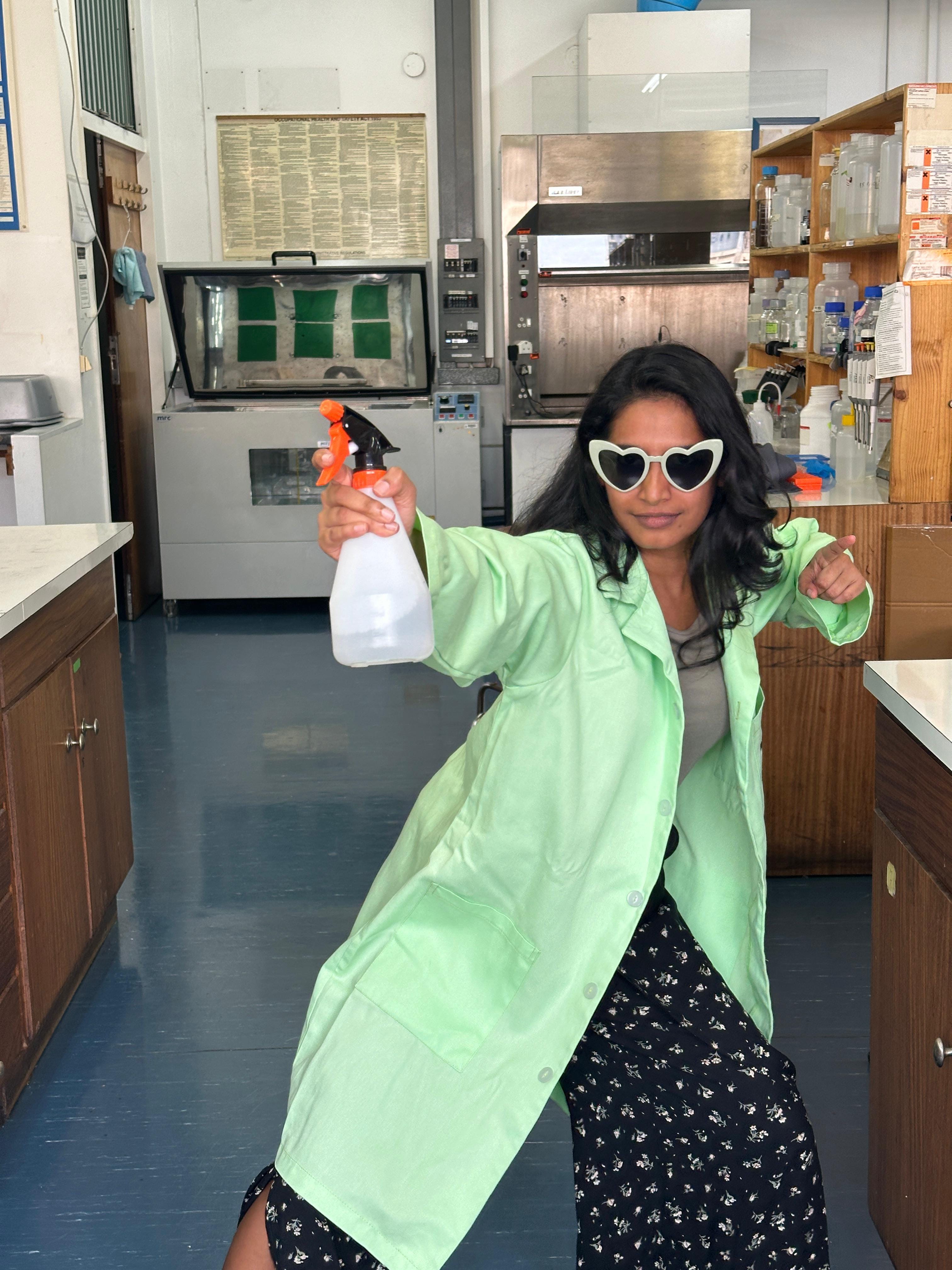
Some days I’m elbow-deep in lab work chasing data. Other days I’m buried in papers: reading them, writing them, running the computational biology side, mentoring students, occasionally lecturing. Then I switch hats entirely and run my company: client meetings, partner conversations, strategy. Threaded through it all is science communication, because none of this matters if nobody outside the lab understands it.
Where are you based?
Johannesburg. Home base for both the research and the business.
What do you love most about your job?
Impact. Whether that’s watching a learner’s face change when they realise STEM is actually for them, or knowing a piece of drug-discovery research could help someone one day, that’s the fuel.
How did you get into this line of work?
I wanted to do science, so I went and did science. I also wanted to fix education, so I built that in too.
Was this always your dream career?
Yes, and it’s also brutally harder than the dream version in my head. I’m running on fumes a lot of the time. Nobody warns you how real the burnout gets.
What have been some highlights so far?
Launching STEM Scholars and watching it become real instead of just an idea in my head. And winning a Naked Scientists fellowship at Cambridge University, which was a proper pinch-me moment.
Pros & Cons
What are the best parts of the job?
Impact. Knowing the work actually changes something for someone.
What are some of the challenges?
Burnout is real, the days are long, and it is draining and exhausting work. I won’t sugarcoat that part for anyone considering this path.
What type of personality suits this career?
Thick skin, deep curiosity, and a high tolerance for uncertainty. You need to be able to switch between being a scientist, teacher, communicator and entrepreneur, sometimes within the same hour, and be okay with the fact that none of those roles come with an instruction manual.
Is it well paying? Are there good benefits?
Not well paying. I’ll say that plainly. What it does buy you is flexibility, the freedom to build research and a business side by side.
Can you work in other countries with this qualification?
Yes. This qualification travels.
What education or training is needed?
A science degree to start, then honours, a master’s and a PhD if you want to go deep into research. That’s the exact staircase I climbed: Molecular and Cell Biology, then Microbiology and Biotechnology, then Microbiology, Biotechnology and Chemistry, then Biochemistry.
Which matric subjects help?
Maths and Science, non-negotiable foundations.
How long does training take, and is it expensive?
Nine years at University. And yes, expensive doesn’t quite cover it, so apply for scholarships; they saved me.
Do you need ongoing training throughout your career?
Constantly. Science and technology don’t wait for you to catch your breath, so neither can you.
Are bursaries, loans or scholarships available?
Plenty. The National Research Foundation (NRF) and the Oppenheimer Memorial Trust are two solid starting points.
Where can one study for this career?
Any university offering molecular biology, microbiology, biotechnology or biochemistry. I built my whole journey at Wits.
What should a young person do first if they want to follow this path?
Go work-shadow someone in the field first. See the real, unfiltered version of the job before you commit years and money to studying it.
Advice for the Young at Heart
What advice would you give someone thinking about this career?
Go in with your eyes wide open, not rose-tinted. It is rewarding, but it will test you. Get real exposure early, through work-shadowing and competitions, before you commit.
Is there a shortage of people in this field (in SA or globally)?
No, and this might surprise people. The real shortage isn’t people; it’s jobs. There are more qualified scientists than positions to fill.
What other similar jobs exist in your industry?
Research scientist roles in academia or industry, biotech entrepreneurship, science communication, university lecturing, lab management, science policy work. The STEM path branches a lot more than people realise.
Looking back, what would you have done differently?
I’d have chased more experience and entered more competitions much earlier. Entrepreneurship only found me during my PhD. If it had found me in first year instead, I’d be much further along and more established by now.
Tell us about a teacher or mentor who inspired your journey.
Dr Chris Smith of The Naked Scientists shaped how I think about science communication. And rewinding all the way back, my high school teacher Miss Moreira and Mr Watson were the reason I stayed in love with science in school and carried that love straight into university. Education is just something I’ve always felt pulled toward.
Opportunities
Where to study
University of the Witwatersrand (Wits): Molecular and Cell Biology, Microbiology and Biotechnology, Biochemistry. Most South African public universities offer equivalent science degrees; check each faculty of science for programme specifics.
DSTI-NRF Postgraduate Scholarships (Honours, Master’s, PhD)
The National Research Foundation’s flagship postgraduate funding, covering all science, engineering, technology, social science and humanities fields. The minimum requirement is 65% for your previous degree. The Free-standing (FCS) stream is for SA citizens or permanent residents who are financially needy (household income under R350,000 a year), living with a disability, or exceptional achievers; a smaller Public Good/international (PCS) stream exists too. Apply only through the NRF Connect portal. No manual applications accepted. nrf.ac.za | nrfconnect.nrf.ac.za
Oppenheimer Memorial Trust (OMT) Scholarships
Merit-based partial funding for Master’s, Doctoral and postdoctoral study, locally or abroad, for SA citizens or permanent residents with an exceptional academic record heading into academia or research. Not for MBAs or narrowly commercial programmes, and you’ll need to arrange co-funding, since OMT doesn’t cover the full cost. Closing dates run twice a year, typically at the end of March and the end of August. (www.omt.org.za)
NSFAS (undergraduate)
Covers tuition, accommodation, transport and study materials for SA citizens with household income under R350,000 a year (R600,000 if living with a disability), at any of the 26 public universities. Applications typically open around September for the following academic year. (www.nsfas.org.za)
Sasol Bursary (Sasol Foundation)
Full undergraduate funding, tuition, accommodation, a stipend and mentorship, for SA citizens under 30 studying engineering or science at a Sasol-approved public university (distance learning like UNISA doesn’t qualify). Comes with a workback agreement after graduation. Applications typically open in April. (www.sasolbursaries.com)
SAMRC (South African Medical Research Council) postgraduate funding
Particularly relevant if you’re heading toward biomedical research, drug discovery, genomics or immunology. SAMRC funds Master’s and PhD candidates through its Division of Research Capacity Development, with calls opening at different points across the year. (www.samrc.ac.za/funding)
Wits Financial Aid & Scholarships Office
Handles Wits-specific bursaries, need-based aid and faculty-level science awards funded by alumni and external donors. Worth a direct visit or query to your faculty’s undergraduate office for what’s live each year. (www.wits.ac.za/study-at-wits/financial-aid-and-scholarships-administration)
Social Media Handles
Instagram: @drmstemgirlie (instagram.com/drmstemgirlie)
LinkedIn: Dr Marushka Soobben (linkedin.com/in/dr-marushka-soobben-9a603b188)
©Higher Education Media Services. – www.ednews.africa