



What if South Africa’s next generation of innovators, engineers, entrepreneurs and changemakers are already sitting in classrooms across the country, waiting only for an opportunity to put their ideas into action?
That question lies at the heart of Samsung’s Solve for Tomorrow (SFT) programme, a global education initiative that is helping young people move beyond textbooks and exams to become practical problem-solvers capable of addressing some of their communities’ most pressing challenges.
At a time when South Africa faces growing demands for digital skills, innovation and youth employment, the programme shows how education can shift from passive learning to active problem-solving. Through science, technology, engineering and mathematics (STEM), learners are being encouraged to identify challenges in their communities and design technology-driven solutions that can improve lives.
This year, 100 learners from 20 public schools across South Africa participated in the programme, supported by Samsung mentors and educators. But beyond the prototypes, presentations and competition milestones, the initiative appears to be delivering something equally valuable: confidence, leadership and the belief that young people can shape their own future.
For many participants, the programme has fundamentally changed how they view themselves and their potential.
Grade 10 learner Keamogetswe Jele from Klerksdorp Secondary School in North West says the experience taught her how to transform a real-world problem into a meaningful solution through innovation and technology.
More importantly, she says, it strengthened critical soft skills often overlooked in traditional education, including teamwork, communication, research, creative thinking and leadership.
Fellow Klerksdorp learner Ronile Lerebo believes the competition highlighted the power of education as a bridge to opportunity.
For her, Solve for Tomorrow reinforced an important lesson: that effort, curiosity and access to the right opportunities can unlock extraordinary possibilities.
“The world is shifting towards technology-based solutions,” she explains. “Investing in young minds will lead to a better and successful South Africa.”
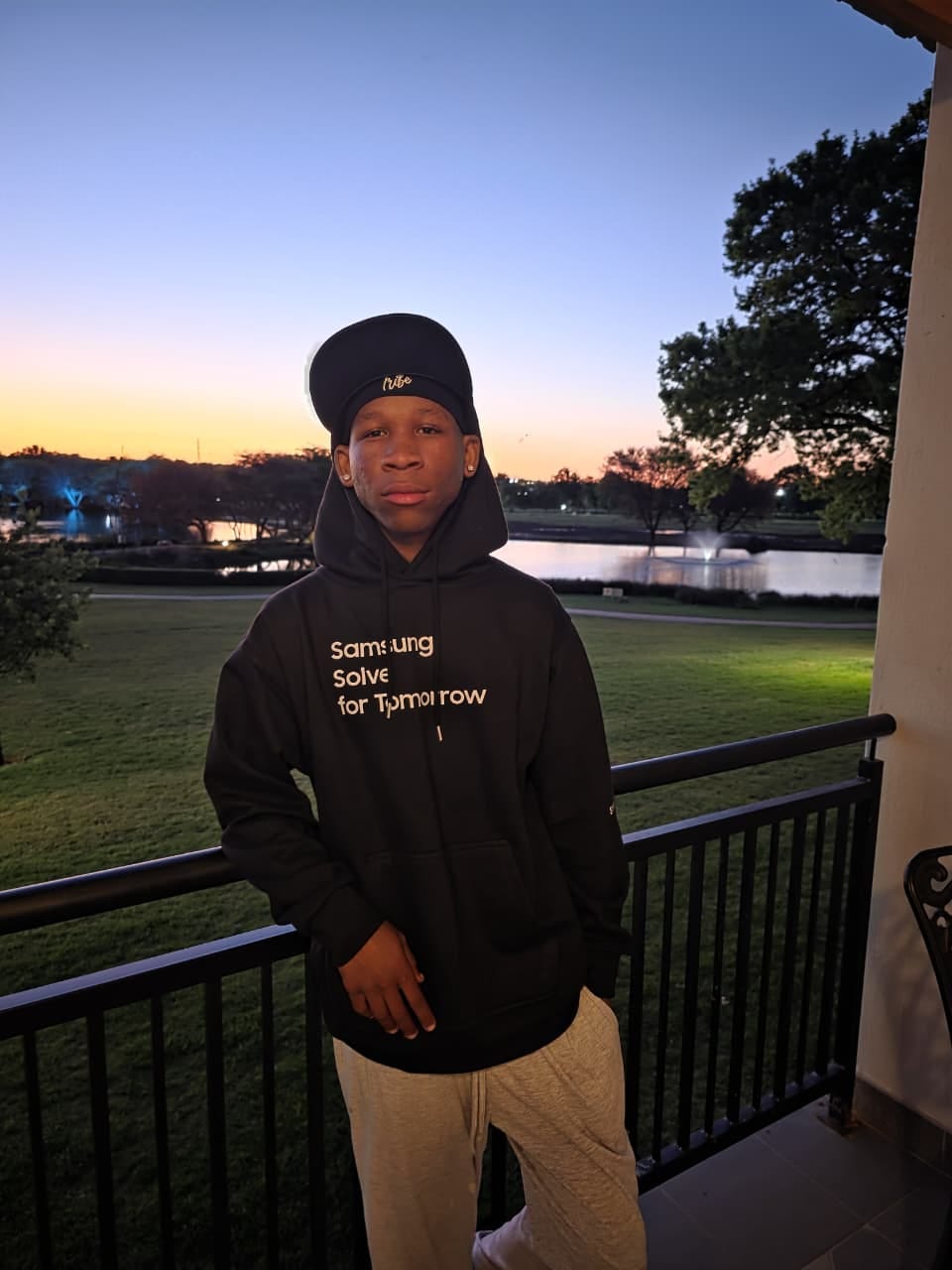
That future-focused mindset is echoed by learners across the country.
At Cape Recife High School in Gqeberha, learner Kukhanya Mbebe says one of the greatest lessons he gained was learning to think differently.
Rather than accepting problems as permanent obstacles, he says the programme encouraged learners to see challenges as opportunities for innovation.
“The biggest takeaway for me was learning leadership, innovation and how to think outside the box,” he says.
His message to other learners is simple: take part, embrace the experience and discover what is possible.
In Gauteng, Nyeleti Mhangwana from Kaalfontein Secondary School says the programme gave her a deeper appreciation of how STEM can address community challenges.
Representing both her school and community has instilled a sense of pride and responsibility. More importantly, she says it has given her confidence that she can become an innovator capable of creating meaningful social change.
That confidence is one of the recurring themes emerging from learner feedback.
Many participants describe the programme not simply as a competition, but as a journey of personal growth.
For Lethabo Ntsoane, also from Kaalfontein Secondary School, perhaps the most important lesson was understanding the value of collaboration.
The programme exposed her to people with different strengths, talents and perspectives, teaching her both patience and adaptability.
“It taught me how to work with people who have different abilities and skills from mine,” she says. “This experience has broadened my capability of working with people.”
In Limpopo, Mugwedi Denga Masindi from Mbilwi Secondary School in Thohoyandou says the programme helped her develop a greater understanding of both innovation and self-awareness.
Working as part of a team enabled her to identify personal strengths and weaknesses while improving her communication skills.
The experience encouraged her to speak up, contribute ideas and recognise the importance of every team member’s contribution.
For learners such as Lonwabo Sibozo and Bereng Thinane from Kagisho Comprehensive Secondary School in Bloemfontein, Solve for Tomorrow became a lesson in perseverance.
Sibozo says she learnt the importance of persistence and discovered how small tasks often become the foundation for larger achievements.
Thinane describes the experience as an introduction to the realities of innovation, where ideas require patience, dedication and collaboration before becoming practical solutions.
“I’ve been exposed to the technical components of solving my community problems,” he says. “I now know that my plan, no matter how simple, can help change the world.”
That statement captures perhaps the programme’s most significant achievement.
In a society where many young people often feel disconnected from opportunities, Samsung is helping learners realise that innovation is not the exclusive domain of scientists, engineers or technology giants. It can begin in a classroom, a township, a rural village or a local community.
According to Lefa Makgato, Corporate Social Responsibility Manager at Samsung South Africa, the learner feedback confirms that the programme is achieving its goal of nurturing future-ready citizens.
“The feedback from these budding young people is very encouraging,” says Makgato. “It is a true testament to the positive impact this competition has had in the lives of these learners and their respective communities.”
Makgato believes the programme aligns closely with South Africa’s Fourth Industrial Revolution ambitions by equipping learners with digital, technological and problem-solving skills that will be increasingly valuable in the future economy.
More importantly, he says, participants gain the confidence to tackle complex challenges and transform ideas into practical solutions.
As South Africa continues searching for ways to address unemployment, educational inequality and economic growth, programmes such as Solve for Tomorrow offer an important reminder: young people are not merely the leaders of tomorrow.
Given the right tools, mentorship and opportunities, they are already helping shape solutions today.
© Higher Education Media Services.