


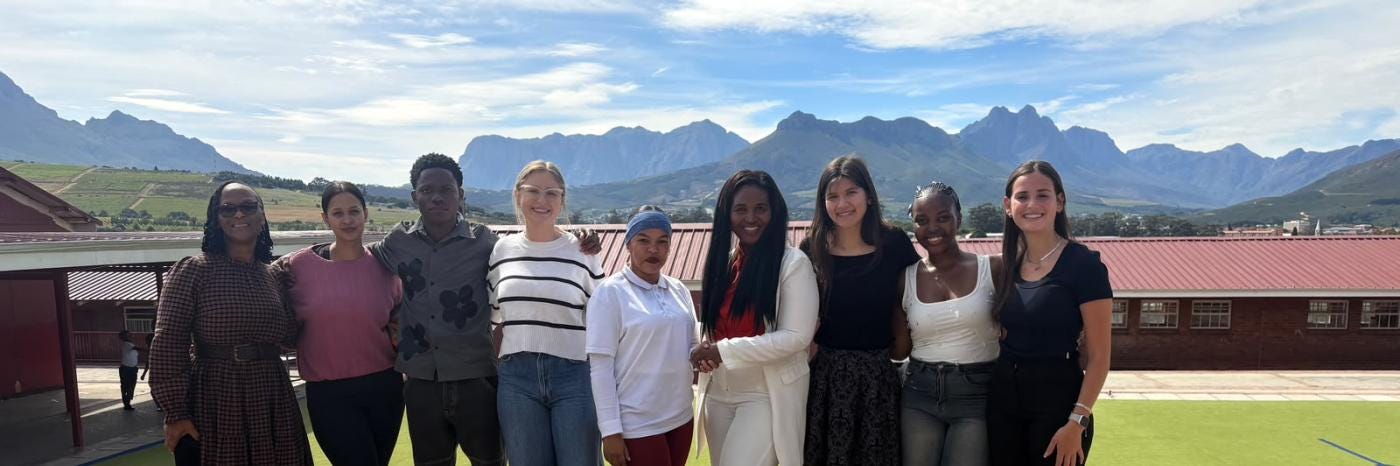
A group of final-year education students at Stellenbosch University (SU) is turning a classroom assignment into a practical response to educational inequality by giving teaching resources a second life in schools where they are needed.
Called From our classroom to theirs, the campaign invites pre-service teachers to donate resources they have created during their training so that other classrooms can benefit from them.
The idea took shape when a group of students – Tennile Adolph, Jemima Opperman, Alexi Hasell, Jade Geerlings , Keesha Rule, Simiso Lungelo Ntombela, Asanda Amahle Gumede, Liana Marais, Natatia Erasmus and Londiwe Mahlangu – worked together on a philosophy assignment that challenged them to identify a problem affecting education in South Africa and develop a campaign to advocate for change.
“As fourth-year education students, we feel that we spend too much time talking about the pressing issues impacting our schools today and how we can theoretically change them but, in the end, never making a real difference,” says Geerlings.
The group began discussing resource shortages and realised that many of the mathematics teaching materials students create as part of their coursework are eventually discarded or left unused once assignments are complete.
They decided to make it easier for final-year students to donate these resources before the end of the academic year, when coursework and other commitments can leave little time to consider what to do with materials they no longer need.
To spread the word, the students created a social media page, @from_our_classroom_to_theirs, and put up posters around the Faculty of Education calling for donations.
The response was encouraging. Within just two weeks, the group collected 19 boxes of mathematics resources, which were delivered to Ikaya Primary School in Kayamandi, near Stellenbosch.
Packed into recycled ice-cream tubs, the boxes contain a range of practical learning materials, including number cards; number-name cards in Afrikaans, English and isiXhosa; dice and counting beads. These tools can help primary school learners explore mathematical concepts through hands-on activities.
Distinguished Professor of Education at SU, Jonathan Jansen, welcomed the initiative. In an interview shared on social media, he highlighted the need for learning resources in many schools, noting that teachers often have to pay for essential classroom materials themselves.
“This will make a huge difference,” he said.
The students also interviewed Agatha Lebethe, a primary mathematics education specialist, who emphasised the value of practical teaching resources in the foundation phase. Children benefit from concrete materials that help them understand concepts such as measurement, shape and space.
For the students, the campaign is a small but practical contribution to a much larger challenge. They hope it will gather momentum and that future final-year education students will continue the initiative, enabling more resources to reach classrooms where they can be put to use.
“This is a small initiative that could make a big difference,” says Keesha Rule, who also highlights the importance of collaboration among educators and with the national Department of Basic Education.
“Things would be so much better if we worked together,” she says.
©Higher Education Media Services.