


By Basetsana Koboyankwe, Radio Personality - Atlega Show, Westside FM 98.9
What if we stopped seeing art as an alternative to learning and begin recognising it as one of the ways people learn, grow and shape the world around them?
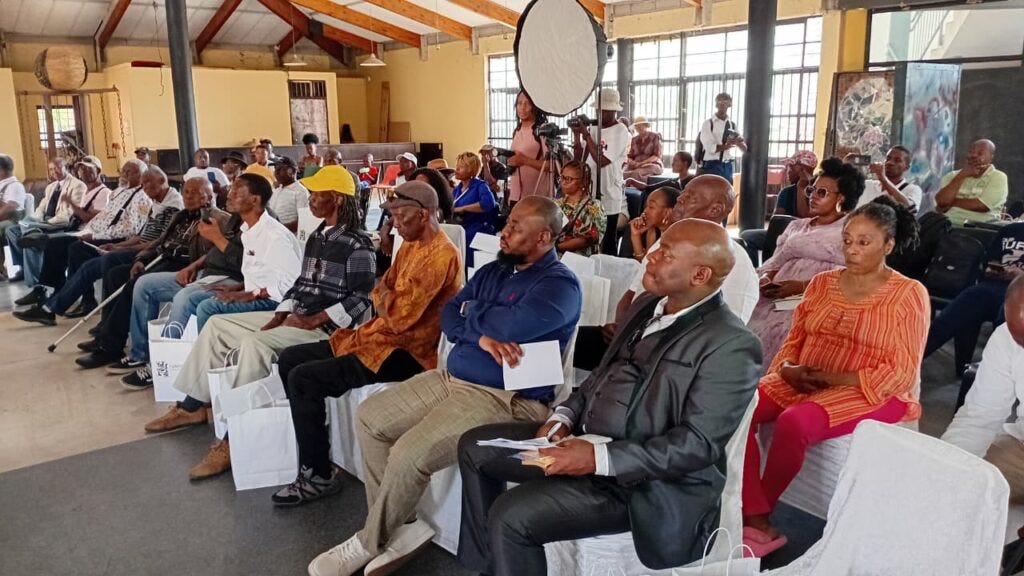
I attended the relaunch of Funda Community College in Diepkloof, Soweto. I left reflecting on more than the institution’s history. I found myself thinking about the value of creative education and an important question came in mind: Who gets to participate, and whose talents are given room to grow?
The transition from Funda Centre to Funda Community College invites us to reflect on the institution’s purpose and the community it seeks to serve.
In his keynote address - The Return of the Imagination - Rector Dr Tshepo Mvulane Moloi reflected on Funda’s history and the influence of Eksia Mphahlele’s vision for creative education.
Funda Centre’s brief history
“The historic institution relaunched on Saturday, 10 October 2026 at College Hall, 8642 Immink Drive, Diepkloof Zone 6, Soweto. It brought together community members, activists, veterans, and various stakeholders determined to revive its legacy.
For many, the occasion represented more than just a relaunch. It was a moment of remembering reconnecting and reclaiming a proud chapter of Soweto’s educational and creative history.
Born of Our Struggle, Built on Hope
Established in 1984, Funda Community College emerged in the aftermath of the June 17, 1976, Soweto student uprising, when the education crisis left many young people disconnected from formal schooling.
The institution was the brainchild of the late Professor Es’kia Mphahlele, the celebrated South African writer, educator, and scholar, who served as its first board chairperson.
His vision was to promote decolonized education and create opportunities for Black communities to learn, develop their talents, and shape their own futures. Funda was part of a wider effort to ensure that education and creative expression remained accessible to young people whose potential was often neglected”.
Now, decades later, the relaunch has reignited hopes that the institution can once again become a home for emerging artists, performers, and other township creatives.
One thing that stayed with me after the relaunch, was the idea of art as another way of learning.
In our society, we often give academic qualifications greater recognition, while music, theatre, dance, visual art and storytelling are treated as secondary pursuits.
Yet art teaches. It preserves our history, gives people a voice, develops skills and creates opportunities for expression and growth.
Art is not the absence of education. It is a meaningful way of learning, expressing and becoming.
Funda’s story reminds us that creative education deserves to be taken seriously. Its future also raises important questions: Will aspiring artists and young creatives have opportunities to develop their talents? How can local people and organisations participate in shaping the college’s next chapter?
Reopening an institution is only the beginning. The real work lies in building sustainable programmes and ensuring that the community can access and benefit from the opportunities created.
I left the event asking myself:
What would our society look like if we invested in creative talent with the same seriousness with which we invest in academic achievement?
May Funda’s next chapter create room for the community not only to witness its story, but to become part of it.
I’m sharing this reflection as part of my commitment to documenting the events I attend, the ideas that challenge me, and the stories that deserve to travel beyond the rooms in which they are told.
Because some experiences do more than inform us. They invite us to think differently.
©Higher Education Media Services.