


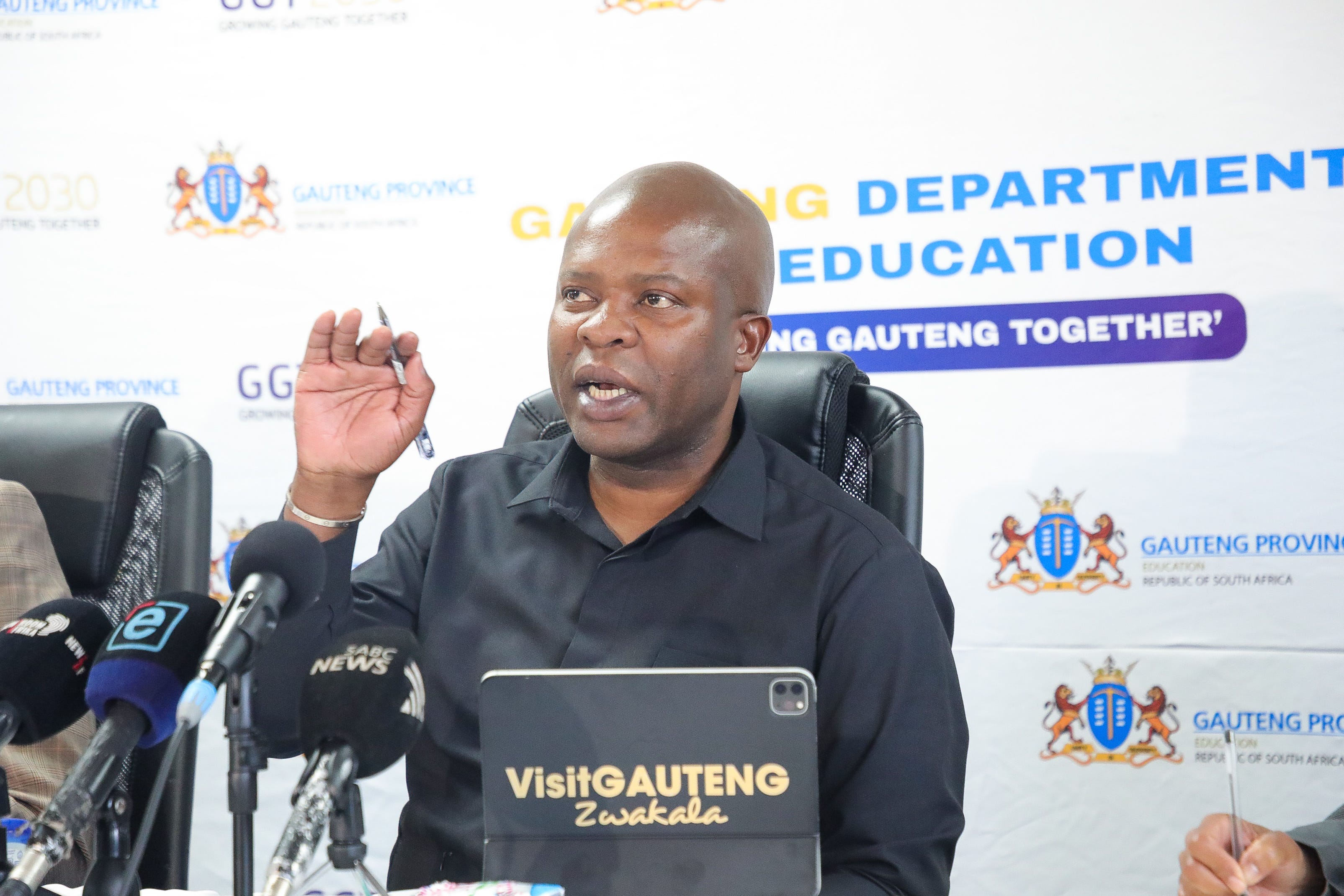
The Gauteng Department of Education (GDE) has released a comprehensive assessment of the province’s independent school sector, highlighting its growing footprint, strong academic performance, significant public funding, and the regulatory challenges shaping the sector.
The department says independent schools have become an increasingly important part of Gauteng’s education landscape, educating hundreds of thousands of learners alongside the public schooling system. While public schools continue to serve the overwhelming majority of learners in the province, the independent sector now accounts for nearly 380,000 enrolments.
Independent schools continue to expand
According to the department, Gauteng currently has 1,083 registered and operational independent schools, up from 961 in 2021. This represents an increase of 122 schools over five years, reflecting growing demand for alternative schooling options across the province.
The sector now enrols 379,727 learners and employs 24,974 educators.
Of the total number of independent schools:
279 schools receive government subsidies
804 schools operate without state subsidies
Johannesburg remains the largest hub of independent education, with 557 schools serving nearly 198,000 learners. Ekurhuleni follows with 233 schools, while Tshwane has 199. Sedibeng and the West Rand have smaller concentrations.
The department says understanding the growth and geographical distribution of independent schools is essential for education planning, particularly as Gauteng continues to experience rapid population growth and migration.
Why government subsidises independent schools
One of the most debated issues surrounding independent education is the use of public funds to support privately managed institutions.
The department argues that such funding is both constitutionally and legally permitted, provided schools meet prescribed requirements. Subsidised schools remain independently owned and governed but receive government support because they contribute to educational access, particularly in lower-fee communities.
This funding has been substantial.
Between the 2022/23 and 2025/26 financial years, Gauteng allocated approximately R4.3 billion in transfers and subsidies to qualifying independent schools.
For the 2025/26 financial year, the allocation was close to R1.1 billion, while approximately R1.13 billion has been budgeted for 2026/27. The department has also projected similar allocations for the following two financial years.
Officials emphasised that funding comes with strict accountability requirements, including monitoring of financial statements, governance processes, payroll systems, assets and budget management.
Strong matric performance
Independent schools in Gauteng delivered strong results in the 2025 National Senior Certificate (NSC) examinations.
Of the 12,291 learners who wrote the examinations, 11,651 passed, resulting in an overall pass rate of 94.82%.
The achievement included:
7,869 Bachelor passes
2,358 Diploma passes
127 schools with a 100% pass rate
49 schools achieving between 95% and 99%
The department noted that almost 70% of independent schools included in the analysis achieved pass rates of at least 95%.
Performance in key subjects was also highlighted:
Business Studies: 93.8%
Life Sciences: 91%
Accounting: 88%
Physical Sciences: 83.6%
Mathematics: 74.8%
The GDE said these outcomes demonstrate the sector’s contribution to Gauteng’s broader economic and development goals, particularly in science, technology and commercial fields.
‘Independent’ does not automatically mean better
Despite acknowledging the sector’s strong academic performance, the department cautioned against equating private ownership with educational excellence.
Drawing on findings from the Human Sciences Research Council (HSRC), the department argued that learner achievement is influenced more by factors such as effective school leadership, discipline, teaching quality and a strong learning culture than by a school’s ownership model.
Officials also pointed to Gauteng public schools, which achieved an 89.06% matric pass rate in 2025, as evidence that high performance is possible across both sectors.
The department said many township schools continue to achieve excellent results despite facing infrastructure and resource challenges.
Ongoing concerns over unregistered schools
The department identified illegal and unregistered schools as one of the sector's most pressing challenges.
Parents have been urged to verify that schools are officially registered with the Gauteng Department of Education and appropriately accredited where required.
Between January and September 2026:
61 suspected illegal schools were inspected
32 schools received closure notices
Seven schools ceased operating
Four applied for registration
Two school directors were arrested
Officials warned that uniforms, websites and marketing material do not by themselves prove that a school is legally authorised to operate.
School fees remain a major source of complaints
Disputes involving school fees continue to feature prominently among complaints the department receives.
Between 2024 and August 2026, the department recorded 3,688 cases relating to independent schools.
Among the most common concerns were:
School registration issues
Suspension or expulsion linked to unpaid fees
Withholding of learner reports or transfer certificates
Admissions disputes
Bullying and disciplinary matters
Curriculum and assessment concerns
The department reiterated that while parents remain responsible for honouring fee agreements, schools may not expel learners during an academic year or withhold progress reports because of disputes between schools and parents.
Home education on the rise
The department also reported continued growth in home education.
In 2026, Gauteng received 2,681 new home education applications, with 1,892 approved and a further 174 awaiting final approval after verification.
Between 2022 and 2026, the province registered 6,930 learners for home education.
However, the department cautioned against institutions operating as unregistered schools under the guise of homeschooling centres, tutor centres or online schools.
Independent schools remain a key part of the education system
In its conclusion, the Gauteng Department of Education described the independent school sector as a “large, diverse and established” component of the province’s education system.
While challenges relating to registration, school fees, governance and illegal operators remain, the department maintains that independent schools contribute significantly to educational access and learner achievement.
At the same time, officials stressed that public schools remain the backbone of Gauteng’s education system.
“The evidence shows that strong schools can exist in both sectors,” the department said, adding that school quality is ultimately determined by leadership, educator commitment, discipline, governance and the quality of teaching and learning taking place in classrooms, rather than whether a school is public or independent.
©Higher Education Media Services.