


South Africa’s basic education system faces interlinked challenges shaped by structural factors rooted in historical inequality, socio-economic pressures, and delivery constraints.
The situation is especially pronounced in the Gauteng Province where rapid in-migration, uneven access to early learning, weak foundational skills, infrastructure backlogs, safety risks, and resource limitations continue to affect education quality and learner outcomes.
A historical overview of basic education in Gauteng
In Gauteng, enrolment across all schools increased from 1 408 237 learners in 1995 to 2 835 168 in 2026, reflecting strong population growth driven by urbanisation and migration into the province.
Overall learner numbers have grown by more than 100% since 1995. Enrolment has continued to rise at an average of about 2% year, adding more than 50 000 learners annually.
While nominal allocations in the education budget have increased, high inflation in educational materials and food for school nutrition have a direct impact on these increases.
Thus, despite being the top spending priority for the democratic government, basic education’s share of total government expenditure has faced pressure and some infrastructure programs have experienced Cabinet-approved reductions.
Provincial education departments have faced immense budgetary strain and are facing shortages in teaching staff due to budget constraint. Gauteng is not unique in this respect.
Provincial outlook of the basic education ecosystem
A total of 2 429 058 of learners from 15 education districts in Gauteng, are in the public education system in the province. Combining both public and independent schools, the total number of learners in Gauteng as of 2026 stands at 2 808 785.
This includes both ordinary and Learners with Special Education Needs (LSEN) schools. These schools provide tailored education for children with learning difficulties, physical disabilities, or behavioural challenges.
This number translates to 86.4% of the total number in the Gauteng basic education system and is a slight decrease from 2 442 956 learners in 2025. Learners enrolled in independent schools amount to a total of 379 727 in 2026, a decrease from 392 212 in 2025.
Despite this, Gauteng continues to have the most number of independent schools in South Africa, with 127 974 of the 392 212 learners, or 32.6 percent, being in subsidised independent schools.
While the Gauteng Department of Education continues to deliver classrooms and new schools where needed, we have not been able to keep pace with the growth in the learner population. This is compounded by ageing infrastructure and, in some cases, inappropriate building materials or temporary prefabricated classrooms.
Since 1996, more than 95% of the capital expenditure budget has been spent in disadvantaged Communities. Additionally, by 2014, the province had built sufficient classrooms to eliminate the historic 1995 backlog. But infrastructure supply has not kept pace with demand: only 48 schools were built or refurbished between 2015 and 2024.
An estimated 723 schools show signs of overcrowding in some grades or across the whole school, with a documented shortage of about 5 554 classrooms - 3 166 in primary and 2 388 in secondary schools.
Gauteng faces a deficit of at least 200 new schools to stabilise the system.
While the allocation has increased to over R68 billion, it remains insufficient relative to demand and inequality across schools. A rising wage bill for educators consumes a large share of the budget, leaving limited funding for learning materials, maintenance, and new infrastructure.
Funding pressures are compounded by inefficiencies and uneven resourcing. Some schools struggle to cover basic operating costs (utilities and staffing), and governance and management weaknesses can reduce the impact of available resources.
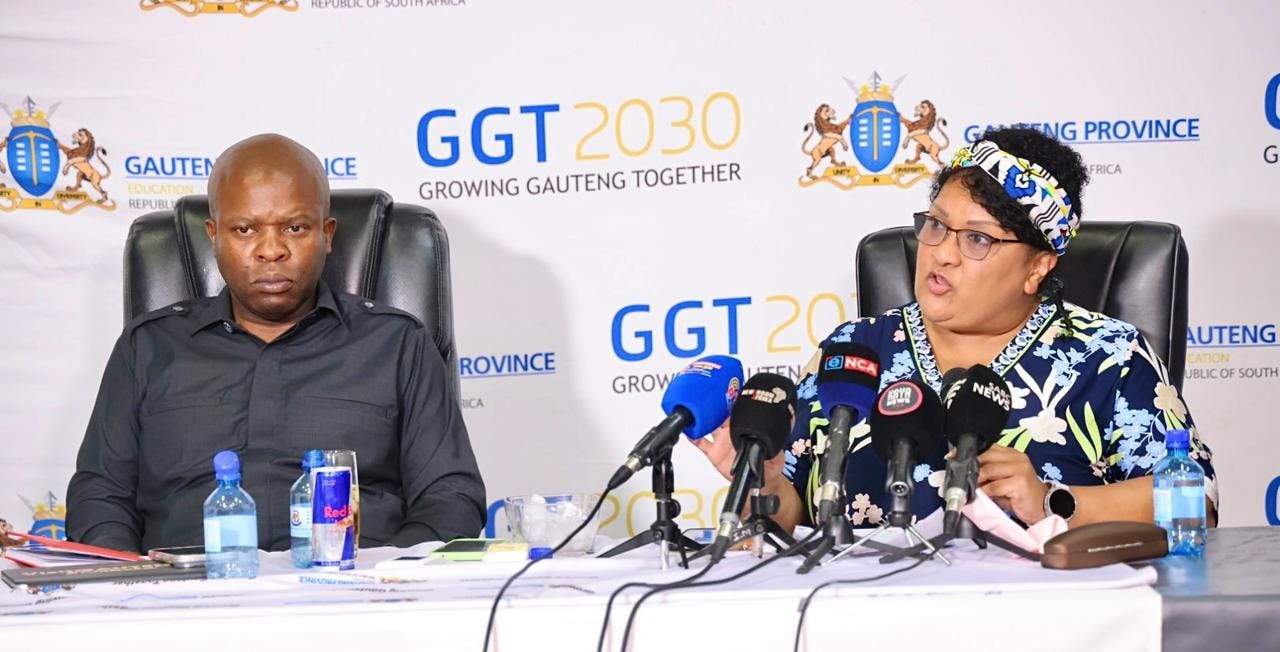
The second issue pertains to Early Childhood Development, which focuses on children aged 0 to 4 ½ years. The ECD function was transferred to the Department of Education as of 1 April 2022.
The key challenges with ECD centres in Gauteng is that a large number remain unregistered, often operating from informal structures that do not meet municipal health and safety requirements.
While the provincial government has undertaken a mass registration drive of ECD centres, registration is slow and paperwork-heavy. Additionally, zoning and approvals can take years and require coordination across multiple departments.
Learning outcomes remain weak, particularly in literacy and numeracy. In Gauteng, weak early-grade reading, comprehension, and numeracy create a silent crisis where learners progress without mastering basics, limiting later success and increasing the risk of repetition and dropout, especially in gateway subjects such as Mathematics and Physical Sciences.
Linked to this, in Grades 4 to 9, Maths and Science performance is constrained by shortages of qualified subject teachers and a persistent conceptual gap linked to weak early numeracy, particularly in overcrowded schools.
Gauteng schools achieved a historic performance in the 2025 National Senior Certificate (NSC) examinations, recording an 89.06% pass rate, with a Bachelor pass rate of 46%, the highest in the province’s history.
However, the statistics do not outline the challenge of broader poor performance in Grade 12, which is often a symptom of weak foundations laid in the primary school years, where critical literacy and numeracy skills were not fully mastered.
Gauteng also faces a retention crisis with boys, with a 21% dropout rate that disproportionately affects male learners, who made up only 44 percent of the 2025 matric cohort.
Another very serious challenge pertains to teacher quality. Teacher quality in Gauteng is uneven, driven by shortages of qualified educators in key subjects (especially maths, science, and technology), overcrowding, and resource constraints. Under-resourced schools face particular difficulty recruiting and retaining skilled teachers, with additional risks from an ageing workforce.
Gauteng, like the rest of the country, faces a severe shortage of STEM teachers, which is constraining the rollout of technical subjects in schools. The province is currently facing an estimated shortfall of 370 teachers in critical technology subjects.
The number of department-employed teachers has increased from 46 048 in 1995 to more than 71 209 in 2026 – an increase of over 55%. Continued growth and overcrowding require additional appointments. However, national fiscal consolidation has limited adjustments to the post establishment over the past five years.
In the short to medium term, about 1 173 posts are required to meet growth, with an estimated cost of R606 million. A further 2 333 posts will be needed to universalise Grade R. The province will also need to absorb more than 70 000 learners currently in private and community-based ECD centres into the mainstream, at an estimated cost of R1.3 billion.
The final challenge, which consistently rears its ugly head, pertains to school safety. School safety and learner wellness are increasingly material risks to learning in Gauteng, with incidents of violence near school premises, bullying, substance abuse, and escalating mental health needs.
The province applies the National School Safety Framework and partnerships (e.g., SAPS, safety committees, and awareness programmes) to address violence, bullying, online risks, and gender-based violence.
Gauteng Department of Education 2025-2030 Strategic Plan
The Gauteng Department of Education has developed and adopted a five-year Strategic Plan that outlines our strategic focus and provides a framework for measuring our performance.
The Plan not only sets the long-term vision for the education ecosystem in the province, but it also indicates how this will be operationalised over the next five years through the accompanying Gauteng Medium Term Development Plan (GMTDP).
It is for this reason that the provincial education Plan focuses on the integration of technology into the curriculum, promoting critical thinking and problem-solving skills. This will ensure that learning is relevant to the real world and will prepare our learners for future challenges and opportunities, equipping them with the knowledge and skills necessary for success in a rapidly changing world.
In support of quality teaching and learning, the Department has introduced support strategies to improve all phases of the curriculum. The first is the General Education and Training (GET) Language and Mathematics Strategy, which incorporates the Reading component.
The second is the Maths Science and Technology (MST) Strategy aligns with the National MST Strategy and Implementation Plan. The strategy seeks to improve learner participation and success in MST subjects; teacher demand, supply, utilisation and support; the provisioning of resources; the establishing of partnerships; and the monitoring, evaluation, qualitative and quantitative research that informs the preceding four pillars.
The third is the Technical High School (THS) Strategy. The aim of the Technical High School (THS) Strategy is to expand participation by promoting and strengthening Technical High Schools for a changing and modernising world by offering technical subjects that will guide its activities over the next five years to address the skills shortage and unemployment crisis among the youth in the country.
The fourth is the FET Strategy, which is aimed at high and improved learner performance to ensure that it performs above the national average. The strategy is National Development Plan (NDP) goal driven, and continues to build on innovative teaching methodologies through ICT infrastructural enhancements, digital curriculum and assessment resources by supporting learners to progress in a diverse and purposeful manner.
Within this strategy is the Secondary School Improvement Programme (SSIP) which follows an integrated approach to ensure alignment to the school programme.
There are activities aimed at monitoring the delivery of curriculum in underperforming schools and in establishing systems to ensure the synchronised delivery of curriculum. This intervention programme is aimed at supplying adequate and effective electronic and printed resources for learners and teachers by providing teacher training, and the Holiday and Pre-exam Camps.
The final support strategy is the Reorganisation of Schools Strategy, with specific focus on Schools of Specialisation. The Gauteng Department of Education has taken a policy decision for learners to have access to a specialised, modern, relevant, dynamic and responsive curriculum that is an alternative to the traditional academic curriculum.
Stakeholder engagement
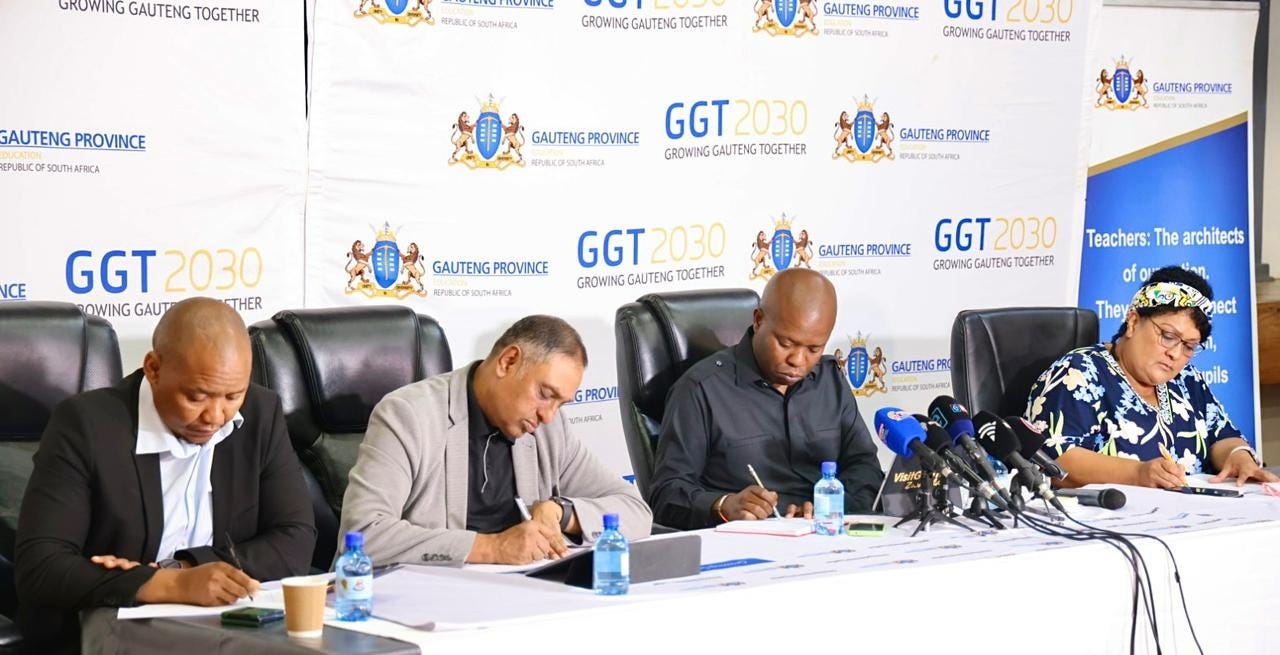
Over the coming months, the Gauteng Department of Education will be engaging various stakeholders to engage on how we can all play our part in ensuring the implementation of the 2025-2030 Strategic Plan and related programmes aimed at improving the education system in the province.
A meeting with principals and deputy principals across Gauteng schools will be taking place this coming week, to be followed by a meeting with School Governing Bodies within the coming week. We will also be engaging parents and communities, as well as stakeholders in the private, public and civil society sectors.
We are committed to improving the quality of teaching and learning in Gauteng, but we recognise that as the provincial government, we cannot achieve this on our own. Public-private partnerships, as well as collaborations with multilateral institutions, non-government organisations, academic institutions, religious institutions, and other stakeholders will play a key role in this endeavour. We will also be relying on the media to continue its important work of informing and educating the public, while also maintaining its independence and holding us accountable where necessary.
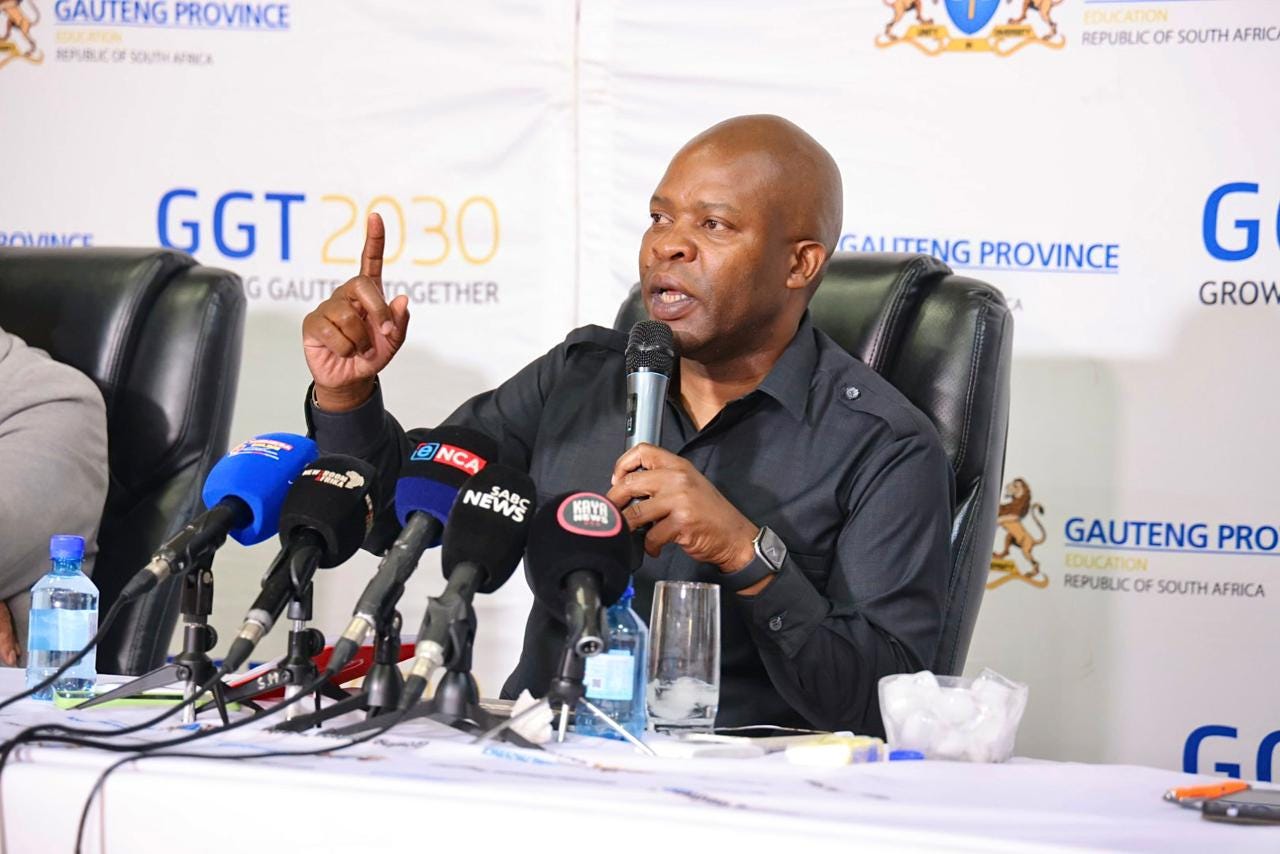
This is a shortened version of newly-appointed GDE MEC Lebogang Maile’s reflection on challenges faced by South Africa’s basic education system and he provides an overview of the Gauteng Department of Education’s five-year Strategic Plan.
©Higher Education Media Services.