



Huawei Cloud’s Code4Mzansi competition has attracted more than 1,000 South African participants, making it the largest Huawei Cloud Developer Competition market globally and highlighting the growing momentum behind locally built innovation.
The finalists have developed AI- and cloud-powered solutions that address some of South Africa’s most pressing challenges, including township trade, healthcare access, food safety, youth unemployment, and energy resilience.
This new generation of South African innovators is building technology that could reshape the country’s future. The top finalists in the Huawei Developer Competition Code4Mzansi are developing AI‑ and cloud‑powered solutions grounded in the realities people navigate every day — from township food systems and household finance to healthcare access, energy resilience, youth employment and small‑business growth. Their work signals a shift toward homegrown technologies designed not in abstraction, but in direct response to the country’s most urgent social and economic challenges.
The competition attracted 1,041 participants in South Africa, the highest number in any Huawei Cloud Developer Competition market globally. South Africa also recorded the highest percentage of enterprise participants, with 176 enterprise teams comprising the 353 teams that entered the competition.
Held in partnership with the Department of Small Business Development and leading academic institutions, including the University of Cape Town, the University of Johannesburg, the University of Pretoria, and the University of the Witwatersrand, the competition has become a showcase for young South Africans building practical technologies around the systems people rely on every day.
What comes through strongly in the finalist solutions is the depth of understanding behind them. Several teams independently focused on food systems, township retail and payments infrastructure. That convergence speaks to how closely young innovators are reading the country itself.
“AI, cloud computing and other cutting-edge technologies are profoundly reshaping the world, driving transformative changes in productivity and production methods, and restructuring the global economy,” says Steven Chen, CEO of Huawei Cloud South Africa.
“Rooted in South Africa, Huawei Cloud continuously brings these advanced technologies to local developers, enriches the domestic developer ecosystem, and helps South Africa build core competitiveness amid the wave of AI and cloud computing.”
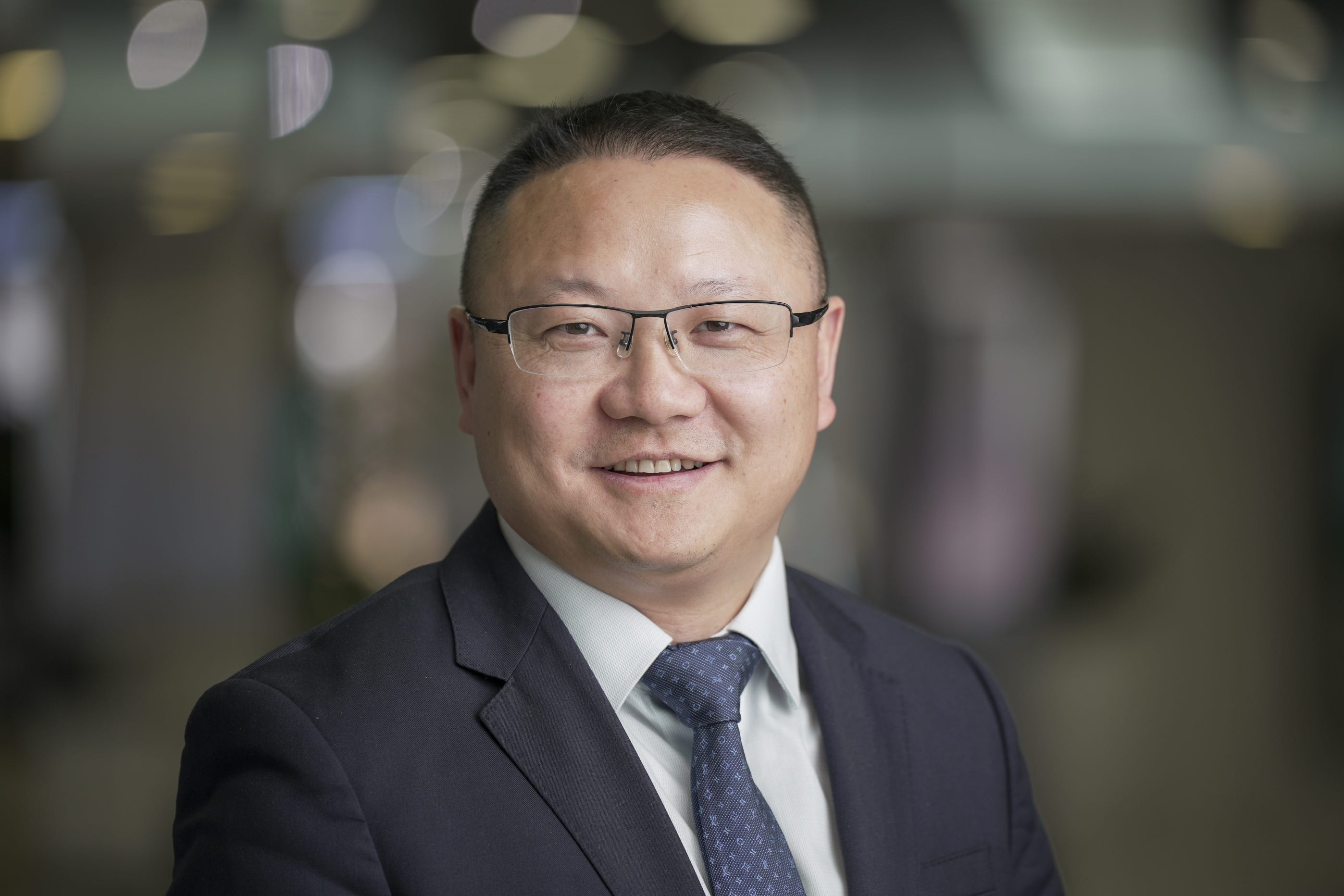
“SPAZA Shop serves as a typical application scenario. With outlets across tens of thousands of communities in South Africa, they supply daily necessities to millions of people every day. Leveraging Huawei Cloud and AI capabilities, local developers can build practical applications to help SPAZA Shops improve delivery efficiency, enhance community interaction, and ensure food safety,” said Chen.
Two finalist teams, SIMVAK’s Atlas and SpazaConnect, built solutions directly around this reality. SpazaConnect developed a WhatsApp-native marketplace that connects spaza shops, customers, and delivery runners and introduces product traceability through verified suppliers. The platform addresses the growing need for trust, visibility, and accountability in informal retail systems.
Atlas by SIMVAK positions itself as an AI-powered trust layer for township retail. The platform is designed to help communities, retailers, and suppliers respond more quickly to food safety risks while improving communication and product tracking across informal trade networks.
e-Khadi has delved into the deeply human space of household finance, built around South Africa’s SASSA ecosystem. The platform combines community credit, stokvel functionality, trusted store credit, stock forecasting, savings tools and financial literacy support for lower-income households and township traders.
PathForge tackles one of the country’s biggest frustrations among young people, the work experience barrier. The platform connects youth to mentorship, project exposure and practical pathways into employment.
HealthHive uses AI-powered healthcare navigation to help users move more efficiently from symptom checking to appointment booking and healthcare access.
GridGuard AI focuses on electricity theft and transformer protection, using intelligent monitoring systems to help strengthen energy resilience in affected communities.
Intellibuild applies AI and IoT technologies to agricultural and food production systems, enabling smarter farming practices and greater food resilience.
ROGOBOA developed an offline-first point-of-sale platform for businesses operating in environments with unstable connectivity, enabling traders to continue operating during outages and disruptions.
Auraa and VAZII by Afru-ikigAI focus on Africa’s growing creator economy, building digital infrastructure that supports music creators, monetisation and creative entrepreneurship.
“Together, the finalists paint a picture of young South Africans building inside the country’s real systems, food, money, health, work, trade, energy and culture,” says Professor Benjamin Rosman, Founding Director of the MIND Institute at Wits University and Co-founder of Lelapa AI. “What is significant from an innovation perspective is that these ideas start from lived reality and then apply technology with purpose. That is how young developers move from writing code to building solutions with relevance beyond South Africa.”
Participants competed across two main tracks: the Business Value Track and the Grand Innovation Track.
The Business Value Track focused on community-based service and delivery platforms, as well as on youth- and women-focused enterprise empowerment platforms. The Grand Innovation Track focused on AI-powered innovation and digital transformation solutions.
Five awards will be presented at the final and awards ceremony on 21 May, including two Business Value awards, one Grand Innovation award, a Future Star Award for student teams, and a People’s Choice Award determined through public voting among the top 20 teams.
The final and awards ceremony will take place on 21 May 2026.
©Higher Education Media Services.