


The Zondo and Madlanga Commissions have helped to lay bare ‘state capture’ in South Africa. With some of it being dramatised on TV through many witnesses, only a few could claim not to know what it is.
On 23 March 2026, USAf held a seminal webinar on institutional governance, focusing on what was termed ‘institutional capture’ in the higher education sector. Evidently, state capture is what inspired this webinar.
The jury is still out there on what ‘institutional capture’, if separate from ‘state capture’, really is. There is ample evidence, though, that these two concepts overlap and even coalesce as some of the external and internal protagonists are of the same ilk.
From the presentations and discussions, it became apparent that there are internal and external forces at work. Because it takes two to tango, the familiar external players consisting of politicians, so-called business forums, convocation factions, and criminals collude with some internal staff with the sole intention to capture and gorge.
For all we know, the higher education sector might even have some senior managers who aid and abet institutional capture, just like the Madlanga Commission has outed some high-ranking police officers alleged to have facilitated police capture.
When state or institutional capture rears its ugly head, it brooks no opposition, and nobody may stand in its way. If one resists, one will be shoved aside no matter how flimsy and/or trumped up the allegations against one may be.
In my 20 years as a Vice-Chancellor, at least three (3) attempts to remove me have been made, for daring to stand up against power, corruption and malfeasance. This occurred in 2012, when I was at the Central University of Technology - where I served for 10 years as Vice-Chancellor and Principal.
Similar attempts to remove me have since occurred two more times, at the Durban University of Technology where I am in my 10th year as Vice-Chancellor and Principal.
The most recent, and perhaps the most desperate attempt was in September 2024. It would be laughable if it was not such a tragic illustration of ongoing attempts to capture higher education institutions.
For my first ten-year tenure as Vice-Chancellor, I was without a bodyguard. But, I might not have survived the last eight years without bodyguards – thanks to the clear, present and continuing danger to my life amidst the raging waves of institutional capture.
Part of the genesis of the last attempt against me is a meeting I had with some members of Convocation way back in 2018 when they directly accused me of not giving them tenders – as if the giving of tenders was part of my job profile, authority or competence. It is not just a coincidence that all those convocants had once been in the SRC and their comrades were in Council till recently.
In South Africa, being in the SRC often connotes deep political roots aligned with political parties who practice what they call ‘democratic centralism’ – clearly a warped and corrupt understanding of the original meaning of democratic centralism.
As understood and practised by capturers of institutions, ‘democratic centralism’ is inimical to academia. It means the big political bosses, deeply implicated in state capture, run the show and everyone must fall like dominoes. There is, thus, this deep and insidious link with politics behind all developments we see in ‘institutional capture’.
Recently, we have seen Vice-Chancellors being dressed-down, almost frog-marched, publicly in parliament. Site visits are replete with both overt and covert messages in the corridors about tenders, which are the main instrument of state and institutional capture.
Given a safe platform that President Ramaphosa could perhaps provide, I could mention names, but not yet. Indeed, so many of us could mention names in high places. Even some very new Vice-Chancellors are not spared these flimsy and/or trumped up allegations about this or that so they know right at the beginning of their tenures that they must not upset the apple-cart of capture.
They must respect this warped version of ‘democratic centralism’ as politicians and their lackeys continue to be on the prowl for resources by whatever means.
Even though I have no knowledge of the depth of allegations against Professors Sakhela Buhlungu (University of Fort Hare) and Nokuthula Sibiya (Mangosuthu University of Technology), their cases may well fall smack in this category of flimsy allegations.
Let me just briefly analyse what Prof Sakhela Buhlungu is being accused of, namely appointments of executive directors that did not follow the process, as we read in newspaper articles.
Articles published so far reveal that it is him, in the first place, who went to Council to explain and correct this through condonation, which is a generally accepted practice in any organisation.
Clearly, there have been gaps at Fort Hare in the human resources division. Coincidentally, one of the executive directors is precisely meant to strengthen this very division. None of the articles points to any malicious intent on the part of Prof Buhlungu.
For all we know, Prof Buhlungu may have been trying to deal with an emergency for which he hoped to obtain subsequent Council condonation later. But, because they have been scrambling to find something against him, they cannot miss this perverse opportunity.
The reason we have the internal audit function in many organisations is because all professionals know there will be this or that which may not have followed established processes and controls and requires condonation or ratification.
As long as there is no malicious intent, we take lessons, correct the missteps and move on. If, henceforth, we were to suspend and discipline everyone found to have missed this or that process - but without malicious intent - so many would have to be suspended and disciplined in organisations.
Could Fort Hare’s Council or rather some members in it be captured by politicians and high ranking civil servants who practice the perverse connotation of ‘democratic centralism’?
Could this suspension be a backlash against Prof Buhlungu’s stoic posture against corruption? Could it be a response to the fact that through his agency the SIU has outed about 33 people, many of whom are high ranking politicians and civil servants for fraudulent degrees from Fort Hare?
Has Prof Buhlungu’s recent no holds barred interview with Ann Bernstein from CDE rubbed Fort Hare’s chair of Council the wrong way? Could Fort Hare’s chair of council, who is relatively junior in the higher education sector be wishing to ascend to the Vice-Chancellorship and just cannot wait for Prof Buhlungu to leave soonest? God forbid!
It is instructive to notice that the relevant parliamentary portfolio committee immediately issued a statement in support of Council’s action. Could they not have waited until the disciplinary processes had been completed?
The seemingly excellent coordination between the Portfolio Committee and the Council may not be that innocent. In that statement, none of the work Prof Buhlungu has been doing against corruption is being mentioned, let alone appreciated. Why would those with fellow politicians essentially in the dock, appreciate what Prof Buhlungu has done?
I write this article fully aware that it will be seen by politicians, their ilk, so-called business forums and convocation factions as an attack on them and as an attempt to derail their sinister agendas.
In 2011/12 I faced the music just after I had written a searing article like this one. I will most likely be called to parliament for a bout of dressing down and ridicule. I am at the tail end of my tenure, I have very little to lose. I must speak and I will speak. Sooner than later, there will be no one to speak for us as Vice-Chancellors, university executives and universities.
This country must do something to stem this raging tide of institutional capture in the higher education sector. If not, our universities will be hollowed out of their essence. They will soon lose their firm leadership in the continent. South Africa will remain with universities that are not what they must be.
Just like we have had the Zondo and Madlanga Commissions, maybe President Ramaphosa will, one day, institute a commission of enquiry into institutional capture in the higher education sector.
I am glad the Minister of Finance has recently outed the NSFAS system, for example, as one form of capture; my words and not his. Does the President need more evidence?
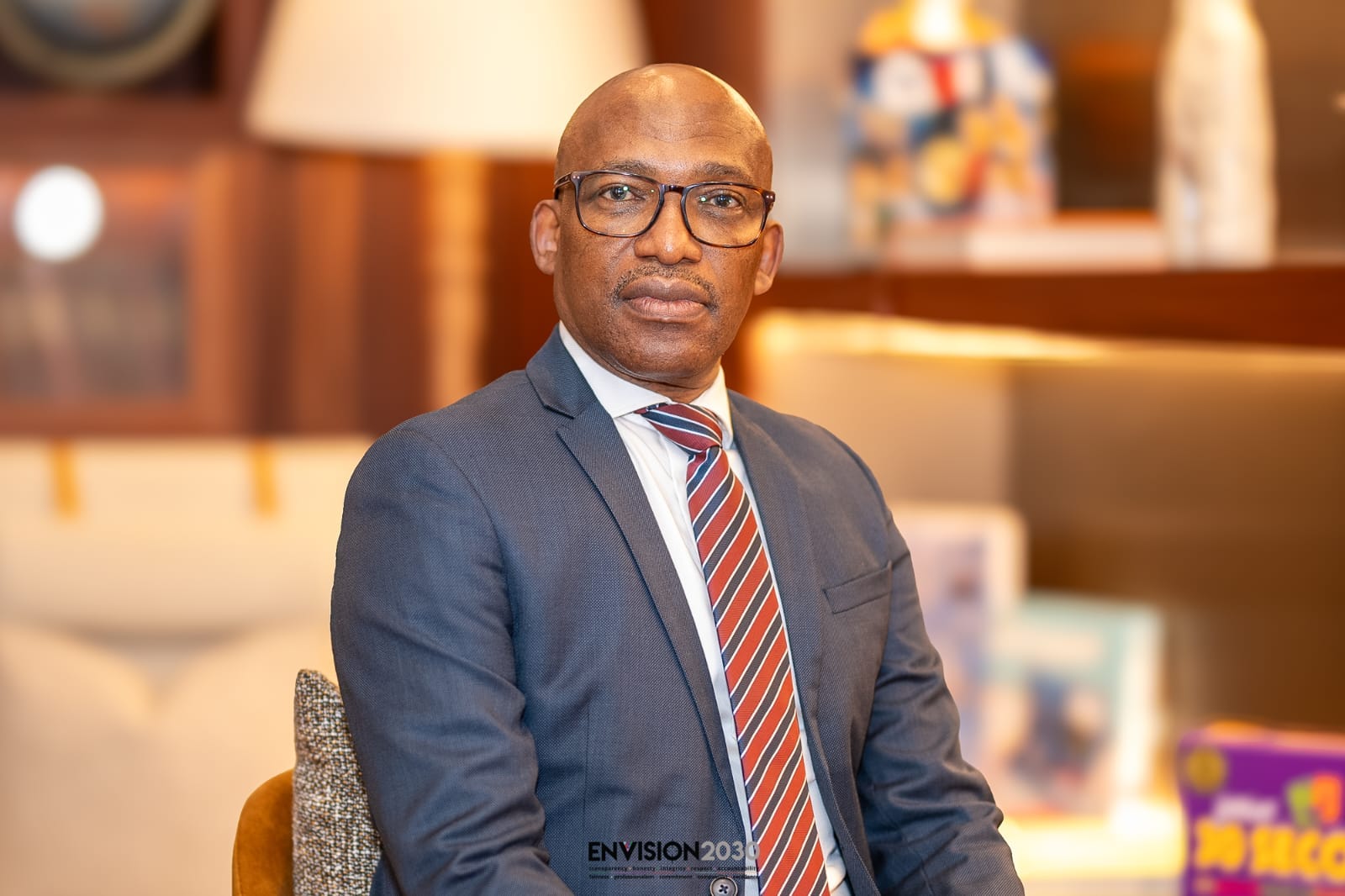
Professor Thandwa Mthembu is Vice-Chancellor & Principal at Durban University of Technology. He writes in his personal capacity and as a proud alumnus of the University of Fort Hare.
©Higher Education Media Services.
https://www.academicjobs.com/higher-education-news/south-africa-dysfunctional-universities-crisis-cut-ul-mut-peril-or-academicjobs-13684