

By William Gumede
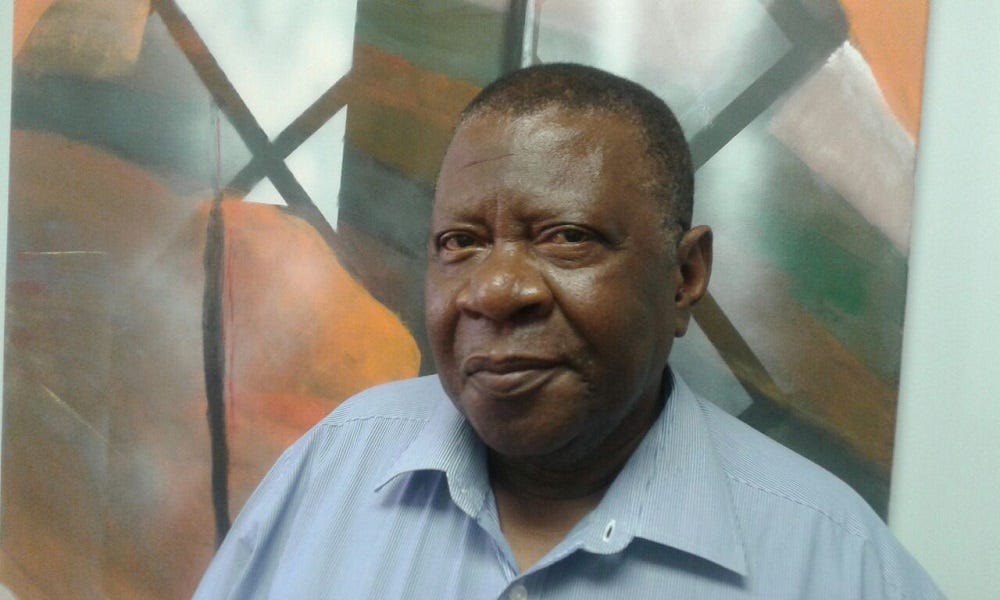
Joe Latakgomo, a giant of black journalism in South Africa, and founding editor of The Sowetan newspaper, who died recently, was one of those special big-view journalists who not only saw journalism as uncovering the truth, holding power accountable, but who were also active community-builders, who were involved in strengthening community civic life, civic institutions and civic engagement, outside journalism.
Journalism for Latakgomo, at the journalistic coalface of the fight against apartheid, was about exposing the truth, bringing out the stories of the marginalised, holding the institutions of power, whether government, business, traditional or religious groups, and the liberation movements such as the African National Congress accountable. However, for Latakgomo, journalism was also about building, educating communities, and changing readers' mindsets from black-and-white village- or township-focused mindsets to more expansive, national and global outlooks.
Functioning and cohesive democracies, societies, and communities require healthy civic life, non-state civic institutions within communities, and active engagement in civic life and civic institutions by ordinary citizens. Civic institutions include local sports, cultural, or community clubs, volunteer service organisations, school governing boards, and organisations that raise funds for local community causes. In the liberation or anti-colonial struggles, civic institutions are often turned by political activists into fronts to take on the autocratic apartheid or colonial regimes. These institutions then lose their traditional civic role, prompting many non-political activists to withdraw and further weakening them.
Latakgomo was also a strong advocate for instilling positive moral values among individuals and communities, particularly those previously oppressed, including respect for others, self-esteem, social justice, and non-violence. Such values are critical to the healthy social fabric of previously disadvantaged individuals and communities and to fostering harmoniously functioning communities and societies. These values guide individuals to interact and behave in healthy ways in schools, workplaces, interpersonal relations across race, colour, and gender, and in any given situation or circumstance.
Such core values are usually inculcated in families. Apartheid, whether through trauma, the migrant mine worker system, its violence, broke disadvantaged communities’ families. Schools, traditional and religious structures, also foster moral values. During apartheid, schools of previously disadvantaged communities became battlefields in the fight against apartheid; some traditional and religious structures also became corrupted.
Broken families, collapsing schools and captured traditional and religious structures cannot infuse positive values in children. Liberation movements, in their fighting of oppressed apartheid, colonial or other authoritarian regimes, often also have to use violence, promote the defiance of inherited social institutions of the oppressed individuals and communities, challenge the received moral values among oppressed communities, and in some instances also rupture existing core moral values.
Journalism could potentially educate, promote and socialise good moral values when other social institutions fail. Latakgomo believed in journalism’s responsibility to do this.
Societies cannot prosper, be cohesive, or stabilise following long liberation or revolutionary struggles, unless there are healthy, diverse, non-state civic institutions, which are functioning, and positive moral values, including respect for others, self-esteem, social justice and non-violence, are fostered among individuals and communities from previously oppressed communities.
He was involved in building the community of his hometown, Atteridgeville, and helped found the Pretoria Jets softball club, with fellow softball aficionados Jerome Sachane, Joe Dau, and Elliot Makhaya.
Latakgomo was the founding editor of The Sowetan newspaper in 1981 and died on 22 February 2026.
Latakgomo was an institution builder. He built The Sowetan as an institution. Building mission-critical institutions that can live on for generations, beyond one’s own life, is critical in developing countries. Since the end of colonialism, many developing and African countries have failed because they have been unable to create lasting institutions.
Institutions are often destroyed, rather than established, preserved or built. Societies fail if they lack enough institution-builder leaders, such as Latakgomo.
Before the Sowetan, he was a senior journalist at The World and Weekend World, which were banned by the apartheid government, and also Assistant Editor at the Post and Sunday Post.
When the June 16 student uprisings exploded in Soweto, he was acting editor of The World newspaper, while the editor, Percy Qoboza, was on a Nieman Fellowship at Harvard University.
The World newspaper was among the first to bring the news of the Soweto uprising to the outside world. The World’s team included Willie Bokala, Duma Ndlovu, Sophie Tema and photographer Sam Nzima.
Latakgomo was deputy to editor Percy Qoboza.
Jovial Rantao, the former editor of the Sunday Independent, wrote that: “It was at The World that he found himself standing alongside one of South Africa’s most towering figures in the press, Percy Qoboza. To serve as deputy to a legend requires a particular kind of strength – not the strength that competes, but the strength that complements. Latakgomo had that strength in abundance.”
“While Qoboza thundered with prophetic courage, Latakgomo held the ground, kept the ship steady, and ensured that the journalism they produced together was worthy of the dangerous times that demanded it”.
The apartheid government banned The World in 1977. Out of the ashes of the banned The World, The Sowetan was launched.
He mentored three generations of black journalists – many of whom started in the 1970s, 1980s, and 1990s.
When I arrived at The Sowetan as the new generation leadership, I would often feel, almost viscerally, the weight of the history of the Sowetan newspaper greats, like Latakgomo and Aggrey Klaaste. Their portraits, including that of Qoboza, hung against the walls of the old 61 Commando Road, Industria, newsroom of the Sowetan, looked out at the newsroom.
He was born in Atteridgeville, Pretoria, on 13 January 1948, the year the National Party came to power and introduced apartheid. He started as a freelance reporter before securing a job at The World newspaper in 1967. He started as a sportswriter.
Latakgomo had many interests, read widely and travelled widely, among the basic requirements for good journalism.
He also loved soccer. His book, on the history of South African soccer, Mzansi Magic, Struggle, Betrayal & Glory: The Story of South African Soccer, was published in 2010.
The South African Football Association awarded him a lifetime achievement award for his long-standing contributions to the development of soccer in South Africa. He was inducted into the SAB Sports Journalists Hall of Fame in 2009.
He was reserved, but warm, with a quiet, dignified personal presence. Although very influential, he was not as widely known as many of his contemporaries, such as Aggrey Klaaste.
After his editorship at Sowetan and his career at ‘black’ newspapers, he was recruited by the then-white liberal Argus group (now Independent Newspapers) as Assistant Editor of Johannesburg Star and of the Argus Africa News Service.
In the post-1994 period, he was Public Editor at Times Media, ensuring that journalists' stories were fair to those they reported on.
He served as Public Advocate at the Press Council of South Africa between 2018 and 2020. He wrote the text for Peter Magubane’s 1996 photographic commemoration, June 16, Never, Never Again.
Abbey Makoe, a former journalist at The Star, wrote: “Across newsrooms, he represented integrity. Young and old, he interacted with the editorial staff with dignified sincerity that was genuine”.
Makoe wrote that Latakgomo, when joining the Star, was a “bridge between journalism during apartheid and the transition into the new society we have today”.
William Gumede is a former Deputy Editor at The Sowetan and the author of the bestselling Restless Nation: Making Sense of Troubled Times (Tafelberg).
©Higher Education Media Services.