


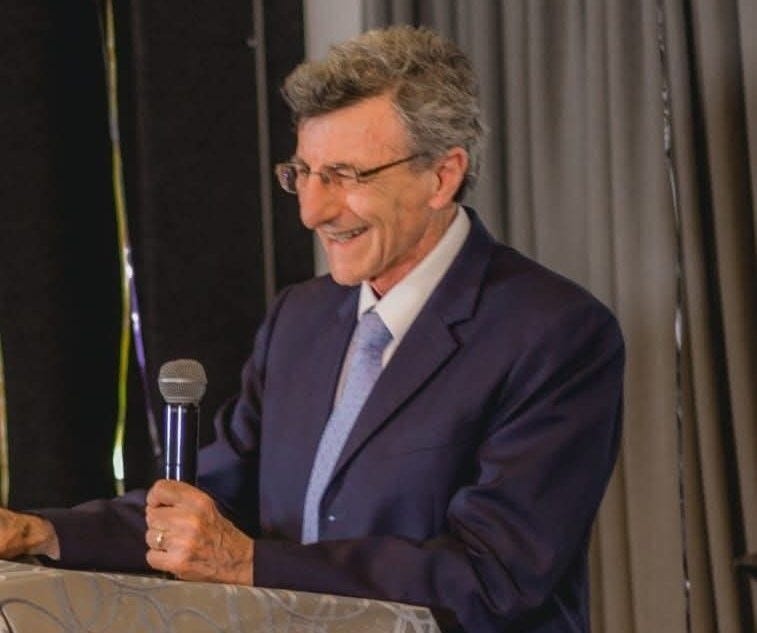
Following the death of John Pampallis, one of South Africa’s most respected educationists, on 3 June, Buti Manamela, the country’s minister of higher education and training, led the outpouring of tributes.
“During the darkest days of apartheid, John chose the path of activism through education. He spent years in exile, most notably dedicating eight years to teaching young freedom fighters at the ANC’s Solomon Mahlangu Freedom College (SOMAFCO) in Tanzania. As a historian, he didn’t just document South African history; he helped rewrite its future,” Manamela said in a statement.
Praising Pampallis’ intellect, integrity, and commitment to social justice and his passion for youth development, Manamela added that he had played a pivotal role in the transition from apartheid to democracy.
Pampallis, who served as a special adviser to former higher education minister, Dr Blade Nzimande, was also instrumental in supporting the transition when the Department of Education becoming two departments, one for basic education and the other for higher education and training, including leading the development of the White Paper on Post-School Education and Training.
Architect of democratic education policy
Returning from exile to South Africa in the early 1990s, Pampallis became one of the key intellectuals shaping the new education system.
He served as the research coordinator and, later, the director of the Education Policy Unit at the University of Natal (now the University of KwaZulu-Natal), contributing significantly to the design of post-apartheid schooling governance. He was a prominent member of the Hunter Commission, which laid the groundwork for the South African Schools Act of 1996.
In 1997, he became the director of the Centre for Education Policy Development (CEPD), where he led major national research programmes on human rights, democracy, rural education and social justice.
His clarity of thought, colleagues say, helped resolve some of the most complex policy challenges of the early 1990s. His work on school governance is widely regarded as foundational.
His publications, including Foundations of the New South Africa, The State, Education and Equity which he co-wrote, and Private Schooling: Problems of Elitism and Democracy in Education, remain touchstones in the field.
A gentle giant of ideas
Tributes from colleagues and comrades paint a portrait of a man who combined intellectual depth with humility and warmth.
Beyond policy and scholarship, Pampallis believed deeply in nurturing the next generation of education scholars. At the CEPD he established the Capacity Building Internship Programme, which trained young researchers in education and social transformation. Many of its alumni now hold senior positions in academia, government and civil society. He also initiated the Solomon Mahlangu Memorial Lecture, honouring the ideals of freedom, equality and education for all.
Phumelele Ntombela-Nzimande recalled that she met the “late Comrade JP” in 1988 after returning from Patrice Lumumba University in Moscow. “I had met him in a political discussion meeting at SOMAFCO, and he was keen on my take on the then Soviet policies of perestroika and glasnost. He was an historian and teacher, whereas I had just got my PhD majoring in history, Russian and philosophy.”
In a tribute, Miriam Saohatse said Pampallis was not only a teacher, but a principled educator, an anti-apartheid activist, and “a quiet servant of the liberation struggle … Through his teaching, he helped students understand their history, identity, and responsibility for a future democratic South Africa.”
Saohatse said those who knew ‘JP’ will remember his calm and dignified manner. “He was collected, accommodating, and respectful. Even in challenging circumstances, he did not need to raise his voice to make his point. His quiet authority, patience, and fairness earned him the respect of students and colleagues alike.”
Educationist Linda Chisholm described John as a wonderful human being, “a real mensch – honest, direct and warm.
“He also had a very clear mind and was able to separate the wood from the trees, and helped one to see with clarity the simple and practical solution to seemingly intractably complex problems. His work around school governance in the early ’90s really exemplified this. He really helped resolve some very knotty issues with his practical, down-to-earth style and analysis of the real issues. His work and contribution around history was huge and deserves a proper assessment and compilation.”
Chisholm added that Pampallis “wasn’t just a colleague, though, with whom one could talk about everything, but a very dear friend”.
John ‘saw’ people
According to Professor Sarah Mosoetsa, Pampallis was one of those rare individuals whose influence extended far beyond the formal positions he occupied, because he believed deeply in the transformative power of education and devoted his life to building a more democratic, equal, and humane society.
Principled and firm in his convictions, Mosoetsa said, he was never afraid to speak truthfully, always doing so with integrity, wisdom, and a profound sense of responsibility.
“Our connection grew even closer after his retirement. We met regularly, often at the same place and the same table, to discuss developments in higher education, research, public policy, and the state of our nation. Those conversations became a cherished part of my life. I valued, not only his wisdom and insight, but also his ability to listen. He had a remarkable gift for helping others navigate complexity without ever imposing his views. He challenged, encouraged, and guided with humility and generosity,” she added.
Mosoetsa said he treated everyone from nurses to car guards with respect, recognising the humanity in everyone he met and treated people, regardless of status or circumstance, with the same respect, dignity, and kindness.
“My visits to him during his illness [pneumonia] were among the most humbling and heart-warming experiences of our connection. Despite his physical challenges, his dignity, grace, and concern for others never diminished.
“Mandla [Radebe] and I visited him as often as we could, and our final visit to his home was on the last day of his life. He was at peace. He smiled warmly, and in that moment, I saw the same gentle strength, kindness and wisdom that had defined him throughout his life. John saw me. John saw people,” she said.
University of Johannesburg professor Mandlakhe Radebe said Pampallis was a decent human being with a good heart and his legacy will live on through the many lives he touched.
Former Nelson Mandela University vice-chancellor Derrick Swartz said he would cherish his memories of working with Pampallis.
“A humble, gentle and generously spirited human being, a friend and comrade with whom I shared many philosophical and intellectual, and human truths. These truths are sadly diminished today in a world marked by the most craven savagery and violation of human dignity and freedoms, but we must fight for an equal, just world like John did throughout his life. Hamba kahle, Comrade John.”
Pampallis was 77 years old. He is survived by his wife Karin, his daughter Irene, his brother, Michael, and his sister, Maria Shiakallis.
© Higher Education Media Services