


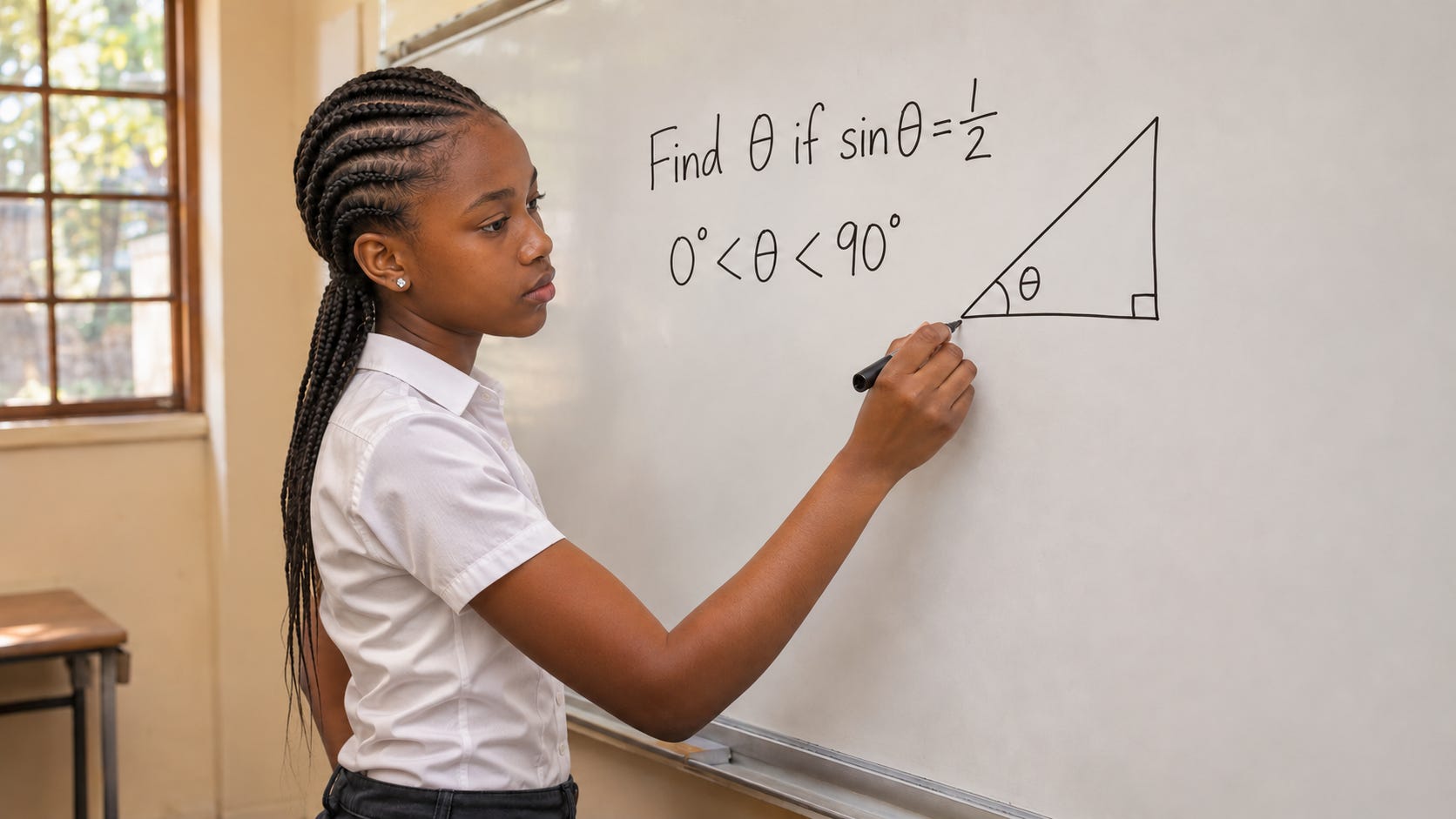
In the 2025 matric exams, only about one in three candidates wrote Mathematics. Basic Education Minister Siviwe Gwarube said in October that competition over matric pass rates had encouraged some schools to steer learners towards Mathematical Literacy.
A learner who follows that advice can earn a bachelor’s pass and still find that the degree they want requires Mathematics. That is why schools need to consider how their advice in Grade 9 could narrow a learner’s study and career options.
Strategic ‘culling’ and school incentives
Pass-rate pressure can influence whether learners progress to Grade 12 as well as which subjects they take. In her October address, Gwarube described a “collective obsession with the matric pass rate”.
She said competition among schools, districts and provinces had led to some learners being held back in Grade 11 when they should have progressed to matric, a practice referred to as ‘culling’.
“She also pointed to schools steering learners towards Mathematical Literacy to improve pass rates. Gwarube said provincial performance would increasingly be assessed using a wider set of measures, including how many learners stay in school and how many take and succeed in gateway subjects.
A school can have sound educational reasons to recommend Mathematical Literacy. It may suit a learner’s interests and plans, especially if difficulties with Mathematics persist after support.
The problem comes when the school’s pass rate carries more weight in that recommendation than the learner’s options after matric. A pass rate records how the year’s candidates fared. It tells us little about which study options they can pursue.
Prof Linda Meyer, managing director of Rosebank International and Visiting Professor at Nelson Mandela University, argues that Mathematical Literacy should remain a “purposeful choice for pupils”. Before recommending Mathematical Literacy, schools can explain what the learner would need to improve in Mathematics and what support is available.
How confidence and identity shape the choice
Mathematics is often treated as a subject you either have a knack for or you don’t. A string of disappointing marks can turn “I’m struggling with algebra” into “I’m just not a maths person”. Once that label sticks, it can affect how willing learners are to attempt harder problems, ask for help or keep going when the answer takes time.
The belief that Mathematics belongs to the academically gifted can make learners see difficulties they encounter from Grade 7 to Grade 9 as a sign that they lack ability, says Meyer. “As the work shifts from arithmetic towards algebra and more abstract reasoning, learners may hit difficulties they have never encountered before. Students with less confidence are more inclined to give up, especially if there is a lack of support from their teacher.”
The Trends in International Mathematics and Science Study (TIMSS) assesses learners’ achievement in mathematics and science every four years. In 2023, it also asked learners to respond to statements about their maths ability.
Among South African Grade 9 learners, 10% were classified as very confident and 55% as not confident. Very confident learners averaged 451 points in Mathematics, compared with 382 for those who were not confident.
A 2025 review of research also links confidence in Mathematics with achievement. That relationship can work both ways. Repeated difficulties can wear down confidence, and learners who avoid unfamiliar problems may get less practice with the skills they need to improve
“A learner’s sense of being ‘bad at maths’ should not, on its own, decide the subject choice,” says Meyer.
How to decide between Mathematics and Mathematical Literacy
In Mathematics, often called pure maths, learners work with algebra, geometry and trigonometry. In Mathematical Literacy, learners use maths to compare prices, draw up budgets and interpret graphs. The choice matters after matric, when the subject a learner took can affect which programmes they’re eligible to apply for.
Mathematics is a gateway subject for many programmes in engineering, science, commerce, finance and the health sciences. Some law, humanities and education programmes accept Mathematical Literacy. Requirements vary by institution and qualification. A programme that requires Mathematics may set a minimum mark well above a matric pass. For learners who are still deciding what to study, taking Mathematics can keep more options open.
Gaps in earlier Mathematics work can make new topics harder to grasp. A learner who is passing comfortably has good reason to continue, while one who keeps struggling despite support may find Mathematical Literacy a better fit. Use the marks to ask where the learner is struggling and whether those difficulties can be addressed.
Meyer says learners need guidance on what each subject could mean for them before they make their choice. Learners can start by picking two or three programmes that interest them and checking the subject requirements, minimum marks and admission points for each. Families can then ask the Mathematics teacher to explain how the learner’s results across Grades 8 and 9 inform the school’s recommendation, which topics need attention and what support the school can offer. They can also agree on when to review the learner’s progress.
What if the form has already gone in?
If a learner has already selected Mathematical Literacy and is reconsidering, families can ask the grade head or guidance counsellor whether the school can review the choice before Grade 10 starts and when it needs a decision. It helps to bring recent assessments and the admission requirements for any programmes the learner is considering. If a switch is possible, ask what work the learner would need to catch up on and what support the school can offer.
Once Grade 10 has begun, the national policy on subject changes allows learners to change up to two subjects by the end of the second term and before 30 June. In Grade 11, the regular deadline is before 31 March. In both grades, changes require the principal’s approval.
It’s worth speaking to the school early. The timetable and class sizes can affect whether a switch is practical, and starting sooner gives the learner more time to catch up.
When the choice is limited
For some learners, the choice is already limited by what their school offers. A Department of Basic Education presentation identified 462 schools that offered Mathematical Literacy as their only option, with neither Mathematics nor Technical Mathematics available.
Even where Mathematics is offered, gaps in numeracy can build up from the early grades. Large classes and limited access to specialist teachers can make it harder to spot those gaps and give learners the support they need to catch up.
Meyer calls for better training and support for maths teachers at every stage of schooling so they can spot and address difficulties early. By the time the Grade 9 form comes home, learners should understand what each subject means for their study options after matric and have had a fair chance to develop the skills to choose between them.
Where both subjects are offered, schools should look past the pressure to protect their matric pass rates and recommend the subject that best serves each learner’s interests.
©Higher Education Media Services.