


South Africa doesn’t have a mentorship shortage. If anything, there’s no lack of people willing to offer advice. What we do have is a shortage of people prepared to genuinely invest — to open up their world, share their networks, and back someone who doesn’t yet have the access to back themselves.
That distinction matters more than we often admit.
Advice is easy to give. What truly alters the course of a career — or a life — is far more specific: someone with influence choosing to use it on your behalf. Someone who brings you into the room, positions you as capable before you’ve fully proved it, and holds you to a standard that stretches you until you grow into it.
Most people who reach meaningful leadership positions can point to one or two individuals who made that possible. Not institutions. Not programmes. People.
The real question, particularly for those who’ve already made it, is how deliberately — and how often — they’re playing that role for someone else.
In my work as a coach, I see the same pattern repeatedly. Talented people stall. Not because they lack intelligence or work ethic, but because they don’t have a map for the environments they’re trying to enter.
They hold the qualifications, yet hesitate to fully step into them. They find themselves in rooms they’ve earned, and still feel as though they don’t quite belong.
That gap is rarely about competence. More often, it comes down to exposure, access, and whether anyone has ever truly backed them.
Formal education doesn’t close that gap. A postgraduate degree gives you knowledge, but it doesn’t teach executive presence, the instinct to read a room, or the composure that comes from navigating high-stakes environments alongside someone who models it well.
Those things are transferred person to person, through sustained, intentional relationships. There’s no shortcut, and no curriculum that can replicate it.
I’ve seen this in my work, and I’ve lived it myself.
I grew up in Soweto, moving between under-resourced township schools before eventually entering better-resourced ones, where it quickly became clear how much ground I had to cover. I repeated grades. My confidence took strain. What I lacked wasn’t ability — it was exposure.
The kind that quietly teaches you how to carry yourself in environments you’ve never seen up close. I built up qualifications, entered the working world, and still walked into boardrooms feeling as though I was performing confidence rather than owning it.
What changed that wasn’t another qualification or course. It was one person, early in my career, who chose to open their world to me — who shared their network, put me in front of rooms I hadn’t yet earned on paper, and held me to a standard I had to grow into. That relationship shifted the material direction of my life in ways I’m still building on.
I share this not to romanticise it, but because it’s replicable. What that person did wasn’t extraordinary in terms of effort or resource. It was intentional. And right now, intention is what’s in shortest supply.
This is where many leaders hold themselves back. Mentorship — especially across the lines of race, class, and professional networks that still shape much of South African working life — is often seen as generous, admirable, but ultimately optional.
It isn’t.
When you bring a capable person into your world, you don’t just change their trajectory — you expand your own. You build trust across networks that would otherwise remain closed.
You develop people who will, in time, create opportunities for others. The return is real, and it compounds — across organisations, industries, and ultimately an economy that cannot afford to leave talent on the table.
The opportunities many leaders are looking for are often just one or two relationships away. But those relationships require a willingness to move beyond the familiar — beyond the networks you already know, the spaces where you’re comfortable, the people who already look and sound like you.
In the leadership and networking spaces I facilitate, I often come back to a simple idea: when familiarity grows across difference, trust follows. And where there is trust, meaningful collaboration becomes possible. That’s not idealism — it’s how healthy ecosystems function.
South Africa doesn’t need more conversations about transformation. It needs more people practising it, one deliberate relationship at a time.
Right now, somewhere in this country, there’s someone with the drive, ability and hunger to succeed — but they’re stuck, because no one with influence has chosen to back them.
Multiply that across thousands of people, across years, and the cost becomes impossible to ignore. It shows up in businesses that never scale, leaders who never emerge, and potential that either leaves or never fully materialises.
This kind of investment works. The harder question is whether you’re doing it — and whether you’re doing it with enough intention to truly make a difference.
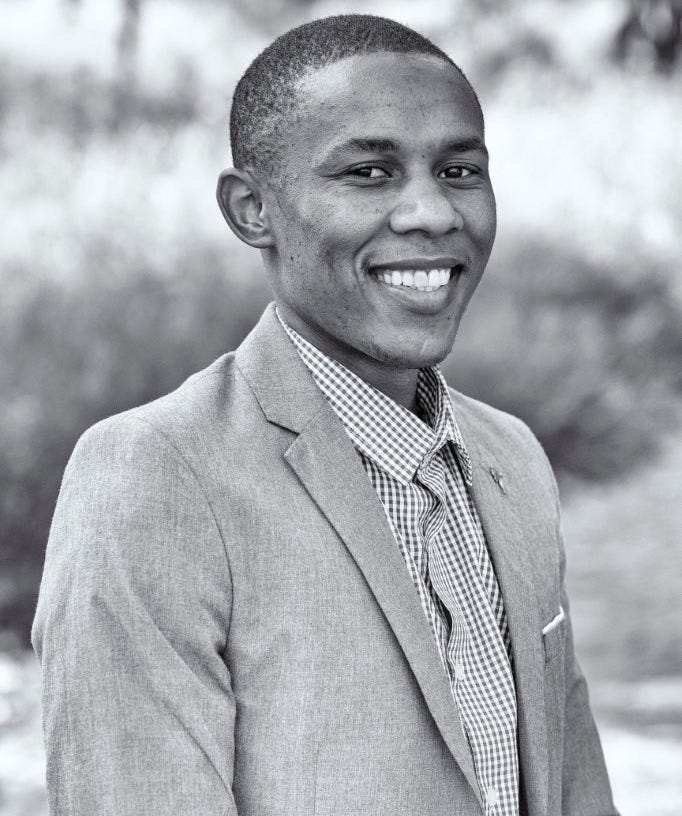
Sakhile Mkwanazi is a coach at Grow.
©Higher Education Media Services.