


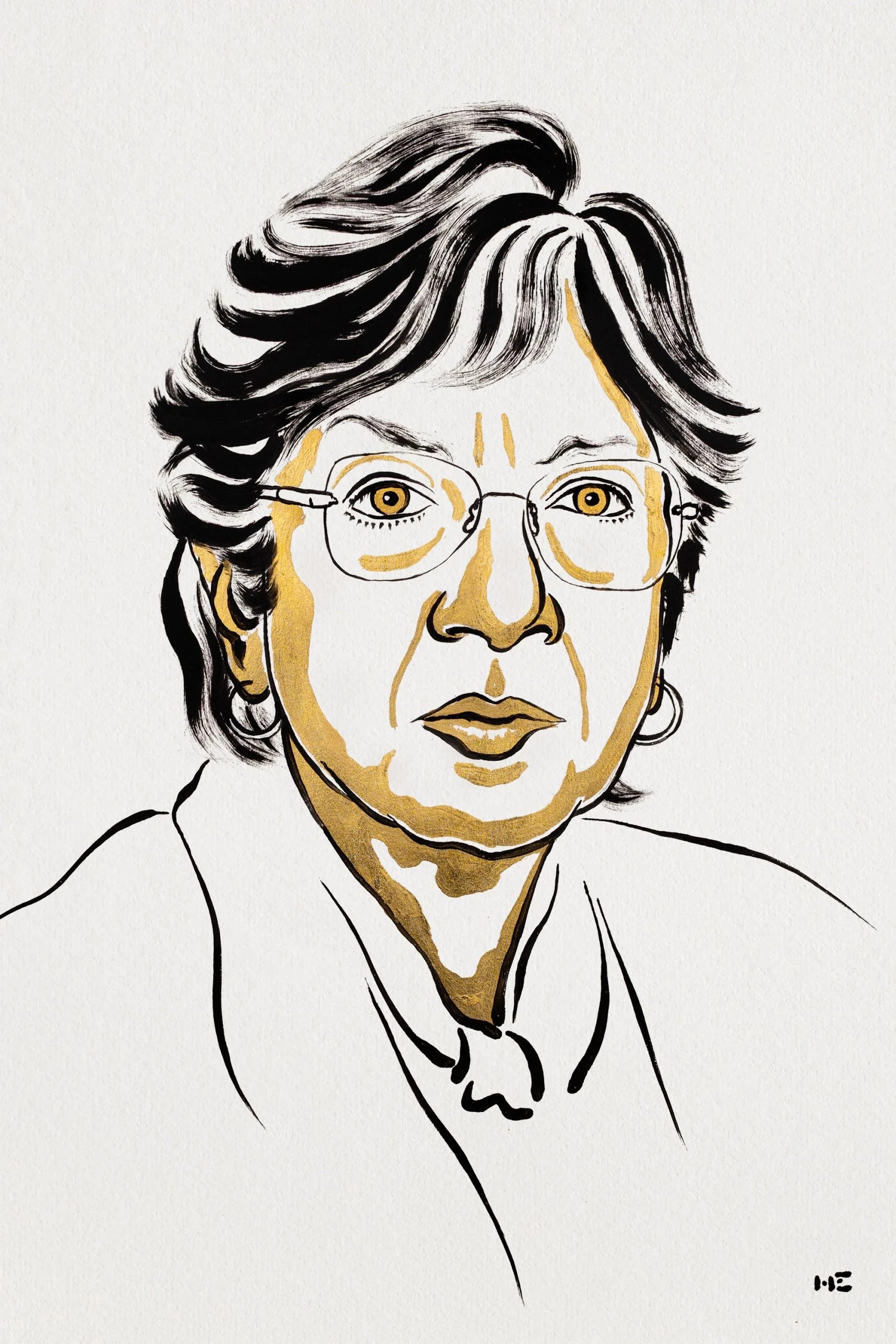
South African jurist and former United Nations human rights chief Navanethem “Navi” Pillay has been awarded the 2026 Nobel Peace Prize, with the Norwegian Nobel Committee praising her decades-long work advancing international law, human rights, and accountability for some of the world’s gravest crimes.
Announcing the award on Friday, the committee said Pillay had shown “exceptional courage and integrity” in helping build a more comprehensive global legal order and had been instrumental in ensuring that war crimes, crimes against humanity and genocide are prosecuted.
The Durban-born lawyer, who grew up under apartheid, was recognised for a career spanning national and international courts, where she helped shape legal precedents that continue to influence international justice.
“Navi Pillay’s commitment to universal legal principles and her firm moral compass are constants in a long career,” the Nobel Committee said.
Pillay became one of South Africa’s pioneering female lawyers during apartheid, representing anti-apartheid activists, including figures associated with the liberation struggle. Her legal career later expanded to the global stage, where she served as a judge at the International Criminal Tribunal for Rwanda (ICTR), the International Criminal Court (ICC), South Africa’s High Court and as the United Nations High Commissioner for Human Rights.
More recently, she chaired the UN Independent International Commission of Inquiry on the Occupied Palestinian Territory and currently serves as a judge at the International Court of Justice in proceedings concerning allegations of genocide against Myanmar.
The Nobel Committee said her work demonstrated how legal institutions can help prevent violence and hold perpetrators accountable.
“In historic international court cases, she has shown that legal measures can help prevent acts of war and violence,” the committee said.
Among the achievements highlighted by the Nobel Committee was Pillay’s role in landmark ICTR rulings that established rape and sexual violence as crimes against humanity and, in certain circumstances, acts of genocide. The committee also noted her contribution to another legal breakthrough in which incitement to commit genocide through propaganda was successfully prosecuted.
The award comes as the international legal system faces increasing strain from geopolitical conflicts and challenges to multilateral institutions.
The Nobel Committee warned that the rules-based international order was under pressure from a growing shift toward power politics and away from legal frameworks designed to resolve disputes peacefully.
“At a time of existential challenges, including more wars and conflicts than the world has seen in a long time, international law is no longer just a supplement to peace and security. It is an absolute necessity,” the committee said.
The committee said the prize was intended as a reminder that both national and international legal systems remain essential for peace, justice and stability.
“Peace requires justice,” it said. “History has shown that a world operating without the rule of law is unjust, unwise and inhumane.”
The Nobel Committee further described Pillay as one of the foremost defenders of international legal principles of her generation, saying her work had strengthened cooperation between nations by promoting legal mechanisms as alternatives to conflict and violence.
For South Africa, the award represents global recognition of one of the country’s most distinguished legal minds, whose journey from apartheid-era Durban to the highest levels of international justice has made her a symbol of the struggle for human dignity and accountability.
In its citation, the Nobel Committee said Pillay’s lifelong commitment to justice and human rights offered “hope and inspiration to all who seek to bring about a more peaceful world”.
The Nobel Peace Prize, first awarded in 1901, marks its 125th anniversary this year. Pillay joins a distinguished list of laureates whose work has advanced peace, human rights and international cooperation.
South Africa now has five Nobel Peace Prize recipients, following the award to Navi Pillay in 2026.
South African Nobel Peace Prize recipients:
Chief Albert Luthuli (1960)
Awarded for his non-violent struggle against apartheid.Arch BishopDesmond Tutu (1984)
Recognised for his role as a unifying leader in the non-violent campaign against apartheid.Nelson Mandela (1993)
Shared the prize for helping bring about the peaceful end of apartheid and laying the foundations for democracy.F.W. de Klerk (1993)
Shared the award with Nelson Mandela for their joint efforts in the peaceful transition to democracy.Navi Pillay (2026)
Awarded for her efforts to promote peace and international law through her work as a jurist, human rights advocate and international judge. Notably, Pillay is the first South African woman to receive the Nobel Peace Prize.
©Higher Education Media Services.