


Around one million South African children aged three to five still miss out on early learning, leaving many, particularly from poorer communities, at a developmental disadvantage before they even enter primary school.
President Cyril Ramaphosa acknowledged that the country “is starting late in building an early childhood development system,” in his keynote address to the Bana Pele Leadership Summit on Monday. “Yet starting late is better than never starting at all. But it should not mean starting slowly.”
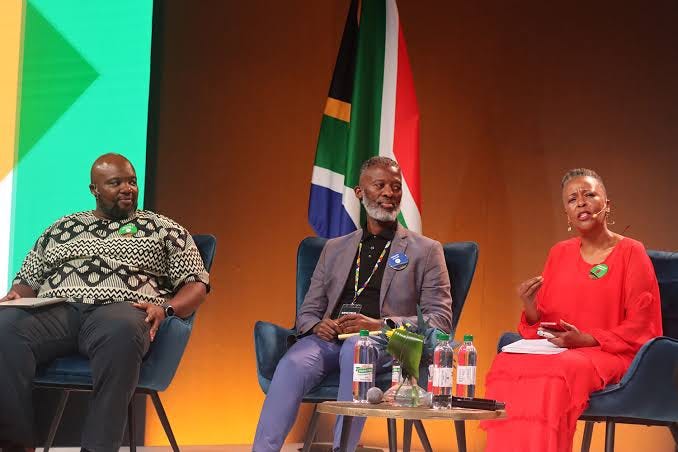
The two-day Summit brought together over 150 leaders from government, business, civil society and community organisations to address a shared challenge: how to close the development gap and ensure every child has access to quality early learning by 2030. This includes all types of preschools, including home-based and mobile programmes designed to reach vulnerable children.
The President told attendees: “We must ensure that every child in South Africa, regardless of where they are born or the circumstances of their family, has the opportunity to develop their full potential.”
At the heart of that effort is the Bana Pele Shared Blueprint, the national roadmap guiding coordinated action across the early learning system. The Summit focused on what has changed since the inaugural gathering in 2025, where progress is still falling short and what government and its partners must do differently to reach children at scale.
There are already signs of progress. The daily Early Childhood Development (ECD) subsidy has increased from R17 to R24 per child, while the subsidy budget has more than doubled from R3.43 billion in 2024/25 to R6.49 billion in the current financial year.
The number of children receiving the subsidy has risen from just over 748,000 to 954,700, meaning more than 200,000 additional children are receiving support compared with two years ago.
The R496 million ECCE Outcomes Fund is creating 115,000 additional early learning spaces for children in South Africa’s most rural provinces of KwaZulu-Natal, the Eastern Cape and Limpopo.
“A bigger budget is progress. A child actually reached is impact,” said Basic Education Minister Siviwe Gwarube. Referring to the roughly one million children still missing out, she added: “One million children not accessing any ECD programme is not a statistic we can become comfortable with. It is the distance we still need to cover.”
The challenge now is not simply to expand individual programmes, but to build a system that can reach children across the country.
South Africa has shown before that major national challenges can be tackled when government, business and other social partners align around a common purpose. The response to COVID and load-shedding showed what coordinated action can achieve when institutions move beyond their traditional boundaries and work together. The Bana Pele movement is looking to bring that same spirit of collective action to early learning.
Government has a central role to play in creating the right policies, funding and systems. But reaching every child will also depend on business, civil society, ECD practitioners and local communities bringing their own resources, expertise and influence.
“I think what’s really exciting about what we’re seeing in ECD is it’s the same circumstances that we’ve seen in successful partnerships in the past,” said Adrian Enthoven, Non-Executive Board Member, Business Leadership South Africa. “The private sector has got particular skills, capacity, capabilities, resources that it can bring, but so does civil society.”
Faith-based organisations and other social partners bring something equally important: trust, local knowledge and deep roots in the communities where they operate. They can help connect people to services, mobilise local support and ensure that solutions are shaped around the realities of each community.
“The faith community is at the centre of any community that you find in our country. It could be a village, it could be a township, it could be a suburb. There is a church, there is a mosque, there is a temple,” said Reverend Mzwandile Molo, General Secretary, South African Council of Churches. “Faith communities are not there to contest for popularity, they are there to serve the people.”
Minister Gwarube added in her address that a Blueprint only matters if it changes what happens beyond the page it’s typed on. The Summit concluded with delegates signing the Bana Pele Charter, setting out how different sectors of society will work together to accelerate progress towards universal access to quality early learning by 2030.
The Charter builds on the Shared Blueprint by turning its shared vision into practical commitments: to collaborate more effectively, design for scale, embrace diversity and strengthen the ability of those closest to children to solve problems in their own contexts.
To ensure those commitments translate into action, the Bana Pele Secretariat will develop and maintain a public dashboard to track progress and report to all signatories every quarter.
For more information and to follow the Bana Pele movement, visit: banapele.org
©Higher Education Media Services.