


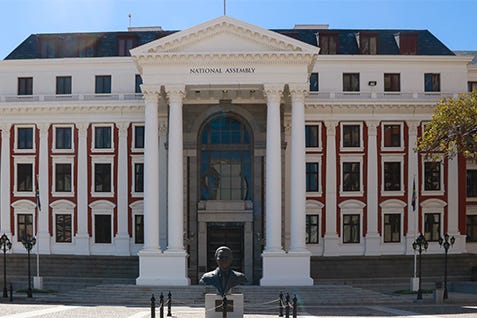
The Portfolio Committee on Higher Education and Training has expressed concern over the continued reliance of some South African public universities on foreign academics, particularly at professor level, despite years of government investment aimed at developing local academic talent.
The concerns emerged during a briefing by the Department of Higher Education and Training (DHET) to Parliament on updated figures relating to the employment of foreign academics across South Africa’s 26 public universities, as well as Technical and Vocational Education and Training (TVET) colleges and Community Education and Training (CET) colleges.
According to the DHET, South Africa’s higher education sector continues to position itself as a regional and global knowledge hub, with the recruitment of international academics viewed as an important strategy to strengthen research productivity, postgraduate supervision and international collaboration.
The department’s latest data shows that foreign academics employed at universities are predominantly drawn from elsewhere on the African continent, with Zimbabwean nationals accounting for 27% of the international academic workforce and Nigerians representing 14%. More than 61% of foreign academics hold doctoral qualifications, reflecting their concentration in senior academic and research positions.
However, Portfolio Committee Chairperson Tebogo Letsie said the figures raise serious questions about whether government interventions designed to build South Africa’s academic and research capacity are yielding the desired results.
“The committee is concerned that, despite substantial public investment in higher education, research development and academic support programmes, some institutions continue to employ a disproportionately high number of foreign academics at senior academic levels,” Letsie said.
He argued that government has invested heavily over the past two decades in programmes designed to expand the pool of South African academics, yet the representation of local scholars in senior academic positions remains a concern.
“Twenty years later, the numbers have not improved. Government has spent a lot of money, yet there are no tangible results from the investments made. We need to ask whether we have produced enough South Africans to occupy these positions,” he said.
The committee highlighted data presented by the DHET which showed that at some universities, including the University of Cape Town (UCT), the number of foreign national professors exceeds the combined number of African, coloured and Indian professors. Similar trends were noted at the universities of Pretoria, Free State and Venda.
Letsie stressed that the committee’s concerns should not be interpreted as opposition to internationalisation or as xenophobia, but rather as part of a broader transformation and skills development agenda.
“To use UCT as an example, 39.7% of professors are white, 39.3% are foreign nationals, and only 22.6% are African, Indian and coloured professors combined. These statistics should shock all of us,” he said.
The DHET acknowledged challenges in collecting accurate information on foreign academic appointments, including gaps relating to permanent residency status and critical skills visas. The department said improvements to the Higher Education Management Information System (HEMIS) are being planned to enable more reliable monitoring and reporting.
Among the department’s proposed interventions are the introduction of mandatory reporting of staff nationality, visa status and employment category; closer collaboration with Universities South Africa (USAf) and the Department of Home Affairs; and the establishment of a standardised framework governing the employment of foreign academics.
The framework, expected to be presented to stakeholders later in 2026, will include provisions on skills transfer, local succession planning and alignment with employment equity requirements.
The briefing also revealed that 265 foreign nationals are currently employed as academics in TVET colleges, with most serving at lecturer level and many having acquired South African citizenship or permanent residency. A further 31 foreign lecturers are employed across five CET colleges.
While acknowledging the contribution of international academics to research excellence and knowledge production, Letsie said Parliament would continue monitoring the issue closely.
The committee has resolved to revisit the matter during the final quarter of the year as part of its oversight responsibilities. Letsie further noted that at least four higher education institutions currently employ more foreign academics than black South Africans in certain academic categories, a trend that the committee believes requires urgent attention.
The parliamentary engagement formed part of a broader review of DHET’s fourth-quarter performance for the 2025/26 financial year, during which the department reported achieving 82% of its annual performance targets and spending 99.93% of its R142 billion budget allocation.
©Higher Education Media Service.