


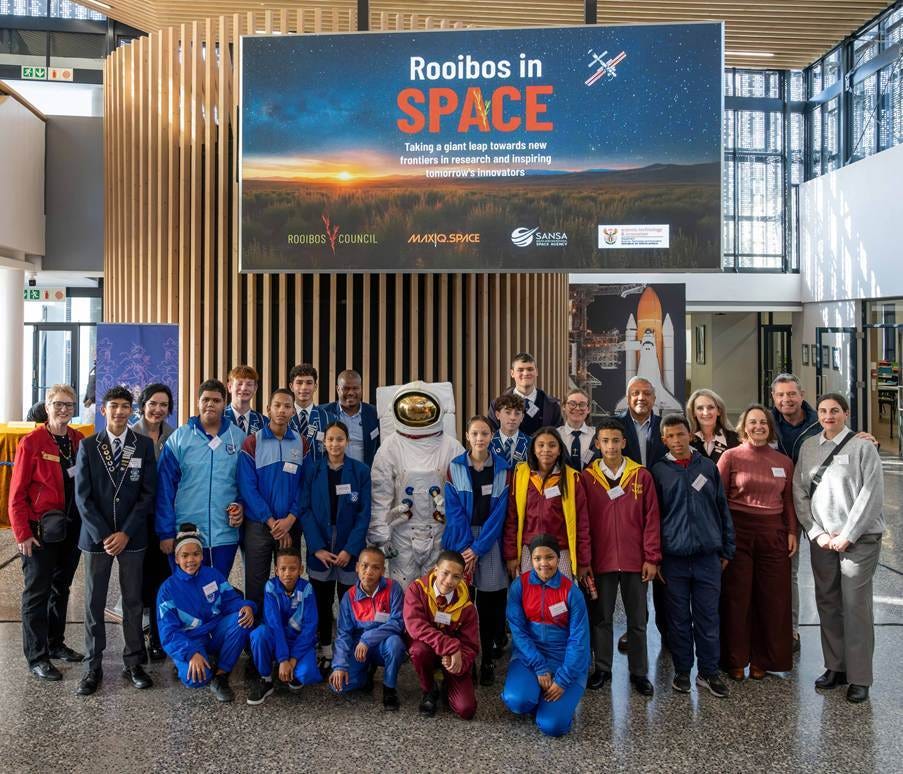
South Africa’s iconic Rooibos plant is heading to the International Space Station (ISS) as part of a new education‑driven research initiative linking agriculture, space science and classroom learning. The project, led by the South African Rooibos Council (SARC) in partnership with MaxIQ Space and supported by the South African National Space Agency (SANSA), will see Rooibos seeds launched to the ISS in October, where they will form part of a global wave of plant‑growth experiments in microgravity.
With long‑duration missions such as NASA’s Artemis programme accelerating interest in space‑based food systems, Rooibos joins crops like lettuce, peas and soybeans already tested in orbit to understand how plants respond to altered gravity and environmental stress. These studies are shaping future life‑support systems for deep‑space travel while offering insights that strengthen agricultural resilience on Earth.
SARC Director Dawie de Villiers said the mission reflects the industry’s commitment to innovation and scientific literacy. “Rooibos has long been part of South Africa’s agricultural heritage. This project places it within a broader scientific context, where plant biology, space research and education intersect.”
The initiative includes an extended STEM programme for participating schools, introducing learners to space science, plant biology and sustainable agriculture through hands‑on experimentation. MaxIQ Space co‑founder Judi Sandrock said the project gives learners access to “authentic scientific learning experiences” that build data analysis skills and an understanding of real research processes.
To broaden national participation, learners across South Africa will be invited to design the official Rooibos in Space mission patch during July and August.
At the launch, Western Cape Education Department Deputy Director‑General Bertram Loriston emphasised the importance of cross‑sector partnerships in expanding STEM opportunities, while SANSA’s Thandile Vuntu highlighted how space science increasingly shapes daily life and future career pathways.
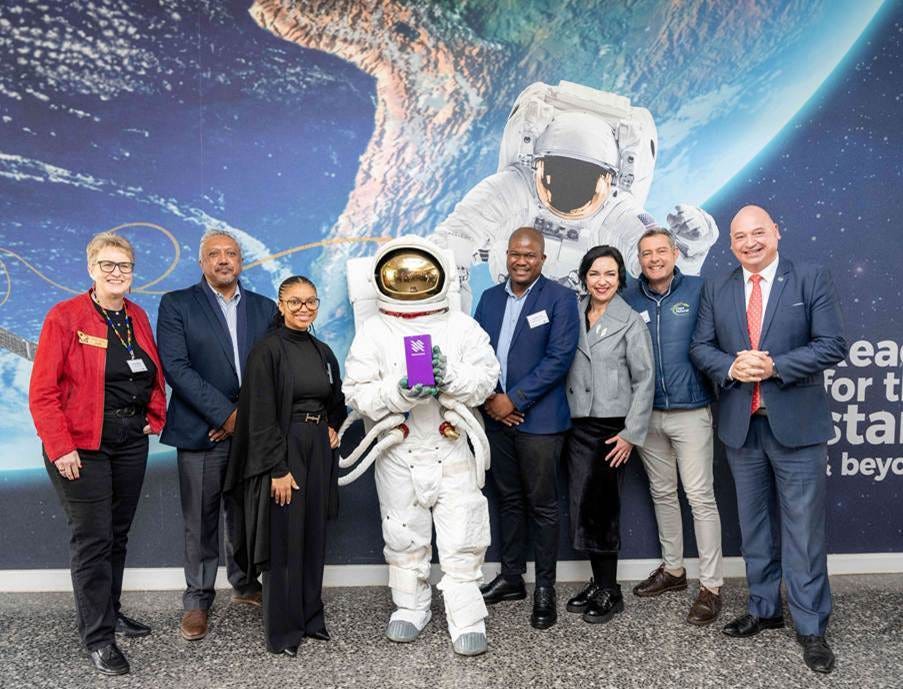
UCT astrophysicist and SARAO postdoctoral fellow Dr Kelebogile Gasealahwe shared her personal journey from Kimberley to cutting‑edge research, encouraging learners to stay curious and open to diverse STEM careers. She also underscored the role of facilities like MeerKAT in strengthening South Africa’s global scientific contribution.
Public engagement will continue as the project moves toward its ISS flight, with updates, learner activities and mission milestones shared via www.sarooibos.co.za, @RooibosCouncil on Facebook and @SARooibosCouncil on Instagram.
©Higher Education Media Services.