


Higher education leaders from across the Southern African Development Community (SADC) have taken a significant step towards strengthening entrepreneurship education through the UNIICo-Create project, which aims to develop and implement a shared entrepreneurship curriculum for undergraduate students across the region.
According to Professor Muhammad Nakhooda, Biotechnology Teaching and Learning Coordinator at the Cape Peninsula University of Technology (CPUT), the Technological Higher Education Network South Africa (THENSA) UNIICo-Create project is focused on creating an entrepreneurship module that can be adopted by universities across diverse SADC countries.
“The entrepreneurship curriculum we are co-creating will primarily target undergraduate students throughout the SADC region,” said Prof Nakhooda. “This means the module must respond to very diverse contexts, cultures and university systems. For that reason, a collaborative development process is essential. If we do not build it together, the project risks losing both its relevance and its ability to be successfully implemented.”
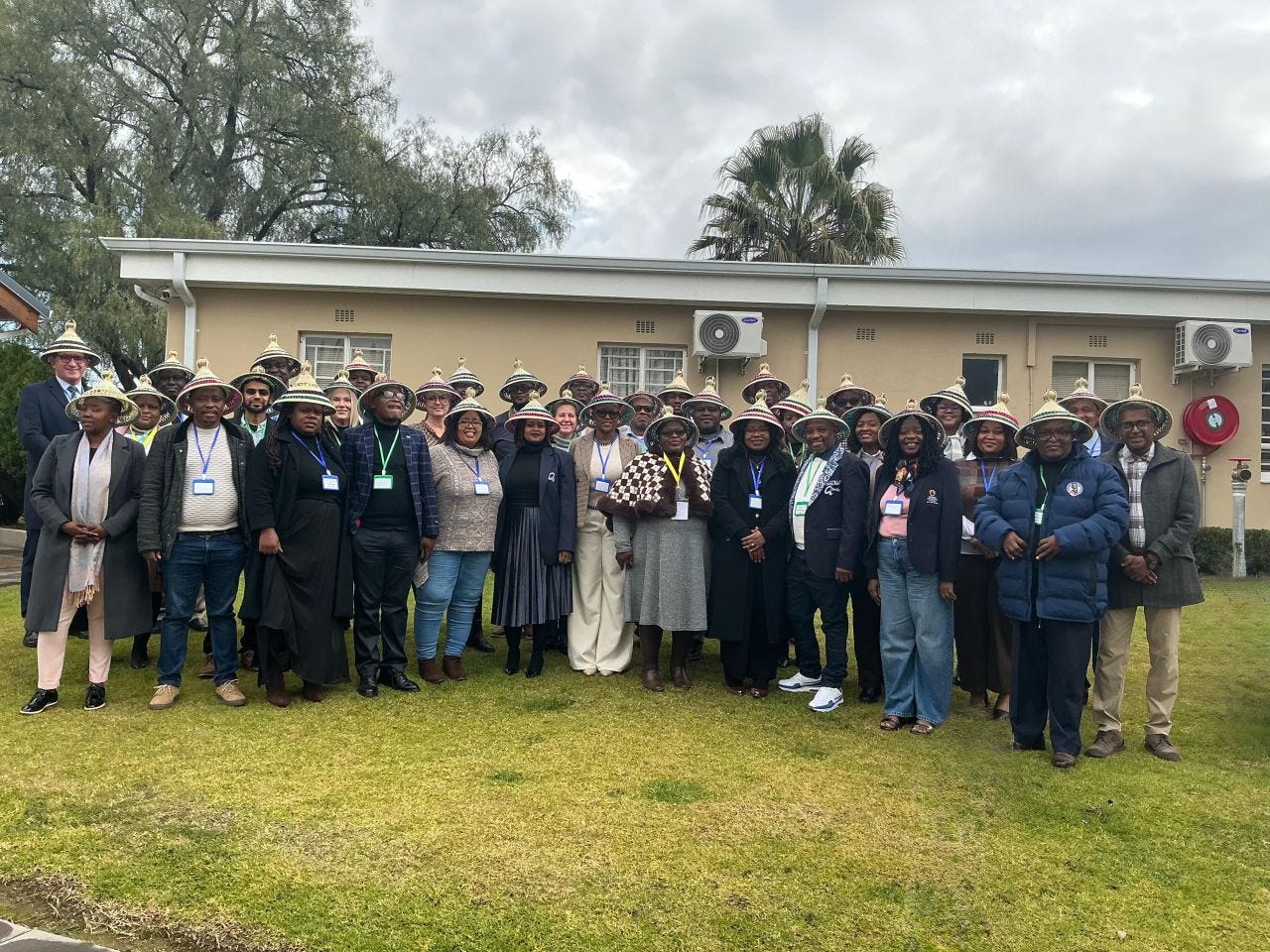
The recent UNIICo-Create workshop brought together academics and stakeholders to finalise the joint entrepreneurship module and develop a pilot implementation plan that can be rolled out across participating institutions.
Prof Nakhooda believes the collaborative approach adopted by the project is both practical and groundbreaking.
“I think that the approach we are taking is the most reasonable and realistic one. It is also a method that has not been properly undertaken for the SADC region in the past,” he said.
He noted that while graduate employability remains a key focus for universities, entrepreneurship development has become equally important in preparing young people for an increasingly dynamic labour market.
“We, and all stakeholders who are interested in and benefit from the higher education sector, fully understand the critical need for entrepreneurship, in addition to graduate employability, which tends to dominate university objectives,” he said.
Prof Nakhooda added that the diversity of perspectives represented in the workshop would contribute to the development of a comprehensive and adaptable learning resource.
“The diverse views in the room, the varying contexts and the shared vision will be instrumental in developing a very holistic and synergistic module for our universities, which we intend to be plug-and-play,” he said.
Beyond curriculum development, the project’s success will depend on effective implementation across institutions. Prof Nakhooda emphasised that universities will need to leverage existing structures, resources and support systems to ensure the module translates into meaningful outcomes for students.
“The development of the module is only one, although major, part of this project,” he said. “Implementation will require our universities to draw on all of the relevant resources and structures in place to see this to fruition.”
He also highlighted the importance of cultivating entrepreneurial thinking as a core graduate attribute, regardless of a student’s field of study or career aspirations.
“Personally, I place value on developing entrepreneurial skills and a mindset of resilience as a critical learning outcome for all undergraduate students, irrespective of discipline, and regardless of whether students become entrepreneurs or not,” said Prof Nakhooda. “These are transferable skills that apply to all aspects of life and work, making them essential attributes for graduates.”
The UNIICo-Create initiative is expected to contribute to a more innovation-driven higher education landscape across Southern Africa, equipping students with the skills, adaptability and entrepreneurial mindset needed to succeed in a rapidly changing world.
©Higher Education Media Services.