


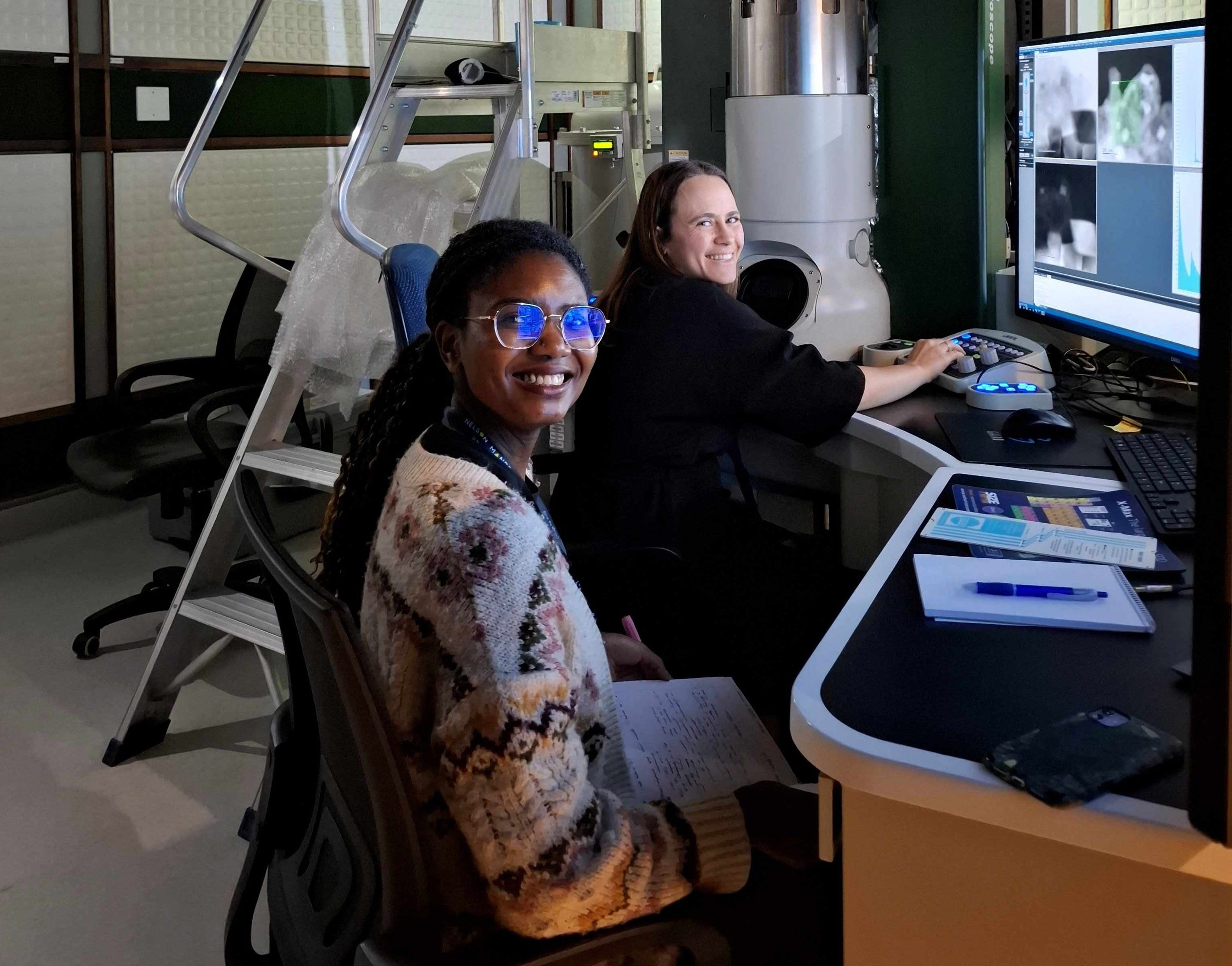
The inner universe is a world of atoms, molecules, crystals and microscopic structures where dimensions are measured in nanometres and picometres - or one trillionth of a metre.
It holds the answers to many of the greatest challenges of our time, including energy security, the just energy transition, ecosystem health, nanomedicine development, digital transformation, advanced manufacturing, semiconductors and quantum technology.
For 15 years the DSTI-NRF Centre for High Resolution Transmission Electron Microscopy (CHRTEM) in the Faculty of Science at Nelson Mandela University has been researching and finding answers to these challenges at the atomic and nanoscale.
Supported by the Department of Science Technology and Innovation (DSTI) , the National Research Foundation (NRF) and Nelson Mandela University, it is a critical national scientific facility for South Africa.
A delegation from the DSTI, NRF and Mandela University will join national and international scientists as well as industry and innovation leaders at the CHRTEM in mid-October for a three-day conference in celebration of its fifteenth anniversary.
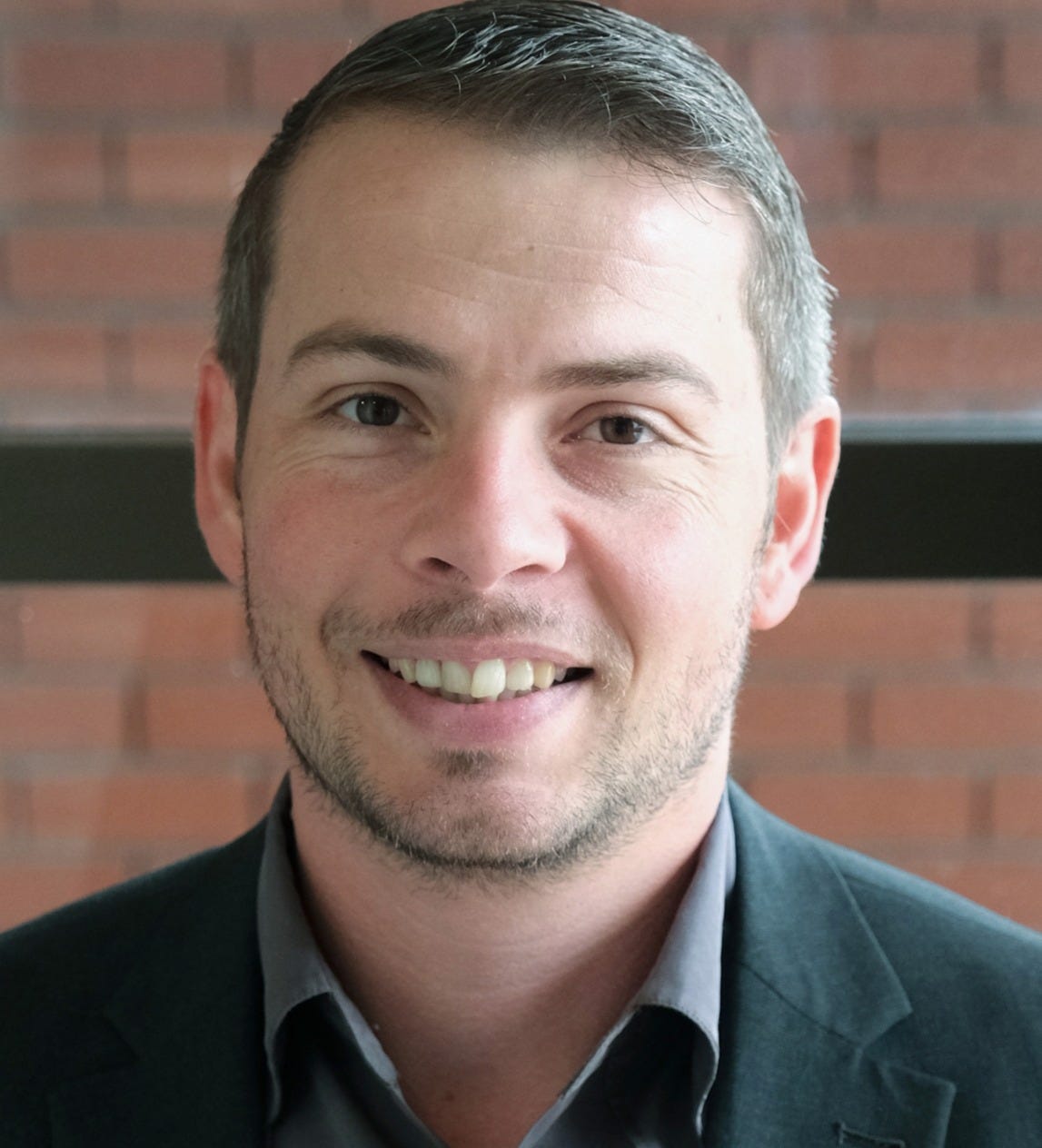
“CHRTEM houses the only aberration-corrected Transmission Electron Microscope (TEM) in Africa. The Centre also includes other microscopy infrastructure, all equipped with unique detector technology, essential for research, analysis and development at the atomic and nanoscale,” says CHRTEM Director, physicist Professor Jaco Olivier.
Almost every manufactured object, construct or technology in existence – from a power plant to a cooldrink can – has to have its properties investigated and assessed at this level.
“CHRTEM has substantial expertise across a broad range of electron microscopy, advanced quantitative imaging and materials science techniques, combining extremely sophisticated instrumentation with the scientific, technical and computational skills required to extract information from increasingly complex datasets,” Olivier explains.
The strategic importance of CHRTEM is ever-increasing as technologies become more dependent on materials engineered at smaller length scales and with increasingly complex structures.
“To understand how a material behaves, we have to understand what is happening within it, studying its microstructure, identifying any flaws, potential failure mechanisms and microstructural changes when subjected to extreme stimuli, such as intense heat or pressure,” Olivier explains.
“This is essential for the development of new products and processes, and to assess the performance, safety and life extension of materials. In a power plant, for example, microscopic degradation can dramatically affect safety, production and the continuity of electricity supply.”
Working closely with industry and research centres in South Africa and worldwide, CHRTEM’s team of predominantly physicists have logged more than 40 000 instrument hours for research and analysis, and over 1 000 postgraduate students have been supported through research and training.
“Our focus,” says Olivier, “is on enabling atomic-scale research and advanced materials analysis in support of the South African National System of Innovation, while simultaneously advancing scientific frontiers by continually pushing the boundaries of spatial resolution to reveal the fundamental structure of matter.
“Achieving this requires the increasing integration of advanced computational methods, including AI-driven data processing and computational imaging. These approaches unlock new scientific opportunities and equip the next generation of researchers with specialised skills in modern data analysis and computational techniques, preparing them for the demands of an increasingly digital and data-driven scientific landscape.”
CHRTEM is a platform through which researchers in South Africa partner in international science. Collaborations include the University of Oxford, Max Planck Institutes, Idaho National Laboratory, Oak Ridge National Laboratory, Ohio State University and the Joint Institute for Nuclear Research (JINR), among many others, as well as partners across the Global South.
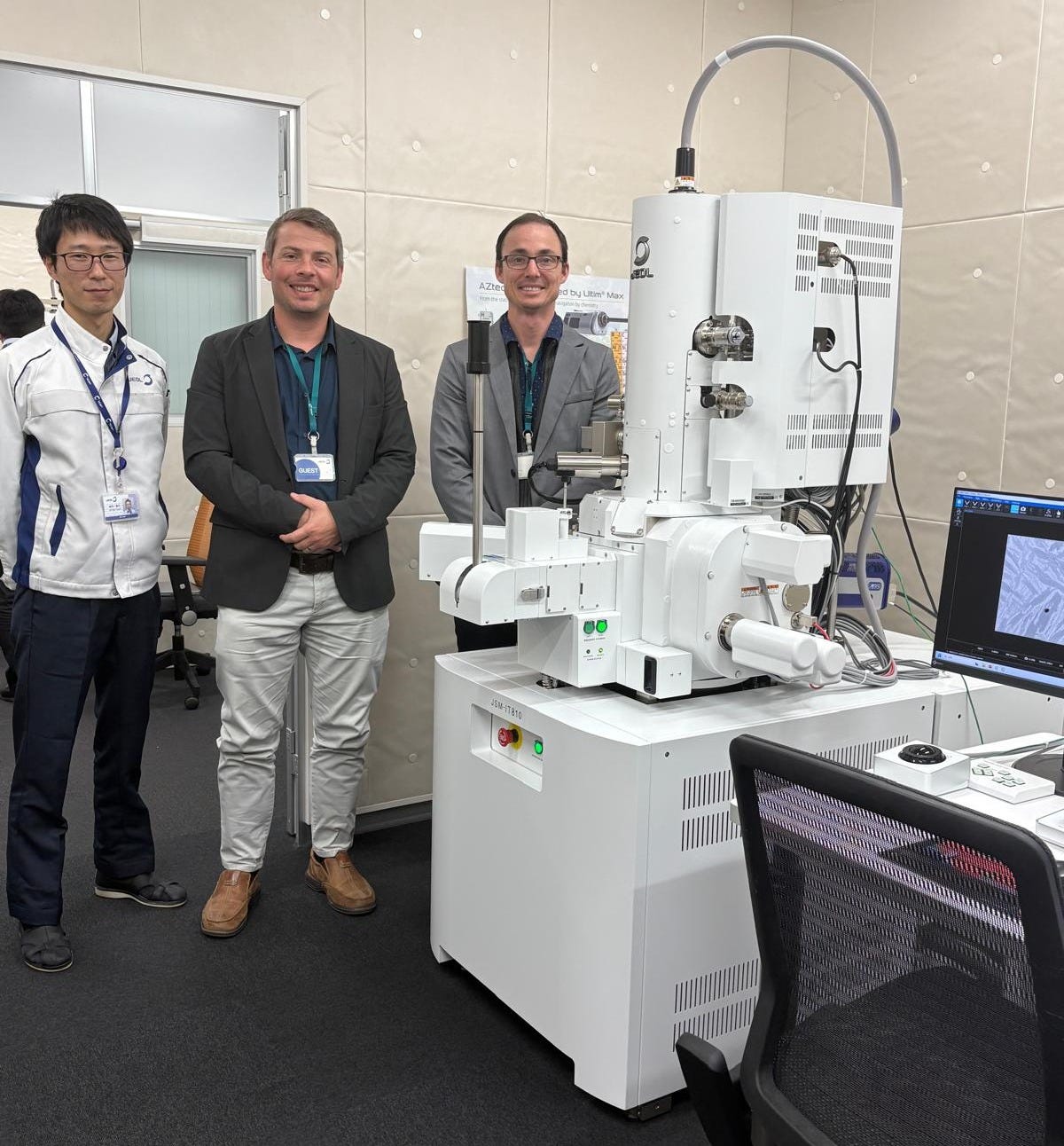
The mid-October delegation will experience the CHRTEM and all its capabilities and instruments, including the two new scanning electron microscopes (SEMs) that arrived in May this year from JEOL in Japan - one of the world’s leading electron microscopy manufacturers with whom the CHRTEM has a longstanding relationship.
“The new instruments offer greater stability, faster acquisition, substantially stronger signals and sharper images, as part of the renewal of the Centre’s capabilities,” says Olivier. “Increasingly advanced technology has speeded up the research process from months and weeks to a few hours, depending on what is being investigated.”
Researchers using the Centre’s facilities work across disciplines: physics, chemistry, engineering, zoology, biochemistry, physiology, medicine, nanomedicine, marine science, geology, agriculture, manufacturing, and green energy.
An example is its partnership with Sasol, where CHRTEM contributes to catalyst development and characterisation. Catalysts accelerate chemical reactions, and understanding their structures at the atomic scale is central to designing more effective materials and lower-emission technologies, including the development of sustainable aviation fuel as part of the just energy transition.
Another key research area is green hydrogen. Hydrogen storage and transportation can expose materials to immense pressures and, in some applications, extremely low temperatures. CHRTEM researchers investigate these interactions, generating knowledge that is essential to understanding material behaviour and hydrogen safety.
The Centre’s work with Hulamin – a South African based aluminium company - investigates what happens to aluminium at the microscopic level during processing – to determine its strength, durability and performance.
An emerging role is in biomedical technologies and nanomedicine, as Olivier explains. “Advanced microscopy provides essential information on nanoparticles, biological structures, drug-delivery systems and therapeutic materials. CHRTEM is part of a strategic collaboration with the DSTI Nanomedicine Platform at Nelson Mandela University Medical School. This creates opportunities in nanomedicine, diagnostics, vaccines, biologics and biotechnology.”
CHRTEM contributes to agriculture and food security through research involving plant materials, plant-pathogen interactions, biomass and agricultural products.
Working with the University’s Institute for Coastal and Marine Research, CHRTEM supports investigations into oceanic invertebrates, marine diatom ecology, novel products, environmental health and pollution.
Diatoms are microscopic organisms found in aquatic environments that serve as indicators of water quality and ecosystem health. At this scale, seeing becomes a form of environmental diagnosis.
These are a few examples of CHRTEM’s unique space in advancing South Africa’s scientific leadership. Without the ability to characterise and understand matter at the atomic and nanoscale, South Africa would be constrained in its ability to contribute meaningfully to national and global research.
Prof Olivier says: “Maintaining this capability is essential for South Africa to participate in addressing global challenges, develop and adapt technologies locally for national development, and remain an active partner in international science and innovation.”
©Higher Education Media Services.