



In a victory for press freedom in the Pretoria High Court, Justice Collis this morning struck off the University of South Africa’s (UNISA) application for a "gagging order" against ednews.africa and journalist Edwin Naidu.
The matter was struck off the urgent court roll, with punitive costs, including the costs of two counsel.
“The matter is now over, and our clients are entitled to continue reporting on the "ongoing governance crisis" at UNISA,” said counsel Michael Power, welcoming the decision.
UNISA had not shown that the matter was urgent.
The Campaign for Free Expression (CFE) has welcomed today’s decision of the Gauteng High Court, Pretoria, to strike from the urgent roll the application brought by the UNISA.
CFE provided financial support to enable Naidu to defend the application, which sought urgent orders requiring the removal of reporting published on ednews.africa and restraining Naidu and the publication from further reporting of specified statements concerning an alleged governance crisis at the University.
Naidu and ednews.africa opposed the application on several grounds, foremost among them that UNISA had failed to establish urgency. They pointed out that the principal article had already been online for more than three weeks by the time of the hearing; that UNISA had waited 16 days after its publication before instituting proceedings; and that substantially similar reporting remained publicly available elsewhere.
Executive Director Nicole Fritz said CFE considers the outcome significant. “Orders requiring journalists to remove published reporting, or restraining what they may report in future, engage the constitutional protection of freedom of the press and should not be sought or granted lightly.
This is particularly so where the reporting concerns matters of legitimate public interest involving the governance of a major public institution. The Court’s decision today means that UNISA failed to establish the urgency required to obtain the immediate takedown and restraint orders it sought. The award of costs on the punitive attorney-and-client scale is also notable.”
Fritz added that CFE will continue to support journalists facing legal proceedings that threaten their ability to undertake legitimate public-interest reporting.
“Journalists must be able to investigate and report on the exercise of public power without being subjected to unjustified legal restraints,” she added.
Naidu and ednews.africa were represented by Power Law Africa, which included Michael Power and Tina Power, acting as counsel, and Sophie Smit, as the attorney of record.
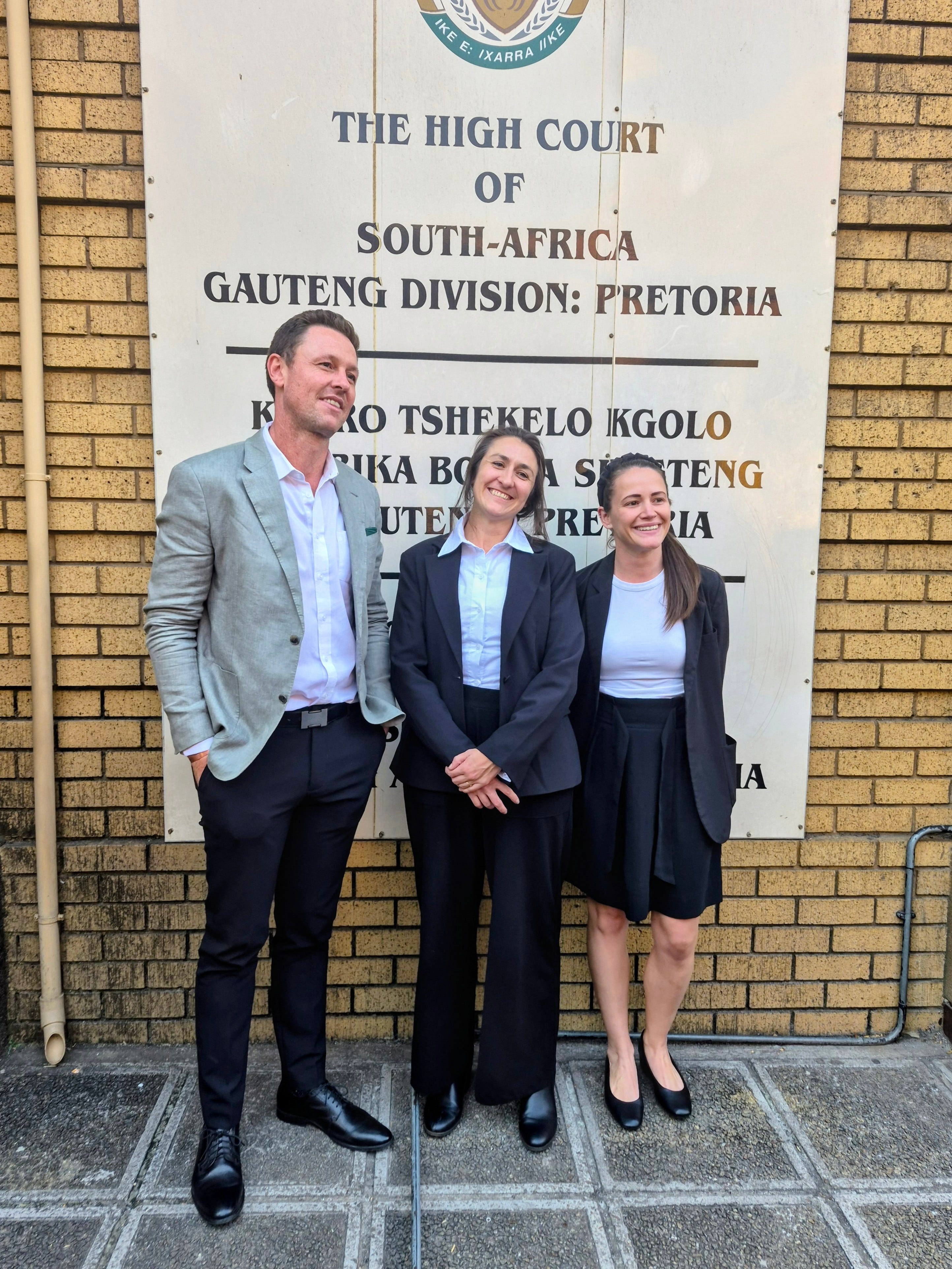
Moxii Africa was admitted as amicus curiae in the proceedings and represented by Ruth Kruger. Executive Director, William Bird, said Moxii Africa welcomes the outcome and pledged to continue fighting for media freedom on the continent.
Reggy Moalusi, Sanef’s executive director, also commented on the outcome of the court ruling.

“Journalists should not be subjected to any kind of unfair treatment and harassment. This is yet another case where our courts are abused, all in the name of trying to silence Edwin (Naidu). Sanef welcomes the court outcome.”
Zingisa Mkhuma, the editor of ednews.africa, described the outcome as a victory for media freedom, in particular, for the many “silenced” voices who had no one to turn to but the media on the UNISA stories.
“Ednews.africa welcomes the court ruling and applauds the judge for considering a punitive cost order against Unisa, whose actions have wasted not only the court’s time but also that of the legal team forced to defend the matter; above all, the ruling is a victory for free speech in South Africa, as guaranteed by the Constitution, particularly in this case where the stories published were of clear public interest, arising from concerns after we were leaked a report that three university employees allegedly lost their lives due to work-related stress linked to unfair treatment and labour practices.
No journalist with a heart would look away when such information with such consequences is brought to his attention, which is what Edwin Naidu did in this case. We will continue doing our service to our community by revealing more stories at UNISA and any institution with similar injustices,” said Mkhuma.
Several staff members at UNISA congratulated the publication for being a “courageous voice” and helping to make their real challenges public.
UNISA was asked to comment on the court outcome. The story will be updated with their response.
Learn more about the case and access the court papers via Power Law Africa here: https://lnkd.in/dh9-RCCt.
©Higher Education Media Services.