


By Dr Johannes Buthelezi
The world has recognised South Africa as one country that has the most progressive constitutions in the world.
Our Constitution prohibits discrimination based on sexual orientation and gender identity. It also provides a framework for recognising the dignity and humanity of all people, regardless of their gender identity or sexual orientation. Yet nearly three decades into democracy, a troubling question remains: why have our attitudes not changed at the same pace as our laws?
Today, information about people with Lesbian, Gay, Bisexual, Transgender, Queer and Intersex (LGBTQI) identities is more accessible than ever before. Schools, universities, social media platforms, television programmes, academic research, religious debates and public policy discussions have all contributed to greater visibility of sexual and gender diversity.
Most South Africans have encountered information about transgender, non-binary, queer and gender-diverse people in ways that previous generations never did. Yet violence, discrimination and exclusion towards LGBTQI people still persist.
Recent events highlight that the society has negative attitudes towards people with LGBTQI. For example, on 19 March 2026, a transgender woman, Buhlebendalo Mthombeni, alleged mistreatment at Universitas Academic Hospital in the Free State while seeking healthcare, raising concerns about the treatment and well-being of transgender individuals within South Africa’s public health system.
In the same month, Hermina Khoza, a 38-year-old queer woman from Bekkersdal, Gauteng, was murdered under circumstances that raised fears of a hate crime, highlighting the persistent vulnerability of sexual and gender minorities to violence.
These incidents prompted the National Task Team on Sexual Orientation, Gender Identity, Expression and Sex Characteristics (SOGIESC) to warn of a growing safety crisis affecting LGBTQI communities during a meeting held in Pretoria on 30 March 2026.
Yet discrimination is not only expressed through violence or institutional practices. It is also sustained through public discourse that continues to portray non-normative identities as morally inferior or socially undesirable.
This was evident when Cape Town pastor Oscar Bougardt, who had previously been found guilty of LGBTQI hate speech by the Equality Court, reignited controversy through a series of anti-LGBTQI + social media posts.
In these posts, he described homosexuality as contrary to scripture, opposed same-sex parenting and transgender identities, and linked LGBTQI people to what he called ‘societal decay’.
Although Bougardt defended his comments as expressions of sincerely held religious beliefs, the episode demonstrated how negative attitudes towards sexual and gender diversity continue to be normalised in public spaces.
Taken together, these incidents reveal a troubling reality: South Africans are not lacking information about people with LGBTQI. Information about sexual and gender diversity is more accessible today than at any other point in our democratic history.
Rather, these incidents suggest that knowledge alone is insufficient to transform entrenched beliefs, prejudices and emotional responses towards people whose identities challenge dominant social, cultural and religious norms.
The persistence of negative attitudes raises difficult questions. Why do some people continue to reject identities that do not directly affect their own lives? Why does exposure to information not necessarily result in greater understanding? Why do constitutional values of equality and human dignity remain disconnected from everyday social interactions?
Part of the answer may lie in the fact that prejudice is rarely based solely on ignorance. People often hold beliefs about gender and sexuality that are shaped by culture, religion, family traditions, political ideologies and social norms.
When these beliefs are challenged, information alone may not be enough to change minds. Individuals can know about LGBTQI identities while still viewing them as threatening to their understanding of morality, family or social order.
This is why legal reform, although necessary, is insufficient. Laws can prohibit discrimination, but they cannot force acceptance. Policies can protect rights, but they cannot manufacture empathy. Educational guidelines can promote inclusion, but they cannot automatically transform attitudes that have been reinforced over generations.
The challenge is evident within educational institutions. Universities often celebrate diversity and transformation, yet research continues to show that transgender and gender-diverse students experience exclusion, marginalisation and institutional barriers.
These realities demonstrate that inclusion is not simply about opening the doors of institutions. It is about changing the cultures, assumptions and attitudes that shape people’s experiences once they enter those doors.
This brings us to what may be the most important question facing South Africa today: What must be done to change how people think and feel about non-normative sexual and gender identities?
The answer cannot be reduced to legislation, awareness campaigns or policy documents alone. Genuine social transformation requires opportunities for dialogue, meaningful encounters across differences and the cultivation of empathy.
Research consistently shows that prejudice often decreases when people have personal relationships with those whom they perceive as different. Humanising stories can sometimes achieve what legal documents cannot.
Perhaps the challenge is not that South Africans do not know enough about people with LGBTQI identities. Maybe the constraint is that the majority of people with heterosexual and cisgender people have not yet learned to see themselves in the humanity of those who are different from them.
As debates continue about school guidelines, Pride flags and competing understandings of family values, we should remember that democracy is not only about protecting rights. It is also about building a society capable of respecting differences.
Constitutional change has already occurred. The unfinished project is social change. Therefore, until we confront the attitudes, fears and prejudices that continue to shape public perceptions of people with non-normative identities, equality will remain a constitutional promise rather than a lived reality.
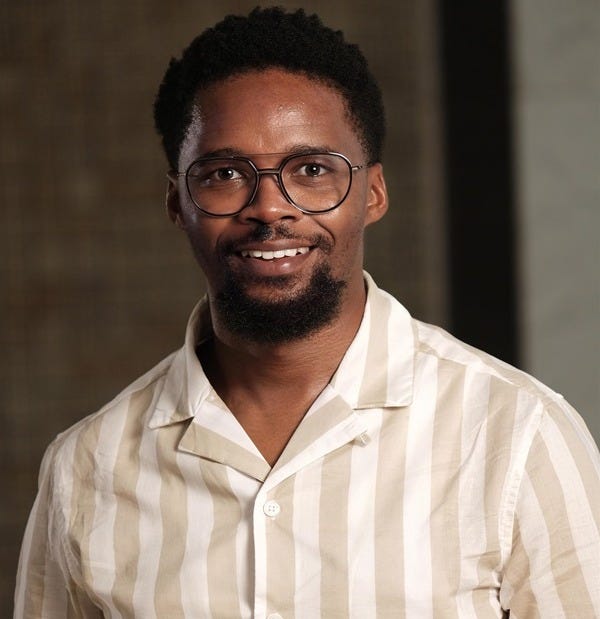
Dr Johannes Buthelezi is Lecturer: Inclusive Education in the Department of Education Foundations, University of the Free State.
©Higher Education Media Services.