


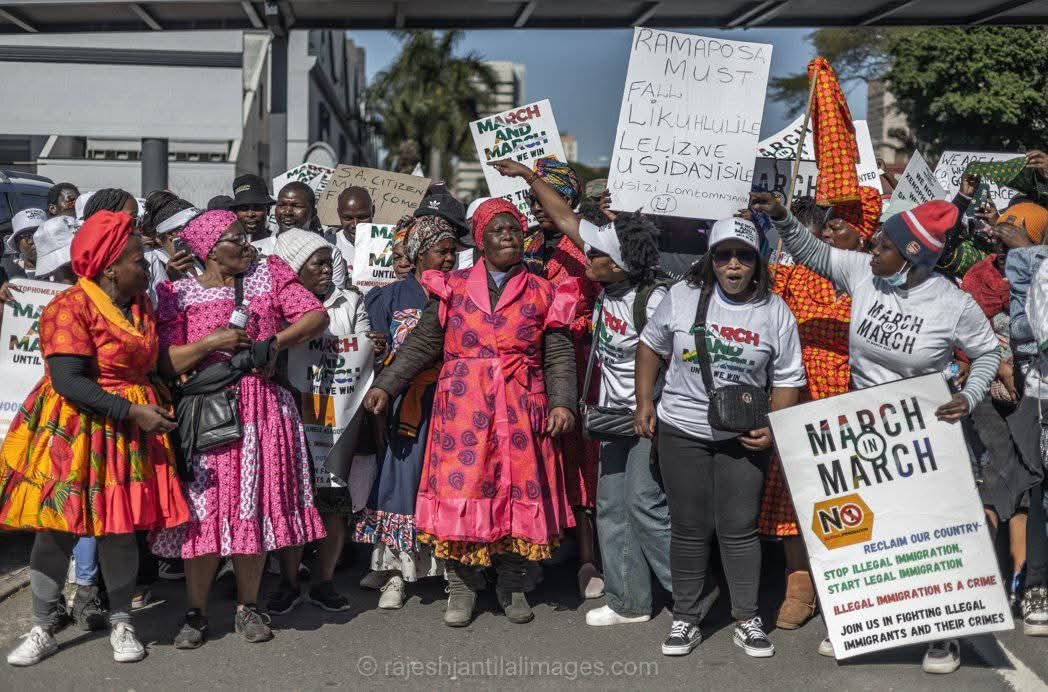
As South Africa approaches the 4 November Local Government Elections, growing frustration and disillusionment are shaping public sentiment.
Across the country, citizens are grappling with violent crime, mass shootings, unemployment, illegal immigration, rising living costs and ongoing fuel price increases.
For many households, daily survival has become increasingly difficult, leading voters to look to the ballot box hoping to change a political landscape they believe is failing to address their needs. Some, driven by desperation for change, are considering supporting racists, right-wing parties they may previously have rejected such as the FF+.
Public anger is evident in conversations taking place in communities, on social media, at taxi ranks and around family tables. Many South Africans are asking how the country reached its current state, why institutions tasked with serving and protecting citizens appear to be failing, and why political leaders seem unable or unwilling to confront the nation’s most urgent challenges.
A common view is that the ANC-led government has not delivered on the promises of democracy. Decades after the end of apartheid, millions remain unemployed, poverty is widespread and service delivery continues to deteriorate in many areas.
The formation of the GNU was presented as an opportunity to move beyond political divisions and focus on rebuilding the country. However, many believe that little has changed in practice.
Critics argue that the DA, as a key participant in the GNU, has not demonstrated sufficient commitment to addressing the concerns of the black majority. They point to conditions in Cape Town, citing persistent gang violence in the Cape Flats, housing shortages for the poor as evidence that the party has refused to address fundamental challenges where it governs. The question then is how effectively could it govern nationally?
Opposition movements that once inspired hope are also facing scrutiny. The EFF, which positioned itself as a champion of radical economic transformation and land redistribution, is increasingly being criticised for failing to advance meaningful land reform.
It seems to have done extremely well in its calls for the documentation of illegal migrants, but its campaign to return land to original owners has yielded little tangible progress.
There is also concern that calls by EFF CIC Julius Malema for people to grab vacant land have contributed to growing pressure on already overcrowded townships and informal settlements.
This has placed additional strain on infrastructure and public services in communities already struggling to meet residents’ needs. One could argue that if land redistribution is a sincere objective, efforts should focus on areas with greater available space rather than concentrating additional populations in crowded communities.
Many voters who hoped coalition politics or new leadership arrangements would produce a cleaner government and better outcomes are increasingly questioning whether any political parties within the GNU are willing to challenge the systems that contributed to the country’s current difficulties.
Concerns are heightened by recurring allegations of corruption and criminal conduct involving politicians and public officials. For citizens, such allegations reinforce the belief that some elected leaders are more focused on protecting themselves from accountability than acting in the public interest. This perception has fuelled growing cynicism about politics and public institutions.
At the heart of the public’s frustration is the belief that political elites have become detached from the realities facing ordinary South Africans. This disconnect has contributed to a significant erosion of trust in democratic institutions and political processes.
Adding to this mistrust is a growing perception that South Africa’s future is increasingly influenced by powerful external actors. Discussions about foreign funding, international organisations, multinational corporations, NGOs and migration have fuelled concerns that major decisions affecting the country are being shaped by interests beyond democratic oversight.
Whether these perceptions are accurate or not, they have become part of a broader narrative that South Africans are losing control over their own destiny.
The issue of illegal immigration has emerged as one of the most contentious topics in public debate in our recent history. Many South Africans believe the government has failed to secure borders effectively or adequately address the social and economic consequences associated with the influx of undocumented poor migrants.
Questions are frequently raised about whether there are undisclosed agendas influencing government policy and whether the public is receiving full transparency on the issue. The government has failed to engage openly and honestly with these concerns, allowing resentment and political polarisation to grow.
Frustration is also directed at institutions traditionally expected to serve as democratic watchdogs. Sections of the media, academia and civil society are increasingly accused of failing to hold those in power accountable.
These institutions have become too closely aligned with political and economic elites, limiting their willingness to challenge authority or amplify the concerns of ordinary South Africans.
The media, in particular, faces a crisis of credibility. Increasing numbers of people are turning away from traditional newspapers and broadcasters in favour of podcasts, independent platforms and alternative news sources.
This shift reflects a growing belief among some citizens that mainstream media outlets are not asking difficult questions with sufficient urgency or providing a platform for diverse perspectives.
Whether justified or not, this perception highlights a widening gap between institutions that shape public discourse and the communities they are intended to serve.
South Africa’s energy future is another source of uncertainty and questions continue to be raised about Eskom, renewable energy projects and the role of coal-powered stations in the country’s economy.
It seems energy policy is increasingly influenced by ideological considerations and external pressures rather than practical realities. While the government maintains that the transition towards alternative energy sources is necessary and responsible, many fear they are bearing the costs through higher prices, economic instability and ongoing uncertainty.
These concerns contribute to a broader feeling that the social contract between citizens and the state is under strain. Communities increasingly feel abandoned, vulnerable to crime and neglected by leaders who appear more focused on political survival than public service.
Yet the greatest threat facing the country may not be corruption, poor governance or economic decline alone. It is the possibility of public apathy. A society that loses faith in its ability to demand accountability risks surrendering its future to those who benefit from the status quo.
When voters stop believing they can influence political outcomes, democratic participation weakens and the prospects for meaningful reform diminish.
This reality makes civic engagement more important than ever. South Africans cannot afford to retreat into cynicism or hopelessness. Nor can they rely solely on politicians to solve the country’s challenges.
Our history demonstrates that significant change often comes from organised communities willing to mobilise, participate and demand accountability from those in power.
Meaningful progress requires more than simply replacing one political elite with another. It depends on active citizenry, democratic participation and sustained public pressure.
Peaceful protest, mass mobilisation, civic activism and continuous scrutiny of public officials remain essential tools for safeguarding democracy.
Communities must insist that public office exists to serve the people rather than enrich political insiders.
Equally important is the belief that the country’s future cannot be left entirely in the hands of politicians, courts, foreign interests or foreign-funded organisations.
The coming elections are significant, but voting alone will not resolve South Africa’s challenges. Democracy is not limited to occasional participation at the ballot box. It requires ongoing involvement from citizens who are prepared to question authority, demand answers and advocate for the interests of future generations.
South Africa stands at a crucial crossroads. One path may lead to deeper disillusionment, instability and decline. The other requires courage, unity and sustained public action.
Ultimately, the future of the country depends not only on political parties but on the willingness of ordinary citizens to transform their frustration into a determined and uncompromising demand for accountability, responsibility and meaningful change.
Zingisa Mkhuma is Editor - ednews.africa
©Higher Education Media Services.