


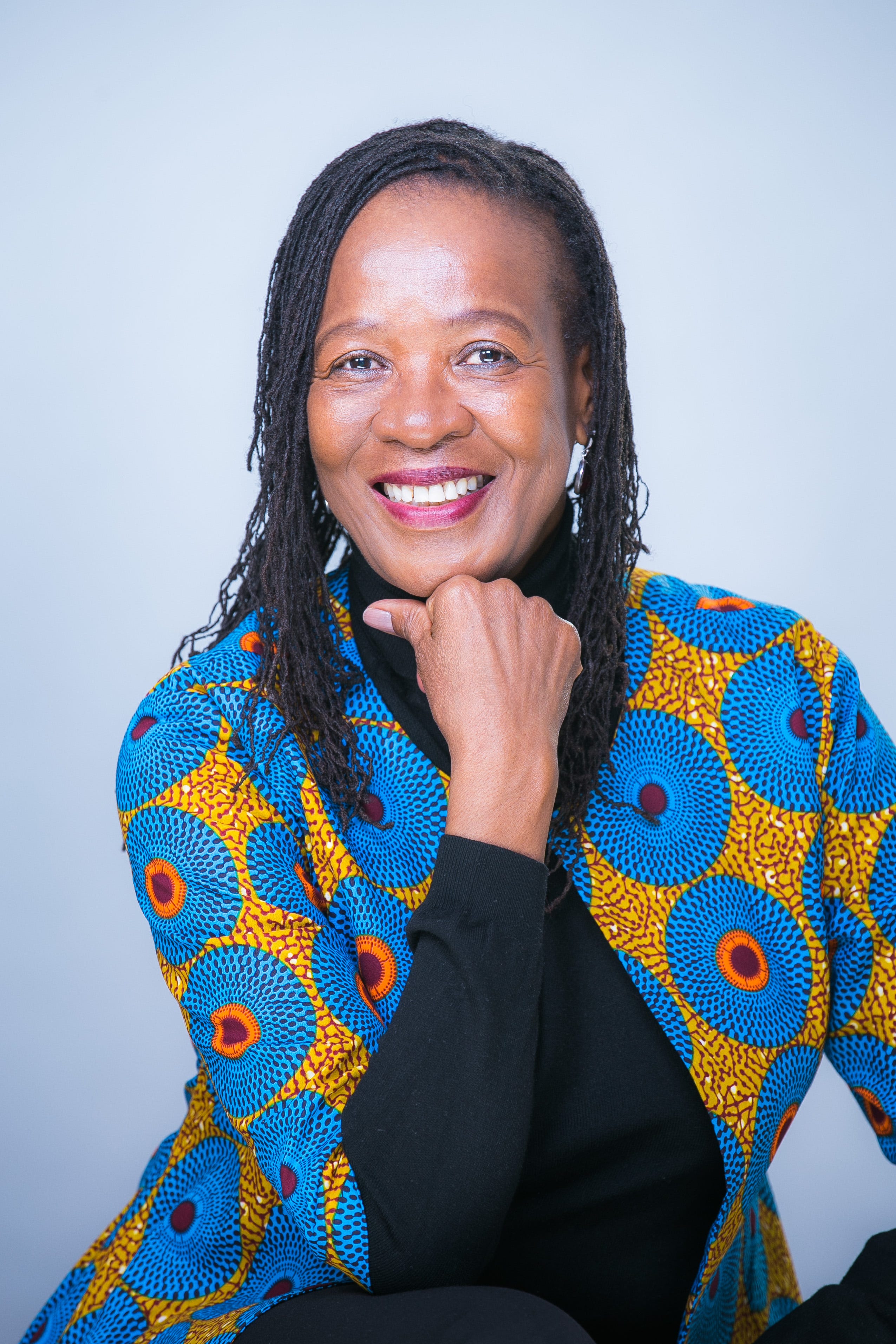
Teboho Moja’s story is one of quiet power, relentless curiosity and a lifelong commitment to expanding educational opportunity. Born in Pretoria and raised in Atteridgeville — with formative years spent in Ga‑Rankuwa and later at the University of Limpopo — her early life was shaped by modest classrooms, vibrant street friendships and the discipline of Sunday church mornings.
“The schools had limited facilities… classrooms were inadequately equipped and very hot in summer and cold in winter,” she recalls, yet those constraints never dimmed her ambition.
From Setotolwane High School to the University of Limpopo, Moja followed the path available to her as a young Motswana woman under apartheid’s restrictions.
But she transformed that path into a global academic career spanning more than three decades — including 26 years as a professor of higher education at New York University, and now as an Emerita Professor, continuing to teach, mentor and collaborate across continents.
“It is now more fun every day as I determine my own schedule… when in South Africa my day starts with engagements with colleagues and family,” she says, illustrating a life lived between Johannesburg and New York, always in motion, always connected.
Her work, from shaping leadership courses to taking students around the world for more than 20 years, reflects a career built on flexibility, courage and a deep belief in education as a tool for transformation.
Recognition has followed her in both South Africa and the United States, but Moja remains grounded in the values that shaped her: mentorship, curiosity, and a willingness to try new things.
This Role Models feature celebrates her journey, her wisdom, and her unwavering commitment to nurturing the next generation of thinkers, leaders and change‑makers.
In 1998, Moja became the first black person, and the first woman, to be appointed Chair of the Unisa Council. The daughter of a nurse and a postmaster-turned-businessman, she has forged an extraordinary career as an educationist.
In 1994, she was appointed as an adviser to the newly democratic South Africa’s Minister of Education, the late Sibusiso Bengu. In this and other roles, she played a pioneering role in reforming higher education in South Africa and has published extensively on the topic.
Moja is a Visiting Research Fellow, Centre for the Advancement of Scholarship at the University of Pretoria, an Extraordinary Professor at the Institute of Post-School Studies at the University of the Western Cape, and Editor-in-Chief of the Journal of Student Affairs in Africa.
Q&A
Beginnings
Where were you born and raised? I was born in Pretoria and raised in Atteridgeville, and later in Ga-Rankuwa for a brief period, as I spent most of my time at the University of Limpopo, then known as the University of the North.
Which primary and high schools did you attend? Attended Kgabo Primary School for 4 years, then Mboweni Senior Primary, both located in Atteridgeville
What was life like growing up? It was challenging in some ways and fun in other ways. The schools had limited facilities and no sports grounds. The focus was on music and preparations for school choir practices. Classrooms were inadequately equipped and very hot in summer and cold in winter. The fun part was having lots of friends and being able to play with them in the streets. We had opportunities to learn different languages because friends came from different ethnic backgrounds. Sunday was always for church first, after getting up early and helping out with household chores. The rest of the day was spent roaming the streets and playing with neighbours.
Where did you study after school, and what did you study? Continued at Setotolwane High School, which was a boarding school in Pietersburg, now renamed Polokwane. I then furthered my studies at the University of Limpopo, as the designated university for my ethnic group. I am Motswana.
Are you married? Do you have children? I was married twice and had one child from my first marriage and two from my second.
What are your hobbies and how do you relax? I love walks in the parks and playing golf whenever I can. I also like hanging out with friends, old and new friends.
How do you keep up with trends in your field? I am a workaholic and get joy from working, so I keep up by reading, commenting on reviews, attending conferences and publishing my work.
When did working life begin and what was that moment like? I started in 1989 as a teacher, but I knew I wouldn't want to be a teacher in a traditional sense all my life. However, I wanted to stay in education.
Career
What is your current job title? Emerita Professor, because I retired in September 2025 and was granted this status so I can continue to have a relationship with my university without being tied to a teaching schedule during the semester, as I like travelling to meet colleagues around the world.
How long have you been in this role? I was a professor for 26 years at New York University, and I will be one year as an Emerita Professor.
Briefly describe what your job involves day‑to‑day. It is more fun every day now that I determine my own schedule, but I still have lots of deadlines to meet. When I am in New York, my day might start with a meeting or two with colleagues in South Africa, then move on to my chosen tasks of writing, reading, and answering emails.
When I'm in South Africa, my day starts with engagements with colleagues and family in the country, and when they go to bed, I might join a meeting with colleagues in the Northern Hemisphere or teach a class at 1:30 am. My teaching mainly happens in June and July, when I teach a summer leadership class to doctoral students online.
Where are you based? Both New York City and Johannesburg.
What do you love most about your job? Flexibility
How did you get into this line of work? Interest and mentoring
Was this always your dream career? No, but I came to love it, which is why I've stayed in it for 26 years.
What have been some highlights so far? Recognition of my contributions through awards in both countries.
Challenges
What are the best parts of the job? Being able to create courses in response to what I see as emerging needs, and the ability, for over 20 years, to take students around the world to expose them to knowledge in other contexts.
What are some of the challenges? Having to sacrifice my children’s time whenever I had to travel. I adapted by giving them quality time when I was home rather than focusing on quantity.
What type of personality suits this career? Flexible and willing to try new things.
Is it well‑paying? Are there good benefits? One is never in education for money. I entered the profession knowing that.
Can you work in other countries with this qualification? Of course!
What education or training is needed? A doctoral degree is required to teach at a university.
Which matric subjects help? I left high school in the 70s, so it is hard to answer this one, but quantitative skills and language competency are always helpful.
How long does training take, and is it expensive? 3-year degree, 1 or 2 years honours, 2 years master's, and 4-5 years doctoral degree. Yes, it can be expensive if you do not get scholarships.
Do you need ongoing training throughout your career? Self-training mainly, workshops, conferences, webinars, etc.
Are bursaries, loans or scholarships available? Sometimes.
Where can one study for this career? University.
Advice for the young at heart
What should a young person do first if they want to follow this path? Get their academic qualifications first.
Is there a shortage of people in this field (in SA or globally)? In South Africa, yes. In the US, there is a bit of an oversupply.
What other similar jobs exist in your industry? Research Centers, think tanks and policy centres.
Looking back, what would you have done differently? Nothing!
Tell us about a teacher or mentor who inspired your journey. Tough one. I had many good mentors along the way, but not as my teachers.
©Higher Education Media Services