


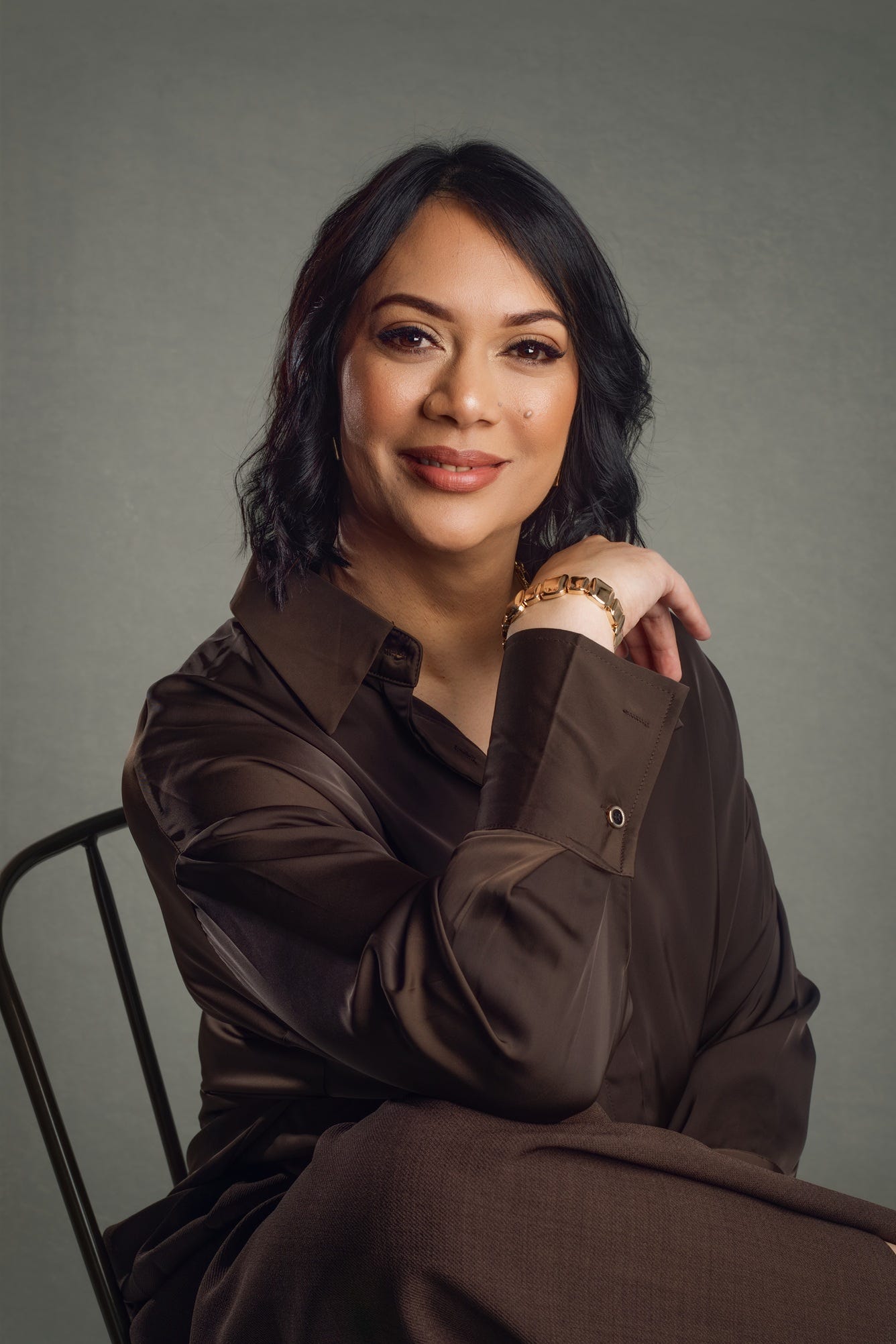
In our ongoing Role Model series, ednews.africa continues to celebrate women whose journeys show young girls that success is not defined by a straight line, but by courage, curiosity and the willingness to keep learning.
Mushfiqoh Samodien’s story begins in Athlone, Cape Town, where traditional expectations often shaped young women’s futures. Yet even as she navigated those norms, she learned early that there is no single definition of a meaningful life, and no limit to what a girl from Surrey Estate can become.
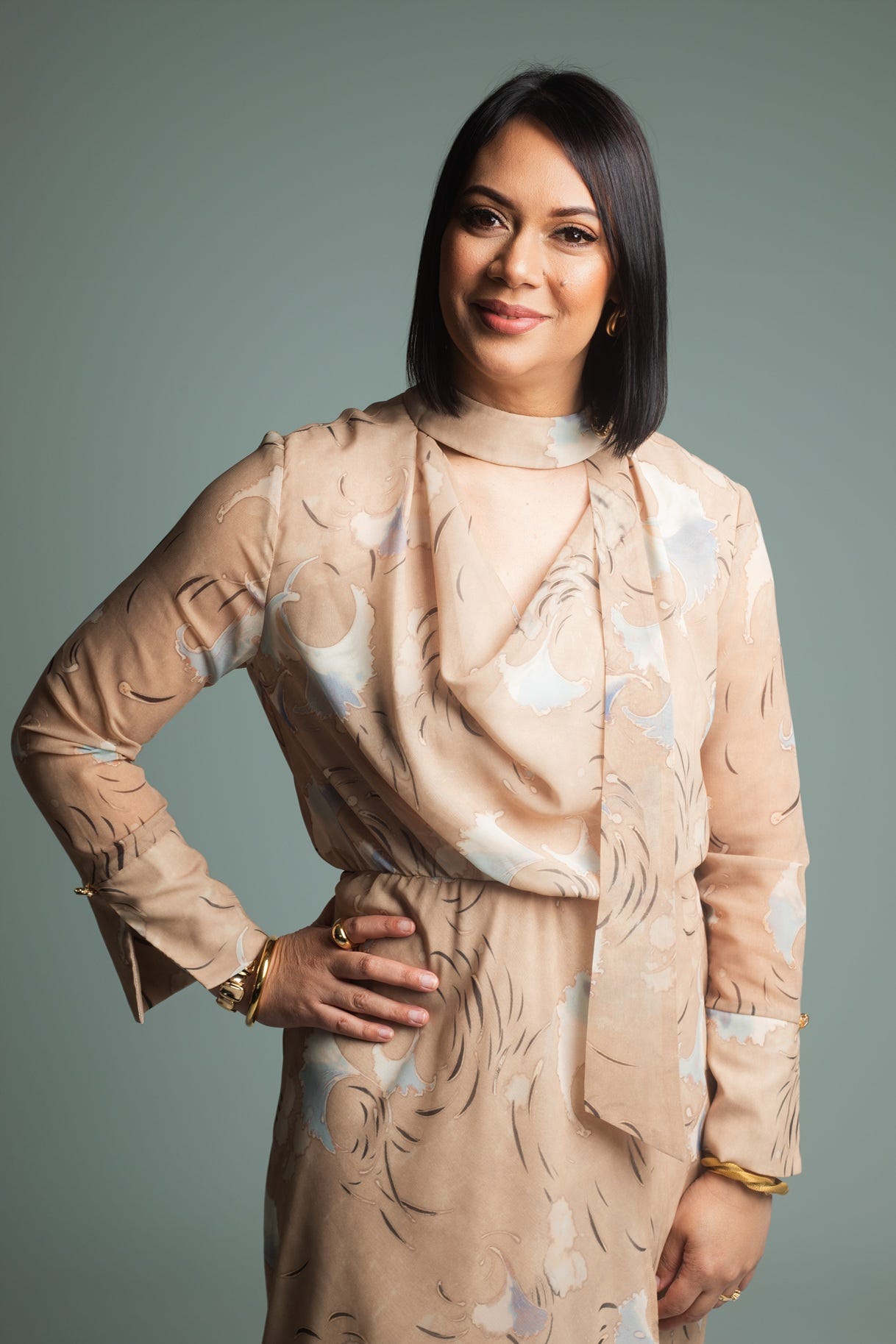
Today, Mushfiqoh is the Business Director and co‑owner of Aspire Solutions, a leading custom software development company. Her path from graphic design apprentice to corporate professional, project manager, business analyst, technologist, and entrepreneur shows young women that every skill, every pivot, and every challenge can become part of a powerful toolkit. She leads with empathy, listens deeply, and builds technology that solves real problems for real people.
Beyond business, Mushfiqoh is driven by impact. Through Aspire’s youth academy and her newest venture, MiniBoss, she is helping young people build confidence, resilience and entrepreneurial thinking. Her message is simple but transformative: try, fail fast, learn, and try again. In a world where girls are often taught to fear mistakes, she teaches them to see experimentation as strength.
Mushfiqoh’s journey reminds us why representation matters. She shows girls that they belong in technology, leadership, entrepreneurship and every space where decisions are made. Her story is a beacon for young women across South Africa, proof that with curiosity, courage and continuous learning, they can build careers that change industries, uplift communities and shape the future.
Q&A
Early Days
Where were you born and raised?
I was born in Cape Town and grew up in Athlone, specifically Surrey Estate.
Growing up in Athlone, the career choices you were exposed to could sometimes feel quite limited. Education was strongly advocated in my family and community, but at the same time, traditional ideas about women’s roles meant that being a stay-at-home mother was also considered a perfectly respectable path.
As a young woman of my generation, there was therefore this interesting balance: you were encouraged to have a profession and make something of yourself, while family and motherhood remained very important.
I think those different expectations influenced me more than I realised at the time. They ultimately taught me that there doesn’t have to be one definition of what a successful life or career looks like.
Which primary and high schools did you attend?
I started primary school in Gauteng, where I attended school until Grade 3. When we returned to Cape Town, I attended Surrey Primary School and later Plumstead High School.
What was life like growing up?
I grew up at a time when there was quite a lot of emphasis on choosing a recognised profession. The thinking was often: become a lawyer, doctor, accountant or choose another established profession.
Because your exposure was limited, you naturally made decisions based on what you could see around you.
I initially studied law. At the time, it made sense because it represented having a profession. However, I was already working and eventually made the practical decision not to finish because completing articles would have meant earning considerably less than I was already earning.
My career therefore started teaching me very early that life does not always follow the plan you had at 18.
One irony is that at school I always felt I should have taken History instead of Accounting. Years later, Accounting is probably one of the subjects that has served me best. As an entrepreneur and business leader, being comfortable with numbers and understanding the financial side of a business has been incredibly valuable.
Where did you study after school and what did you study?
My education has been a journey of continuous learning rather than one traditional academic path.
I initially studied law but did not complete it. I started my working career through an apprenticeship in graphic design and continued developing myself through accredited short courses and qualifications, including Project Management, Business Analysis and various technology accreditations.
Later in my career, I completed a Postgraduate qualification in Business Practice through the UCT Graduate School of Business.
That combination of formal education, practical experience and continuous professional development has probably been one of the greatest strengths of my career.
Are you married? Do you have children?
Yes. I have been married twice previously and am now married. I am also incredibly fortunate to be a mother of four—three beautiful daughters and a son.
Motherhood has been an important part of my journey and has certainly influenced how I think about leadership, opportunity, balance and the future we are creating for the next generation.
What are your hobbies and how do you relax?
My favourite thing is spending time with my family. I also enjoy keeping fit.
Business and entrepreneurship can be demanding, so both family time and fitness help me reset and create some balance.
How do you keep up with trends in your field?
I stay curious.
Technology and business move incredibly quickly, and today, with developments such as AI, that pace is only accelerating.
I read, engage with people across different industries, learn from clients, participate in business and technology networks and continuously expose myself to new thinking.
I also listen.
Listening has become one of my strongest capabilities because trends aren’t only found in reports or online. Sometimes the earliest indication that something is changing comes from listening to your customers, employees, young people and the problems organisations are trying to solve.
When did you first “start” in this career and what was that moment like?
My first real career opportunity was actually an apprenticeship in graphic design.
That surprises some people because today I am known primarily for business and technology.
But my career has never been a straight line.
I moved from graphic design into different business environments and continued adding skills and experience. I worked across corporate environments, including finance, FMCG, and oil and gas, and developed expertise in project management, business analysis, implementation, and technology.
Eventually, I started my own consulting agency as an implementation partner.
That journey taught me something I still believe strongly today: you don’t have to have your entire career figured out when you start.
Every experience can add something to your toolkit.
Career
What is your current job title?
I am the Business Director and co-owner of Aspire Solutions, a specialist custom software development company based in Cape Town.
I also serve as a Board Member of the Virtual Advisory Board (VAB) and am expanding my entrepreneurial focus into youth entrepreneurship through MiniBoss.
How long have you been in this role?
I have been part of Aspire Solutions for more than a decade.
Aspire itself has been operating for over 20 years, and it has been incredibly rewarding to be part of its growth and evolution.
Briefly describe what your job involves day-to-day.
My role is very diverse, which suits me because my career has always been diverse.
I focus on business strategy, growth, partnerships, client relationships and identifying opportunities where technology can solve meaningful business problems.
A large part of my role is also understanding people.
Technology is only useful when it solves the right problem and works for the people who need to use it. So my day might involve a strategic client conversation, developing a new partnership, reviewing a solution, supporting our team, looking at commercial opportunities or thinking about how we develop the next generation of talent.
Where are you based?
I am based in Cape Town, South Africa, although our work, partnerships and networks extend beyond Cape Town.
What do you love most about your job?
The diversity.
I love solving problems, meeting people and seeing an idea become something tangible.
But increasingly, what gives me the most satisfaction is impact.
It is seeing a business improve because of something we’ve implemented, watching someone on our team grow, or seeing a young person gain confidence because somebody gave them an opportunity.
How did you get into this line of work?
After my corporate career, I opened my own consulting agency and worked as an implementation partner.
Through that work, Mike and I joined forces on a project.
The rest, as they say, is history.
That initial collaboration eventually developed into the partnership we have at Aspire Solutions today.
We’ve built something that we are incredibly proud of—not only because of the technology and solutions we’ve delivered, but because of the people and opportunities that have developed around the business.
Was this always your dream career?
No, and I think that’s important for young people to hear.
I initially studied law. I started my working career in graphic design. I then moved through corporate environments, consulting, project management, business analysis and technology before becoming an entrepreneur and business owner.
My career has been about diversification.
Graphic design taught me creativity. Business analysis taught me to understand problems. Project management taught me execution. Corporate life taught me structure and discipline. Technology gave me another way to solve problems. Entrepreneurship taught me resilience.
Today, I use all of those skills.
So your first career choice does not have to define the rest of your life.
What have been some highlights so far?
Becoming a co-owner and Business Director of Aspire Solutions and helping build the company into what it is today is something I am very proud of.
Aspire has also evolved beyond software delivery into talent development and social impact, including a self-funded academy supporting young people from high school into professional technology careers.
I’ve also been fortunate to receive recognition, including Standard Bank Top Woman in Tech, Inspiring 50, Panache Woman of Wonder Trailblazer, the FAB Woman Award for Resilience, 50 Under 50 Global Future Female Founder and the CEO Achievement Alley Business Leadership Award.
But some of my greatest highlights are not awards.
They are the people we’ve developed, the young people we’ve helped create opportunities for and the relationships that have remained with me throughout my career.
Challenges
What are the best parts of the job?
The ability to create, solve problems and make an impact.
Entrepreneurship also gives you an opportunity to build something that reflects your values.
For me, that increasingly means building successful businesses while also asking how we develop people, create opportunities and contribute positively to society.
What are some of the challenges?
Entrepreneurship comes with enormous responsibility.
You are responsible for employees, clients, cash flow, decisions and ultimately the sustainability of the business.
Technology also changes rapidly, so you have to keep learning and adapting.
There will be failures and difficult periods. What matters is learning quickly, adjusting and trying again.
What type of personality suits this career?
Someone who is curious, adaptable, resilient and willing to listen.
You don’t have to be the loudest person in the room.
One of the most valuable capabilities I have developed is listening. When you genuinely listen to people, you understand problems differently.
You also need to be comfortable not knowing everything. Entrepreneurship and technology require constant learning.
Is it well-paying? Are there good benefits?
Technology can be a financially rewarding industry, but I wouldn’t encourage a young person to choose it purely because they believe they will earn a lot of money.
Develop valuable skills. Learn how to solve problems. Understand business. Become someone who can create value.
The financial opportunities tend to follow.
Can you work in other countries with this qualification?
Yes. Many technology, business analysis, project management and digital skills are transferable internationally.
Technology has also made it possible to work with organisations and teams across borders without necessarily relocating.
What education or training is needed?
There isn’t one pathway.
My own journey demonstrates that.
I’ve learned through an apprenticeship, accredited short courses, Project Management, Business Analysis, technology accreditations, practical experience and eventually postgraduate business studies.
Depending on the career you choose, you could enter through university, a university of technology, a coding academy, professional certification, internships or other practical programmes.
Which matric subjects help?
Mathematics and technology-related subjects can certainly help, but I would also include Accounting.
Ironically, Accounting was the subject I thought I didn’t need. I would have preferred History!
Today, as a business owner, Accounting has worked enormously in my favour. Understanding numbers, costs, margins, budgets and the financial health of a business is incredibly important.
Communication subjects are also valuable because no matter how technical your role becomes, you still need to communicate with people.
How long does training take, and is it expensive?
It depends on the route you choose.
A degree may take several years, while accredited programmes, certifications and practical training can be considerably shorter.
Today there are also many more accessible ways to learn.
What is important is not to think that your education ends once you receive a qualification. My career has involved learning continuously.
Do you need ongoing training throughout your career?
Absolutely.
I have continued studying and developing new skills throughout my career.
Technology changes, industries change and business changes.
Continuous learning has allowed me to move from graphic design to corporate business, project management, business analysis, consulting, technology and entrepreneurship.
Are bursaries, loans or scholarships available?
Yes. Various bursaries, scholarships, and funding programmes are available through educational institutions, corporates, government initiatives, and industry programmes.
My advice is to research widely and apply. Don’t automatically assume an opportunity isn’t available to you.
Where can one study for this career?
There are many routes through South African universities, universities of technology, private institutions, coding academies and professional accreditation bodies.
The important question isn’t only “Where should I study?”
Also ask:
“What skills will I leave with, and can I practically apply them?”
What should a young person do first if they want to follow this path?
Start.
Don’t wait until everything is perfect.
Learn something. Build something. Try something. Find a problem and think about how you could solve it.
And don’t be frightened of getting it wrong.
That philosophy is also central to what we’re developing through MiniBoss: fail fast, learn and never be afraid to try again.
Advice for the Young at Heart
What advice would you give someone thinking about this career?
Don’t put too much pressure on yourself to have your entire life mapped out at 18.
I certainly didn’t.
Your career may change several times, and that isn’t necessarily failure—it can be growth.
Keep developing your skills, remain curious, listen to people and don’t be afraid to diversify.
Most importantly, don’t let fear of failure stop you from starting.
Is there a shortage of people in this field in SA or globally?
There's still a need for skilled people in technology and related fields.
But I believe we also need people who can combine technical ability with business understanding, communication, creativity and emotional intelligence.
Technology can build a solution. Understanding people helps ensure you’re building the right solution.
What other similar jobs exist in your industry?
The industry is incredibly broad.
There are careers in software development, business analysis, project management, data, cybersecurity, cloud technologies, product management, UX/UI design, digital transformation, consulting, sales, strategy and entrepreneurship.
And new careers are emerging continuously, particularly around AI.
Don’t only look at the job titles that exist today. Some of the careers young people entering school now will eventually have probably don’t exist yet.
Looking back, what would you have done differently?
I would probably have trusted the journey more and worried less about having everything figured out.
There were times when changing direction could feel like starting again.
Today I understand that I wasn’t starting again, I was adding another layer.
Every experience eventually contributed something to the business leader and entrepreneur I became.
Tell us about a teacher or mentor who inspired your journey.
One person who profoundly influenced me was Derek Smith, my Project Management lecturer, who recently passed away.
Derek taught me something that has stayed with me throughout my career:
Focus on the people, not just the product.
That philosophy has grounded me through project management, implementation, consulting, technology and leadership.
It also helped me develop listening as a genuine capability.
You can have the best technology or product in the world, but if you haven’t listened to the people affected by it, you may still have the wrong solution.
Derek and I remained in contact for many years after he lectured me. That relationship and his lessons stayed with me long after I left the classroom.
My Latest Endeavour: MiniBoss
MiniBoss represents the next chapter of something I have been passionate about for years: developing young people.
The purpose is to introduce young people to entrepreneurship while simultaneously developing confidence.
But I don’t want entrepreneurship education to become simply about making money.
Business needs a commercial outcome, but entrepreneurship should also teach young people to ask:
What problem am I solving? Who am I helping? What value am I creating? How can this business contribute towards a stronger society?
I want young people to understand that they are allowed to experiment.
Try the idea.
Test it.
If it doesn’t work, understand why.
Learn.
Change it.
Try again.
That is the principle of failing fast without becoming afraid to try.
If we can teach young people entrepreneurship alongside confidence, resilience, problem-solving and social responsibility, I believe we can develop stronger individuals—and ultimately a stronger society.
For me, MiniBoss isn’t separate from my career journey. In many ways, it brings together everything I’ve learned: creativity, business, technology, entrepreneurship, people and purpose.
Where to Study?
Young people should investigate opportunities through:
South African universities – UNISA/UCT/UWC
UCT Graduate School of Business
Accredited technology academies
Professional Project Management and Business Analysis programmes
Find me on
LinkedIn: Mushfiqoh Samodien
MiniBoss: www.miniboss.co.za
Aspire Solutions: www.aspiresolutions.co.za
Instagram: aspire_solutions_connect / miniboss_sa
TikTok: NA
Facebook: NA
Key takeaway?
If there is one thing I would want a young person reading my story to take away, it is this:
Your career does not have to be a straight line.
I started in graphic design. I studied law and didn’t finish it. I moved through corporate environments, project management, business analysis, consulting and technology. I became an entrepreneur and business owner, and today I am taking everything I have learned and using it to help develop another generation of entrepreneurs.
Don’t be afraid to change direction.
Keep learning. Keep listening. Stay curious. Build your confidence.
And most importantly, never be so afraid of failing that you become afraid to try.
©Higher Education Media Services.