

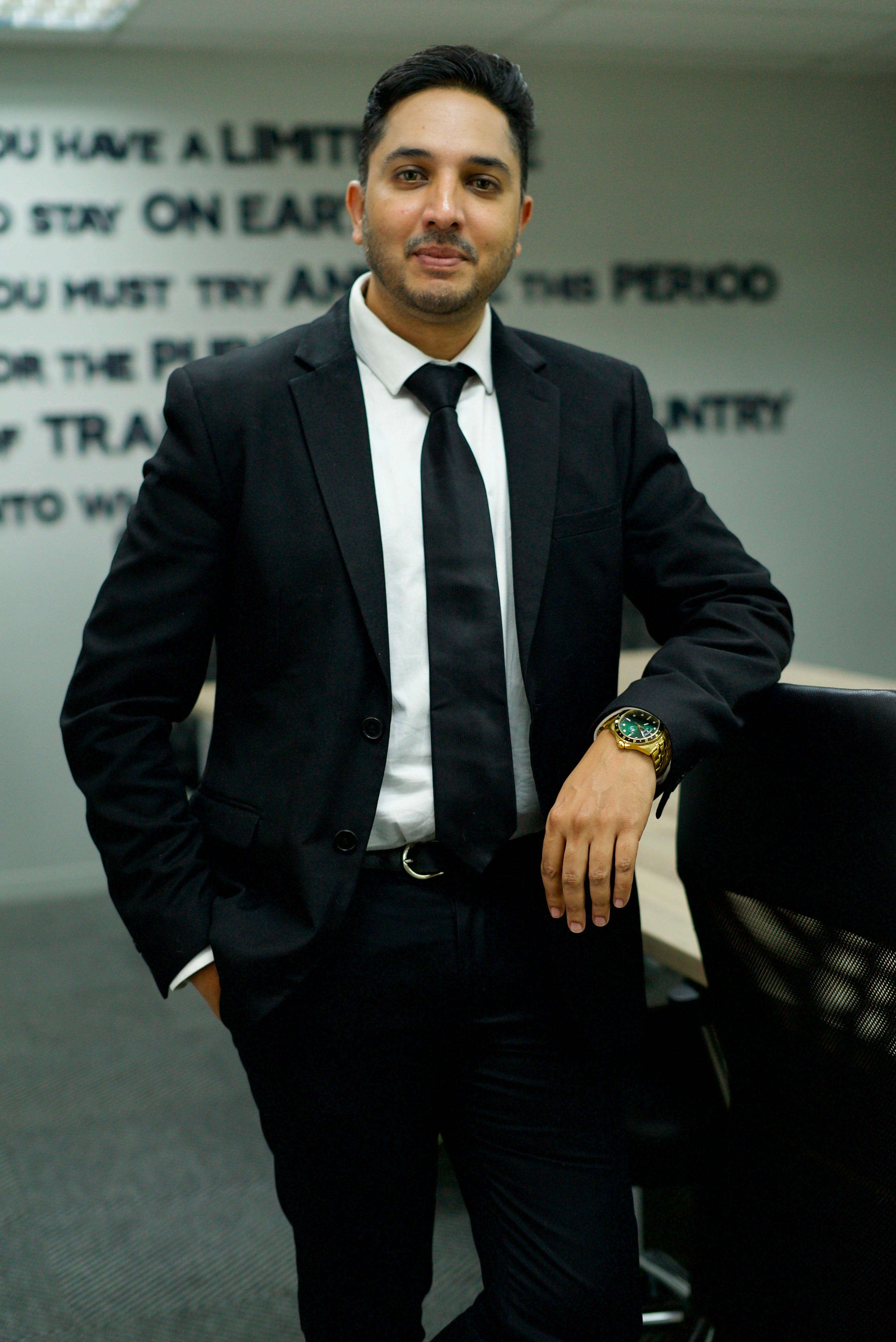
Kershen Pillay
Every generation inherits institutions. The real test of leadership is whether it leaves those institutions stronger than it found them. Across South Africa’s education, training and professional development landscape, conversations around governance, accountability and public confidence have become increasingly prominent. While these discussions may be uncomfortable, they are necessary. Healthy institutions are not built without scrutiny. They are built on the willingness to confront difficult questions honestly and to respond with integrity. This is particularly true in the skills development sector where GIFS has been at the forefront of advocating for justice for learners.
Why more organisations must become custodians of opportunity
At a time when the country faces persistent unemployment, critical skills shortages and growing pressure to equip young people for an increasingly complex economy, the organisations responsible for developing future talent carry a profound responsibility. Their mandate extends far beyond administration. They are custodians of opportunity.
The challenge facing South Africa is not a lack of ambition among its young people. It is ensuring that the systems designed to support that ambition remain credible, effective and worthy of public trust. Trust is often spoken about as though it is an abstract concept. In reality, it is remarkably practical.
If we unpack it, trust is present when a learner enrols for a programme. When an employer invests in training, trust is present. When public funds are allocated to skills development initiatives, trust is present. When educational institutions partner with industry to create pathways into employment, trust is present. The moment that trust begins to weaken, the entire ecosystem is affected. Students become uncertain. Employers become cautious. Stakeholders become sceptical. Opportunities diminish. For those reasons, GIFS has championed the view that confidence should never be treated as a public relations concern.
Sector developments show us the need for trust now more than ever
Institutions that enjoy confidence attract participation, collaboration and investment. Those that lose it face an uphill battle, regardless of the quality of their programmes or intentions. Recent developments within the broader skills development environment, including matters involving the Insurance Sector Education and Training Authority (INSETA), have provided an important reminder of this reality. While opinions may differ and legal processes may follow their course, the broader lesson transcends any individual dispute. Institutions cannot assume trust. They must earn it continuously. This requires leadership and not positional leadership. It’s also not leadership defined by job titles or organisational hierarchy. It is authentic and real leadership. One of the most powerful leadership principles is also one of the simplest: when something appears wrong, do not ignore it.
Too often, organisations become vulnerable not because challenges emerge but because concerns go unaddressed. Problems that could have been resolved early are allowed to grow. Warning signs are overlooked. Difficult conversations are postponed. Silence becomes mistaken for stability. Yet sustainable institutions are rarely built through avoidance. They are built by people prepared to ask questions, raise concerns and pursue solutions in the interests of the communities they serve. This is where accountability becomes more than a governance requirement. It becomes a cultural value. We have pursued the challenges facing the INSETA with dogged determination. The latest is that the Board resolved to fire the CEO. The point we raise for industry is that in many organisations, accountability is associated with compliance checklists, audit outcomes and reporting obligations. While these mechanisms matter, genuine accountability begins at a much deeper level. It begins when individuals understand that they are responsible for protecting the integrity of a system, not merely participating within it.
No single stakeholder can solve South Africa’s skills development challenges alone
Success depends on collaboration between industry, educational institutions, regulators, professional associations and government structures. Each plays a distinct role, but all share a common objective: preparing people for meaningful participation in the economy. Collaboration, however, can only flourish where trust exists. Trust creates space for constructive engagement, even when disagreements arise. Without trust, relationships become transactional. Stakeholders become defensive. Progress slows. This is why governance should never be viewed as an administrative exercise. At its best, governance creates the conditions for trust to thrive. Most importantly, good governance protects the interests of those who depend on institutional outcomes. In the context of skills development, those beneficiaries are often young people seeking pathways into employment and professional advancement. Their interests should remain at the centre of every conversation. Weak governance rarely remains contained within boardrooms or executive offices. Its consequences eventually reach classrooms, workplaces and communities.
For this reason, leadership in the skills development sector carries obligations that extend beyond organisational performance. It requires stewardship that goes beyond short-term outcomes to consider the long-term health of the institutions entrusted to us. It requires leaders to ask not only whether an organisation is functioning today but whether it is being positioned to serve future generations effectively. This perspective is becoming increasingly important.
The workforce of tomorrow will require adaptability and ethical judgement
We know that technical expertise alone will not be sufficient. As educators and industry leaders prepare young professionals for this future, we must also model the values we expect them to embrace. We cannot teach integrity while tolerating ambiguity.
We cannot promote accountability while avoiding responsibility, and we cannot expect courage from future leaders if current leaders remain silent in the face of difficult realities. We know the next generation pays close attention to what institutions do, not merely what they say. They notice whether leadership actions align with leadership language. This presents both a challenge and an opportunity.
The challenge is that trust can take years to build and moments to undermine.
The opportunity is that trust can be rebuilt through principled action, honest engagement and visible accountability.
Dr Kershen Pillay, CEO of GIFS
©Higher Education Media Services.