


Universities in South Africa are under such pressure in terms of finance, functioning, student access and sustainability that these issues are often foregrounded ahead of discussions about the intellectual and social direction required. This is occurring in a world of profound socio-economic, political and technological change.
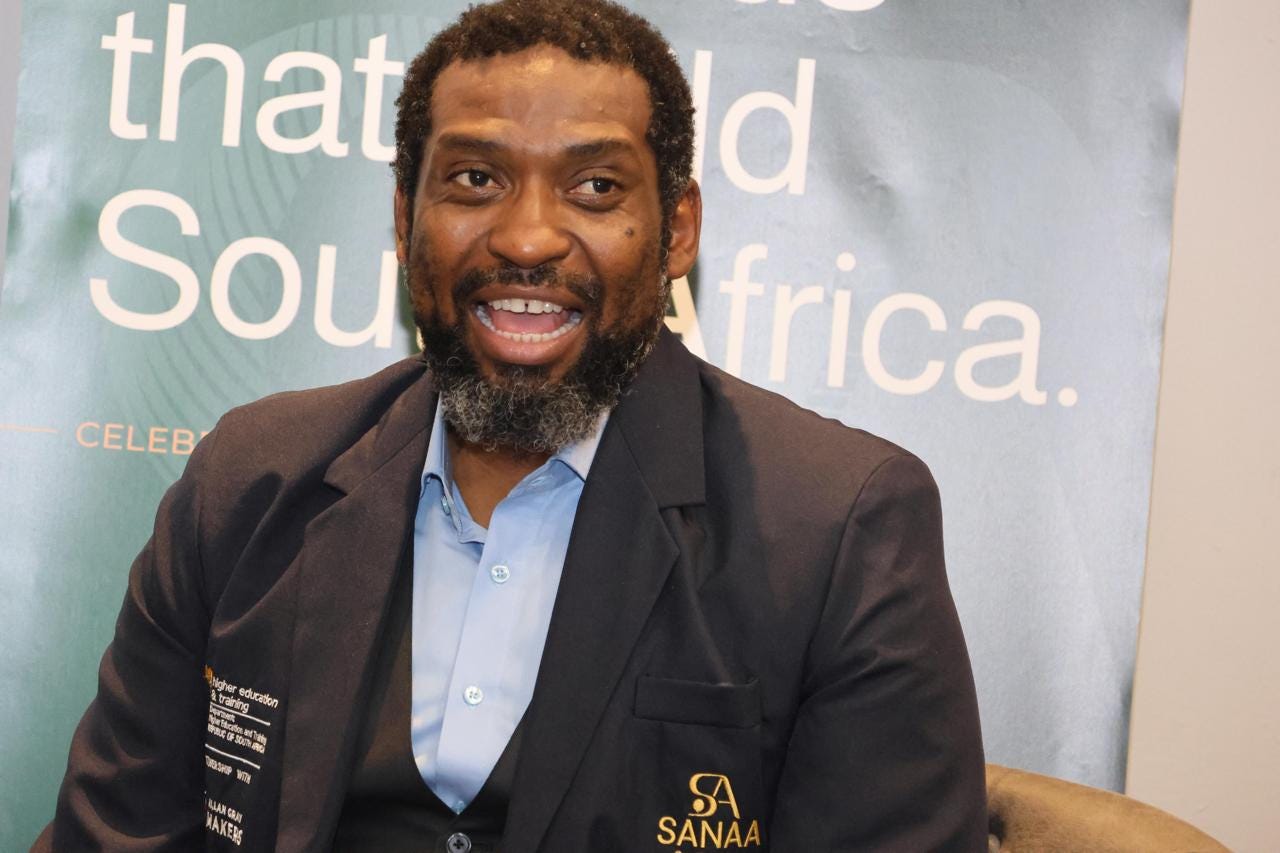
This is according to Minister of Higher Education and Training, Buti Manamela, who was the keynote speaker at a webinar hosted recently by Nelson Mandela University, in partnership with Higher Education Media Services, publisher of ednews.africa. The respondents were Professor Sibongile Muthwa, Vice-Chancellor of Nelson Mandela University; Professor Linda Meyer, President of Rosebank International, a private higher education provider; and Professor Hester Klopper, Vice-Chancellor of the University of the Free State. Professor Andre Keet, Deputy Vice-Chancellor: Engagement and Transformation at Mandela University, facilitated the webinar.
Manamela raised the issue of the intellectual directions of higher education in South Africa: “We’ve become accustomed to discussing universities through the crisis of the moment, but it is equally important to focus on the kind of universities South Africa needs in the emerging world and in the society we are still struggling to build.”
In answering this, he raised several points. “We need our universities to continue to discover knowledge, challenge perceived wisdoms, imagine a different future and enlarge our freedom to think. We need our universities to generate knowledge that moves beyond our campus gates and into our communities to address critical issues like water and energy security, failing infrastructure, unemployment and preventable diseases. At the same time we need our universities to persist with fundamental research that delivers profound discoveries years or decades later.”
He said South Africa does not need “26 copies of the same university. We need a connected system of distinct institutions with different strengths and responsibilities. This requires exploring what our 26 public universities could do differently together to protect quality while reducing duplication and deepening intellectual transformation – the whole issue of decolonisation.
“This should not be seen as a rejection of ideas that originated elsewhere; it should rather be looked at as a disciplined interrogation of power in the process of knowledge production. We need to interrogate what has been treated as universal, and who is permitted to theorise.” He emphasised this applies as much to African languages scholarship as it does to issues of climate change, health, land, food, water and energy.
“The planetary crisis is not somewhere outside of our country. It is right here with us, in our municipalities, our farms, our mines, our communities. Our universities need to connect scientific, technical, social, and indigenous knowledge to understand and address these challenges.”
One challenge is the speed of technological transformation and the changing world of work. “It forces us to consider the very meaning of learning … Generative AI can assist in teaching, research, translation and administration, but it can also reproduce bias, fabricate evidence, and deepen dependence on proprietary AI and data systems. Building our own capabilities to develop and govern these systems is crucial, including research infrastructure, open resources, and technologies around African languages.”
Manamela explained that all students need to be educated not to mistake generative AI’s fluent answers for the truth. “We need to rethink assessments and the type of questions being asked so that students have to apply critical thinking, test the evidence and make ethical judgements.”
He stressed that the Arts and Humanities are as important as Science, Technology, Engineering and Mathematics (STEM) for innovation, creativity and ethical progress in the world we live in. Prof Klopper added to this: “With the rapid acceleration of AI, the Arts and Humanities are increasingly necessary for numerous forms of knowledge and development, including ethics, judgement grounded in philosophy and good governance. Retaining originality and creativity also remains critical.” She added that the Arts and Humanities should not receive less funding than STEM fields.
Prof Muthwa said: “The Minister’s call for renewed intellectual imagination resonates deeply with the university that carries the name of Nelson Mandela whose life continues to challenge us to think seriously about freedom, justice, democracy, dignity and human flourishing. He taught us that freedom is not simply the removal of constraint, it is the creation of conditions under which human beings can flourish. This is both an intellectual and ethical commitment.”
She said that over the past decade, South Africa has made remarkable progress in widening participation in higher education. “Yet we have also learned that access, while it is indispensable, is not sufficient. Students do not merely seek admission, they seek to belong, they seek recognition, they seek opportunities to develop their capabilities, their confidence and to liberate their agency.”
On AI, she said universities are grappling with the extraordinary speed of technological change. “AI is fundamentally reshaping assumptions about knowledge, learning, authorship and expertise. In our context, it would be a mistake to adopt a posture of either uncritical enthusiasm or reflexive resistance. Our responsibility is to educate graduates who can question the wisdom of AI, understand its strengths and limitations, recognise its biases, and exercise accountability.”
Prof Meyer spoke about another form of accountability: access, which is inseparable from the intellectual project. “The youth of South Africa need access to higher education. We have over 600 000 young people who qualify to participate in higher education; over 340 000 for degree studies, a further 200 000 for diploma studies and a further 100 000 for higher certificate studies. Creating greater access for students is about transforming the realities of our young people, the stability of our country and producing the skills we will need.”
She said South Africa’s universities can only provide approximately 230,000 spaces, the bulk of it through UNISA, (so) “we have to reflect on how to deepen access, how to ensure that no student is left behind”. Prof Meyer added that this also requires addressing the country’s technical, vocational and education and training colleges. “We need to acknowledge where we have introduced systems that are not achieving what they set out to do; that haven’t worked.”
A positive direction for higher education access is micro-credentialing or short learning programmes which create immense opportunity for young people and for lifelong learning. “What is critical for their success is that they reflect what the labour market and world of work requires,” said Prof Meyer.
©Higher Education News Services.