

By William Gumede
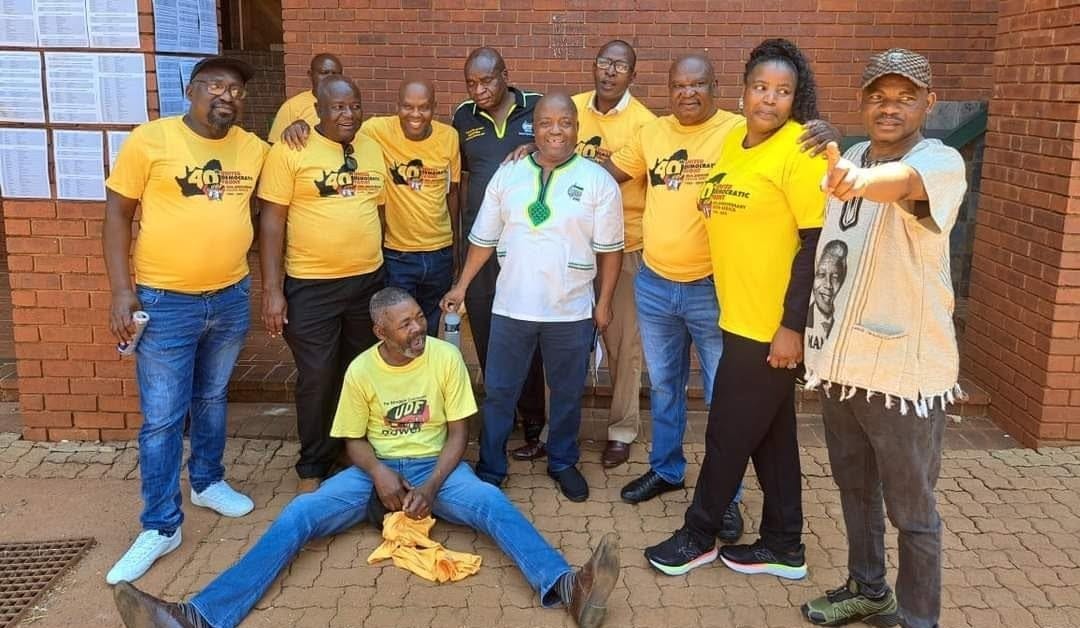
Naledzani “Nale” Mashapa, the President of the South African Students Congress (SASCO) in 1993, during the transition from apartheid to democracy, and a strong campaigner for a non-racial student movement, unlike many other student leaders of the period who leveraged the student movement to secure high office in the African National Congress and government, went to work to strengthen worker rights after his student leadership stint.
Mashapa passed away recently. Born in 1966, Mashapa was from Sibasa, Limpopo, the former capital of the Venda Bantustan before the capital was moved to Thohoyandou.
Mashapa was instrumental in preventing SASCO from splitting into two separate organisations in the run-up to the organisation’s 20th national conference in 2020. SASCO had prior to the 2020 conference, failed three times to string together a united conference, elected its national executive committee (NEC).
The two rival SASCO factions, those supporting competing presidential candidates Luyanda Tenge and Bamanye Matiwane, planned to host two separate and rival elective conferences at the same time, one planned for Mpumalanga and the other for KwaZulu Natal. He was asked to mediate to unite the two disparate factions to prevent the formation of two rival SASCO organisations. He successfully did this.
I met Mashapa at the University of the Western Cape in the early 1990s, where he was also studying, and where I edited the multiple award-winning student community newspaper, Student Voice. His opinion was widely used in the student newspaper.
We had many animated political discussions, particularly with our mutual friend, the late Chris Matlhako, who later became deputy general secretary of the South African Communist Party [Chris Matlhako: SACP stalwart forged in ‘fire and ash’].
Some of the issues we sparred over, included whether ANC negotiators were making too many compromises in its negotiations with the National Party in the Convention for a Democratic South Africa (Codesa) negotiations, whether a Nuremberg-style Truth Commission should be established and whether it was the right decision to disband the United Democratic Front, and not have it continue as a civil society organisation.
Mashapa cut his political teeth in the late 1980s in the South African Youth Congress, being active in the Far North region, present day Limpopo, of the organisation. He became a dominant national student leader during the period following the merger of the black ANC-aligned South African National Student Congress (SANSCO) and the liberal white National Union of Students of South Africa (NUSAS) in 1991, to form SASCO.
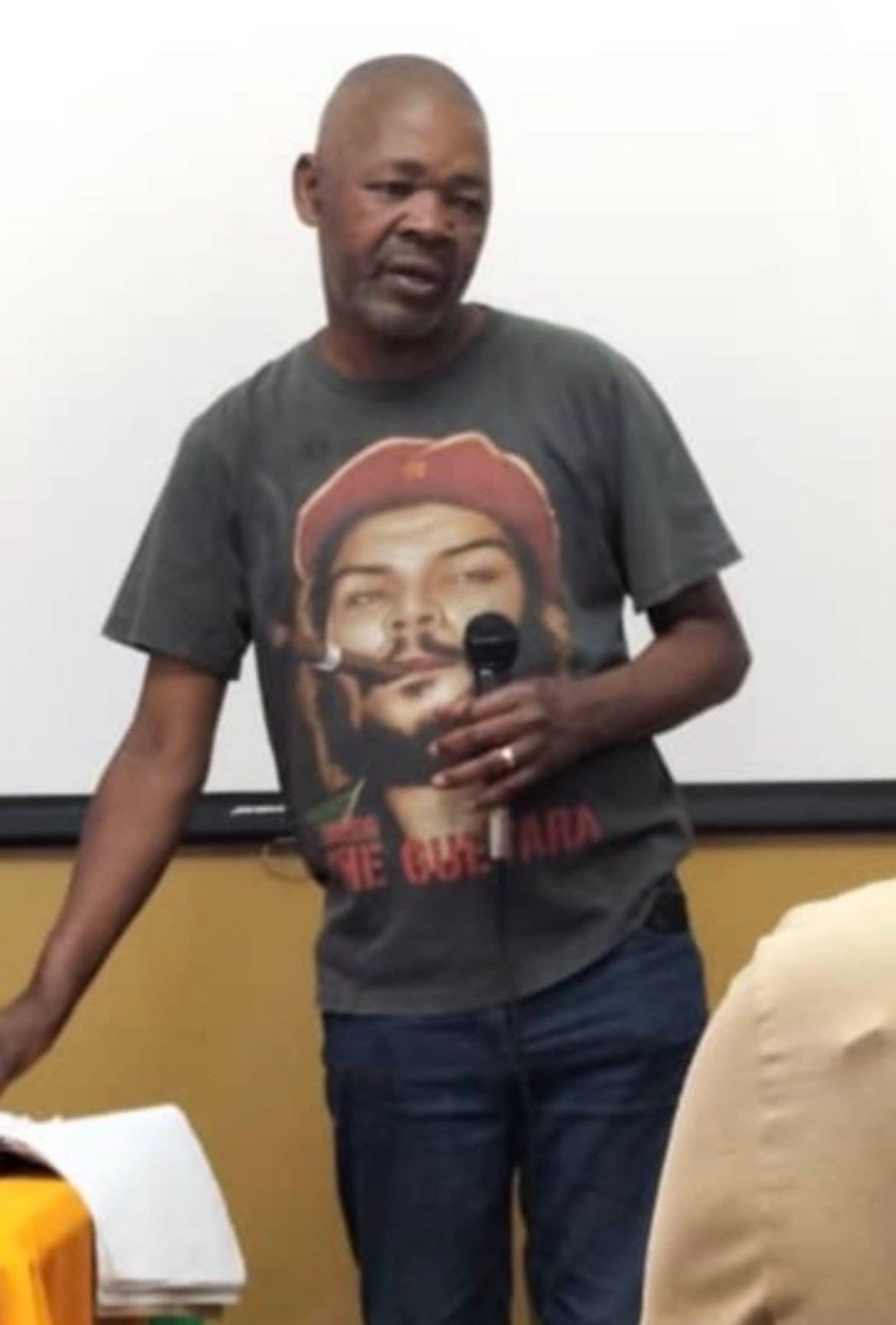
During the same period, the black student newspapers and radio stations, combined with the liberal white counterparts in the South African Student’s Press Union (SASPU). I was elected to the national executive of SASPU. SASPU—which produced the national publications SASPU National and SASPU Focus—operated as an alternative press network that fought against the apartheid government’s heavy censorship.
The merger of the white and black student movements, which became the first racial integration of political formations, following the unbanning of the ANC in 1990, was controversial, with many ANC leaders and student activists actively opposing it. Mashapa was a strong proponent of the merger, on the basis that it could create a truly non-racial national student organisation.
UWC was also at the forefront of the merging of the different race-based student sport organisations. The South African Universities Sport Council (SAUSC) and the non-racial South African Tertiary Institutions Sports Council (SATISCO) moved in 1991 to form a unified non-racial tertiary dispensation, with UWC student sport activists leading these negotiations. Jakes Gerwel, the UWC’s principal at the time in February 1994 chaired the Interim Committee of the South African Student Sports Union (SASSU) meeting which would officially constitute the merged South African Student Sports Union (SASSU) later that year.
Mashapa was elected the second President of the new NUSAS and SANSCO merged SASCO in 1993. Significantly, two UWC student leaders, Mashapa as head of SASCO, and the late Carol Moses, as head of SASPU, were now leading South Africa’s largest and merged student movements during this turbulent period of the country’s transition from apartheid to democracy.
UWC at the time was called the “home of the (South African) Left”. The university, a festival of ideas, was also home to many national student leaders of non-ANC aligned student formations, such as the Pan Africanist Students Organisation, the black Conscious Azanian Students Organisation. UWC also had a heavy presence of key leaders from the Namibian National Students Organisation.
UWC was also at the centre of the modern black women’s feminist movement. Kopanang, the new generation women’s black women feminist group was formed by women students at the university and made the UWC the primary centre for women’s advocacy in politics, the marketplace and society. Several of the Kopanang leadership were on the Student Voice editorial collective and shaped the publication’s content and direction.
Student Voice for example ran thought-proving pieces, such as Gloria Steinem’s “If Men Could Menstruate”. UWC also hosted the pioneering Gender Equality unit, led by the formidable women’s rights activists Rhoda Kadalie, who was later a commissioner of the post-apartheid Gender Commission.
UWC under the leadership of the late Prof Jakes Gerwel, and the Chancellorship of the late Archbishop Desmond Tutu, was also at the forefront of policymaking for the new democratic South Africa. The outlines of the new democratic Constitution, of the ANC’s Reconstruction and Development Programme (RDP) and the form of a Truth and Reconciliation Commission that would probe apartheid-era human rights abuses were interrogated here.
Key ANC figures were based at UWC, such as the late Prof Kader Asmal, the late Dullah Omar, Zola Skweyiya, Albie Sachs and Bulelani Ngcuka were based at the university.
UWC was also at the centre of the racial integration of the adult sports organisations. Danny Jordaan, a former UWC lecturer and soccer player was a pivotal figure in unification of South African football in the 1990s. Wilfred Daniels, former athletics champion who studied and coached at UWC, was tasked by the ANC to help with athletics and broad sports unity talks in Lusaka in the late 1980s. Daniels successfully helped pushed for the merger of the racially segregated athletics sporting organisations.
Makhenkesi Arnold Stofile, a theologian at UWC, was also a driving force in the anti-apartheid sports movement. He was president of the non-racial South African Council on Sport (SACOS) and became Minister of Sport and Recreation in the post-apartheid-era. Harry Hendricks, another leading UWC sports leader, who was involved in the South African Senior Schools Sports Association (SASSSA) was instrumental in establishing unified, non-racial school sports organisations.
This was a period filled with a heady mix of wild hope for the future and also worry that the country could be plunged into violent chaos, caused by verkrampte groups of the ancien apartheid regime, and by black conservative groups aligned with it, and by criminal groups taking advantage of the power vacuum opened by the last days of apartheid.
Mashapa initially started his studies at the University of Venda in 1987, based in the old Venda Bantustan. In 1988, he clashed with the Venda university administration for “operating as an administrative extension of the illegitimate Venda Bantustan regime”, aligned to the Nationalist apartheid government. The Venda Bantustan administration in 1988, following student protests against the regime, sent the police to occupy the university and evicted many student protestors from the residences, including Mashapa. He transferred to UWC.
Thivhilaeli Eric Makatu, a lawyer, and fellow student with Mashapa at Venda University during the 1988 Venda University student protests, wrote that Mashapa “spent every waking hour strategising against the fascist might of the homeland government and went toe-to-toe, not only with the formal police, but with the brutal, state-sponsored vigilante squads like Tshitangu Tsha Phila Misevhe, the reactionary forces deployed to terrorise, spy and divide youth solidarity”.
Mashapa at UWC belonged to the group of student activists who were called “klipgooiers” (stone throwers), as they were the first out in street protest to take on the police or the army. Although, Mashapa was at the time viewed by some fellow students as a firebrand, he was in private reserved, warm, and humble, with a great sense of humour, and a loved a party.
He was self-effacing. David Maimela, president of SASCO in 2006 said Mashapa “believed the spotlight should not shine on him, even when he suffered personal setbacks, he was not the one to be loud about it – something which I find humbling and frustrating at once! If I recall well, he is the same person who would say: ‘Why do you make such a big fuss about my birthday?.”
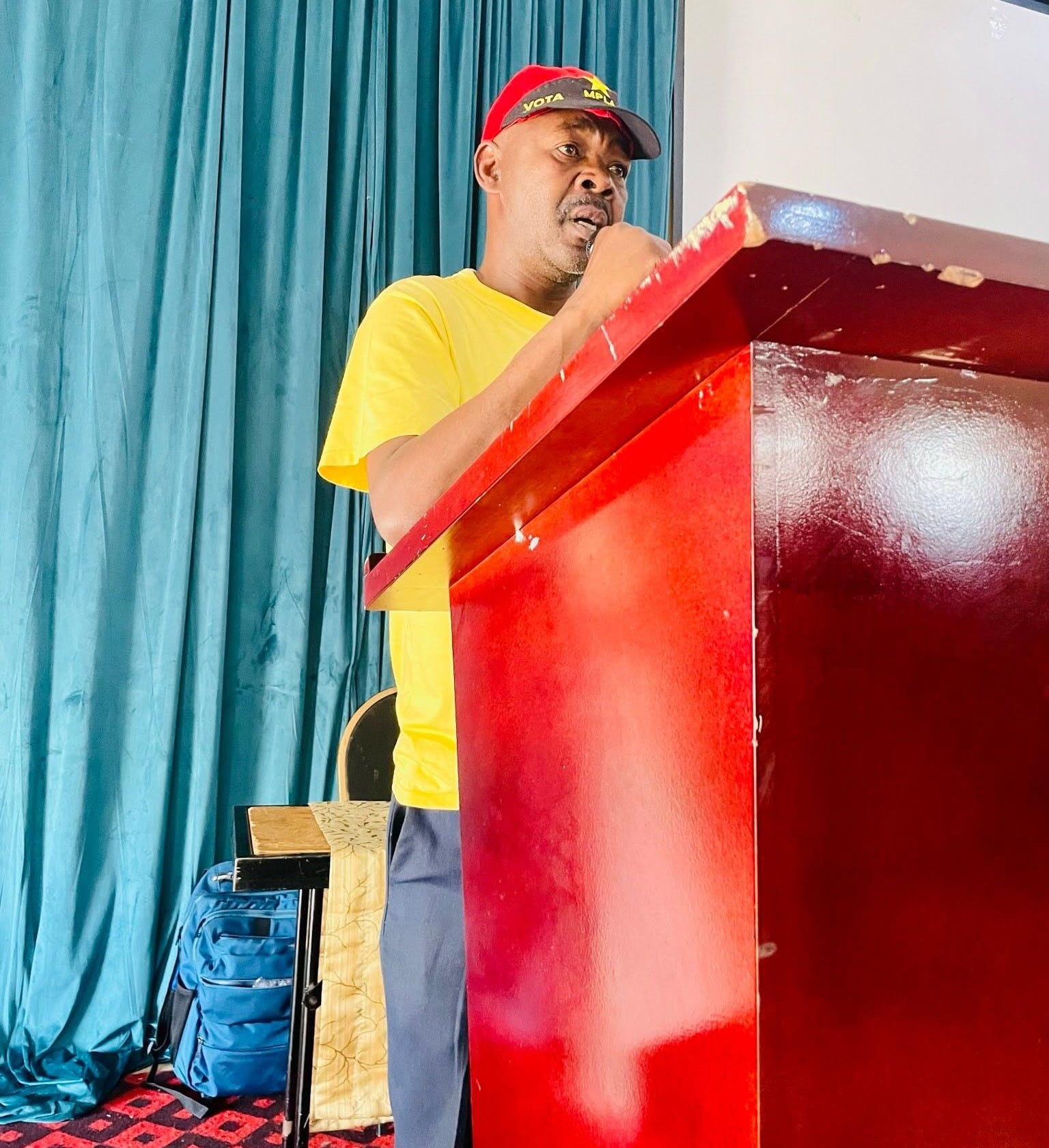
Mashapa fiercely pushed for an incoming ANC government to establish a national student financial scheme, initially called the Tertiary Education Fund of South Africa (TEFSA), now called the National Student Financial Aid Scheme (NSFAS).
The last time we saw each other was at the 40th anniversary of the United Democratic Front in August 2023 at the Johannesburg City Hall. He was working on a book on the history of the South African student movement.
Mashapa was a fierce non-racialist. He was at the forefront of the 1991 white liberal NUSAS and black ANC-aligned SANSCO merger, because he genuinely believed it would create a non-racial, progressive national student movement in South Africa. Sadly, contemporary SANSCO has, like the ANC, largely lost its non-racial make-up, now being predominantly a black organisation.
David Maimela, president of SASCO in 2006, said that Mashapa was “never a regionalist or tribalist”. Having myself grown up in the 1970s and 1980s largely in the tough urban townships and informal settlements, where communities of different racial groups were already beginning to clandestinely living together in defiance of apartheid, and I was therefore an a non-tribalist from early on; I was amazed to at university meet the likes of Mashapa, and the late Matlhako, who grew up in deep rural areas and in monolithic ethnic communities, but who were nonetheless deeply non-racial and non-tribal.
Mashapa in his post-SASCO days were opposed to the ANC Youth League and the youth formations of political parties setting-up at higher education institutions, believing this would move student politics away from ‘bread and butter’ students issues, such as the quality of education, access to funding and financial exclusions to political student formations becoming parrots of their parent political parties.
Sadly, South Africa’s student movement has now largely become uncritical, pliant appendages of political parties. They mostly lack independence, repeating their mother parties’ empty, old slogans and rhetoric, mimicking their outdated, old world, leadership styles, such as command-and-control, self-enrichment, transactional and black-and-white approaches.
They have failed to come up with fresh ideas and approaches, appropriate to our complex times, where the fusion of technologies blur the lines between the physical, digital, and biological spheres, the merger of AI with automation, in which traditional software combines with machine learning and natural language processing.
For another, traditional factory model of employment has been permanently disrupted, by automation, robotics, and AI, has meant that the demand for humans on the assembly line has decreased. Supply chains are in increasingly spread across different countries, where sourcing of inputs, the manufacturing and the distribution, logistics and marketing of a product often take place across countries. Dramatic social changes are disrupting societal and cultural norms, institutions and identities.
All these structural disruptions demand new kinds of leadership, new ideas and imagination, which the current political party mini-me student movement leadership is sadly not delivering.
In the post-student movement Mashapa joined the trade union movement, working among others for the South African Municipal Workers Union (Samwu), the affiliate of the Congress of South African Trade Unions (Cosatu). We initially remained in touch, because I had also joined the trade union movement, securing my first job at Cosatu at its head office in Johannesburg.
Mashapa was an opponent of the more market-friendly Growth, Employment and Redistribution (GEAR), introduced by then ANC and South African Deputy President Thabo Mbeki in 1996 to stabilise the country’s economy. It aimed to reduce the budget deficit, slash public debt, reduce trade tariffs, and integrate the South Africa into the global economy.
While GEAR stabilized South Africa’s macroeconomic environment—reducing inflation and public debt— it was criticised by the ANC’s tripartite alliance partners, the Congress of South African Trade Unions and the South African Communist Party who argued it was “neo-liberal,” had prioritized fiscal conservatism, privatised some state-owned entities, and did not meet its job creation targets.
Mashapa also opposed the ANC-led Johannesburg city’s disliked EGOLI 2000 reforms strategy which restructured the city into a “unicity”, and corporatised municipal services, such as Johannesburg Water, Pikitup and City Power, turning these into standalone entities delivering public services. Mashapa and critics of EGOLI2000 said that it was a case of changing the institutional design, without dealing with lack of accountability and poor governance by elected and public officials, capacity failures, lack of competence and systemic corruption – the root causes of Johannesburg’s crises.
Pheello Oliphant, a public sector communicator, who met Mashapa in at SASCO’s 1995 national conference, which he attended as a delegate whilst in his first year, said Mashapa “eschewed high government offices and blue lights”, was “never detached” from the struggles “of the masses”, and “never aloof, but approachable”.
Mashapa leaves behind his wife Phatuwani and his daughter Masana.
Prof William Gumede was the former Editor of the Student Voice student community newspaper, the former Head of the South African Students News agency (Sasnews) and former national executive member of the South African Students’ Press Union (SASPU).
©Higher Education Media Services.