


A six-airbag upgrade has transformed the Toyota Starlet’s latest Global NCAP safety result, taking it from an alarming zero-star adult occupant protection rating to four stars.
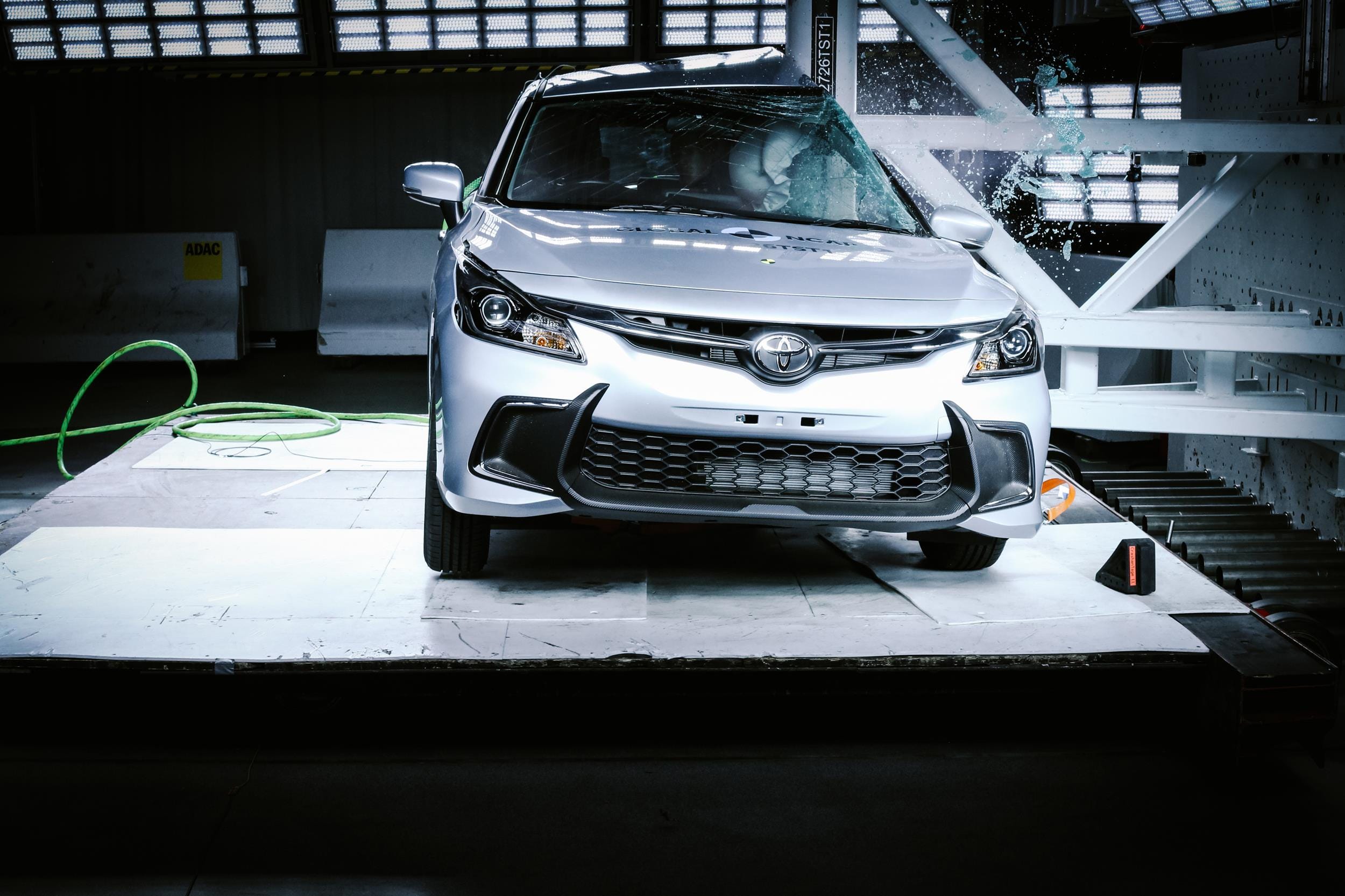
The Toyota Starlet has recorded a dramatic improvement in Global NCAP’s latest #SaferCarsForAfrica crash tests, with the updated model achieving four stars for adult occupant protection and three stars for child occupant protection.
The result follows a production update that made six airbags standard, including side curtain airbags.
The improvement is notable because the previous two-airbag version of the Starlet received a zero-star adult occupant protection rating from Global NCAP in May this year. It also received three stars for child occupant protection.
The Starlet is manufactured in India and is one of South Africa’s most popular vehicles, with more than 20 000 units sold.
The previous version was fitted with driver and passenger frontal airbags and Electronic Stability Control as standard, but did not have side head-protection airbags.
Toyota subsequently introduced the six-airbag specification as part of a production update at its Indian manufacturing plant.
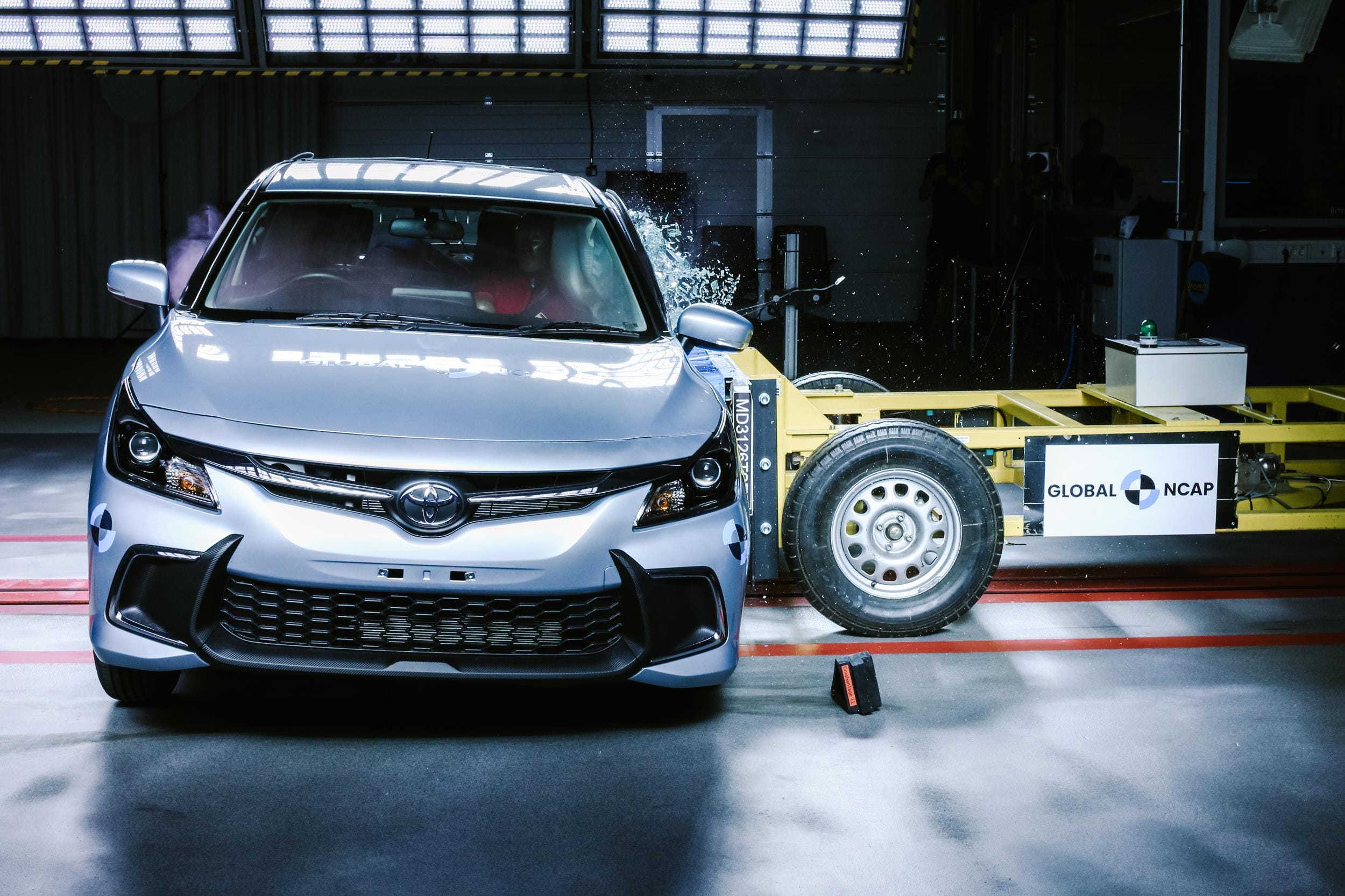
Global NCAP allowed Toyota to volunteer the updated six-airbag Starlet for testing. This would have allowed the manufacturer to demonstrate the safety benefits of the additional equipment.
Toyota declined. Global NCAP instead decided to fund the crash test independently. The resulting four-star adult occupant protection rating represents a significant improvement over the previous zero-star result.
Richard Woods, Chief Executive Officer of Global NCAP, welcomed Toyota’s decision to upgrade the Starlet in South Africa.
He said the result demonstrated what could be achieved when manufacturers prioritised safety and encouraged other manufacturers to make life-saving safety equipment standard across the markets they serve.
Safety improvements, but weaknesses remain.
While the four-star result is a substantial improvement, Global NCAP’s assessment identified several areas where the Starlet still has room for improvement.
The footwell was rated as stable in the frontal crash, but the bodyshell was classified as unstable and unable to withstand further loadings.
In the side-impact test, head protection was rated as good, while chest protection was adequate. Abdomen and pelvis protection were also rated as good.
During the side-pole impact test, head protection remained good, although chest protection was rated as marginal. Abdomen and pelvis protection were again rated as good.
Child occupant protection also highlighted some concerns.
In the frontal impact, the head of the three-year-old dummy made contact with the vehicle interior, while chest protection was rated as low.
In the side-impact test, the head of the three-year-old dummy was exposed to impact.
AA welcomes Starlet safety turnaround
The Automobile Association of South Africa (AA) has also welcomed the Starlet’s improved safety rating.
Bobby Ramagwede, Chief Executive Officer of the AA, described the move from zero to four stars as a considerable improvement and said it demonstrated that entry-level vehicles could be made safer through improvements to their safety specifications.
The AA also called on manufacturers whose entry-level vehicles have recently performed poorly in #SaferCarsForAfrica testing to work towards improving their safety equipment and occupant protection.
For South African motorists, the message is simple: safety equipment should not be treated as a luxury reserved for more expensive models.
What is #SaferCarsForAfrica?
The #SaferCarsForAfrica campaign forms part of Global NCAP’s wider efforts to promote safer vehicles in markets where mandatory vehicle crash-testing programmes are not in place.
Global NCAP has argued that motorists in countries without mandatory crash-testing requirements can sometimes be offered vehicles with lower levels of safety equipment or structural protection than comparable models sold in markets with stricter safety standards.
Global NCAP is a UK-registered charity working internationally to promote vehicle safety in support of the UN Global Goals. Its work includes independent crash testing, research and advocacy across Africa, India, Latin America, the Middle East and ASEAN.
For the Starlet, the latest result marks a remarkable turnaround—from zero stars to four — simply by making critical safety equipment standard.