


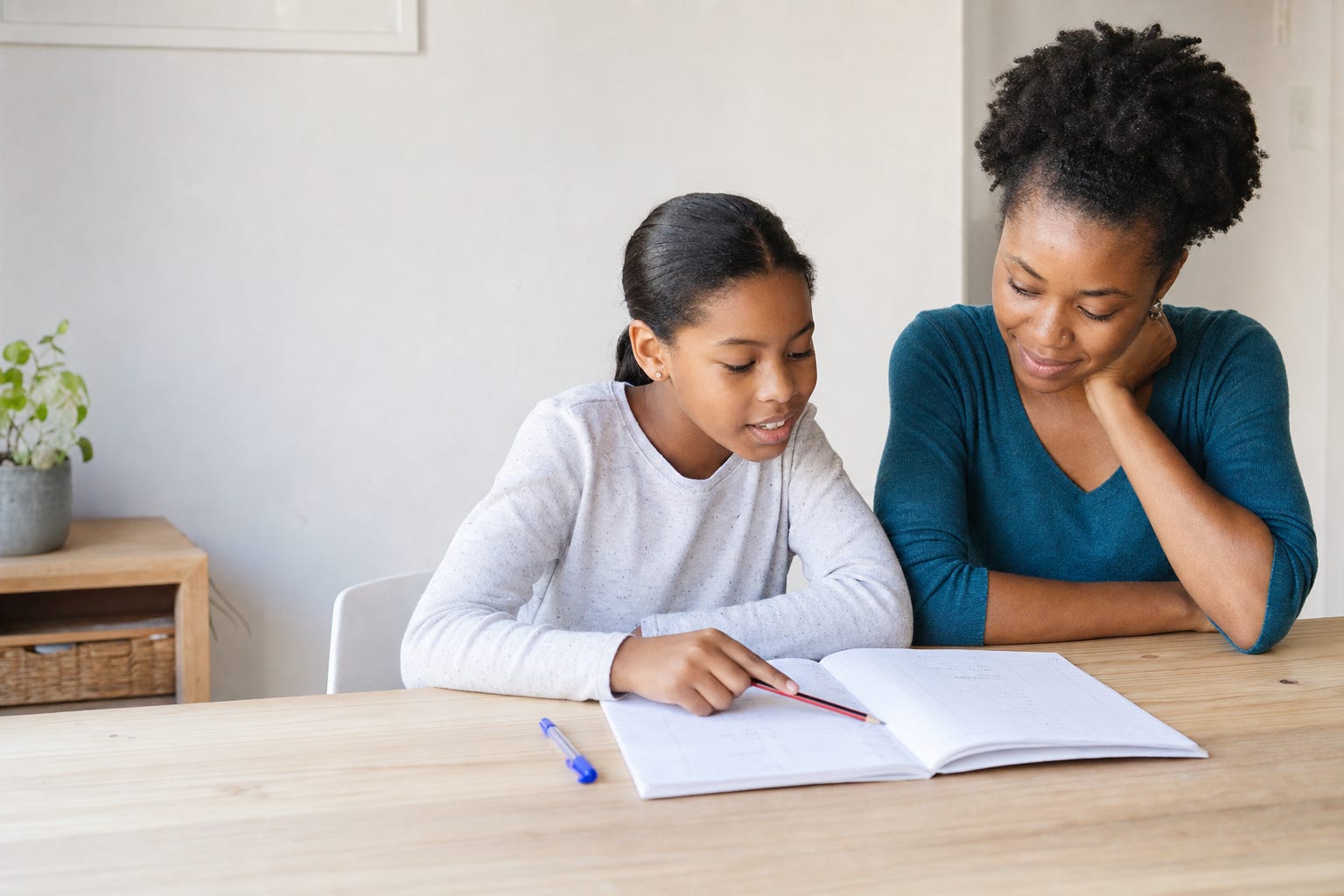
In a fast-changing educational landscape, tutoring is shifting from a specialised intervention for struggling learners to a more mainstream personalised learning strategy. While it remains highly relevant for learners who have lost their confidence in a specific subject, fallen behind in class or who have acquired learning deficits, the appeal of tutoring has broadened.
Nick Miller, founder and CEO of Teach Me 2, has had a front-row seat to the decisions thousands of South African families make about education. Designed to help families find high-quality tutors, Teach Me 2 has grown from providing 4 400 lessons in its very first year to a record 115 000 lessons last year. More than 10 000 families are currently engaged on the platform, and South Africans have now spent over a million hours learning with Teach Me 2.
One of the biggest changes Nick has observed is that there is no longer one archetypal learner who gets tutoring. He says, “At one end, we encounter learners who have significant foundational gaps. At the other end of the spectrum, some of our strongest learners use tutors.
They’re not struggling at all, but may be preparing for a competitive degree, looking to master the hardest questions in an exam or to preserve as many options as possible for university.
They may turn to tutoring because they are trying to move from 80% to 90% in a particular subject. This is significant when it comes to Maths because just a small gain can be the difference between getting into a highly competitive field of study, or not.”
Maths is South Africa’s tutoring emergency – and it isn’t even close
Maths is consistently the most in-demand subject for tutoring interventions on the Teach Me 2 platform. It accounts for 4 out of every 10 tutoring hours and there are 4 times more Maths lessons delivered than English ones, the second most requested tutoring subject.
Pure Maths remains a critical checkpoint for learners wanting access to the STEM, data science, finance, economics and medical fields of tertiary education. Despite a rising Matric pass rate, the number of South African learners mastering Mathematics is in decline. In 2025, distinctions in both Maths and Physical Science fell. There were only 4,897 out of 253,368 potential maths distinctions - that’s 1.9%, down from 3.9% the year before.
Tutoring isn’t simply about catching up - increasingly, it’s also about getting ahead
“Whether we like it or not, education is a somewhat competitive endeavour,” says Nick. “Learners aren’t only trying to get a good education. They may have specific goals that define academic success for them. For that reason, many very strong students use tutoring precisely because they’re ambitious.
National data backs this up. Last year, over 700 000 Matrics qualified for some form of tertiary study, but public universities were expected to turn away over 500,000 applicants in 2026 due to the shortage of seats.
According to the actual intake reporting of January 2026, University of Cape Town received almost 99 000 applications for 4500 places; University of the Witwatersrand Wits had around 86,000 applications for 6,000 places; and Stellenbosch University had 90,000 applications for 6,005 places.
Demand for personalised learning is on the rise
Nick also believes the growing body of research around personalised learning, combined with the current excitement around AI, is contributing to a fuller appreciation of the potential of tutoring. One of the promises being made about AI in education is the possibility of giving everyone access to a personalised tutor and coach.
“A classroom is necessarily a fairly blunt instrument to deliver mass education,” he says. “A teacher has a curriculum to cover in a specific timeframe and a group of learners who are all progressing at different speeds.”
By contrast personalised learning can instead go backwards, identify exactly where a gap exists and spend time addressing it. For increasingly busy children, that efficiency can be valuable.

Supplementary education does not necessarily mean schools are failing
According to the latest BrandMapp survey, 27% of parents from households with a R10k+ monthly income are worried about the quality of their child’s education, whether they are in public or private schools - representing around 2.3 million parents whose concerns may make them open to an intervention such as tutoring.
But Nick doesn’t believe this should simply be read as evidence that schools are failing. “Schools have an incredibly difficult job,” he says. “Even an excellent school and an excellent teacher cannot consistently provide every learner with completely individualised instruction. This means that tutoring doesn’t only fill a quality gap. It fills a structural gap inherent in mass education.”
Parents are becoming designers of their child’s education
Expectations of education are also changing. Nick says, “We’ve had a relatively narrow definition of educational success for a long time, and that inevitably increases competition around access to universities.
What we are seeing today is a combination of system constraints, rising expectations and rising stakes, with families increasingly aware that they have additional tools available when the mainstream education system cannot meet a particular need.”
Nick describes today’s parents as much more sophisticated consumers of education than previous generations. Increasingly, parents are supplementing school with tutoring, exploring homeschooling, considering different curricula, paying a premium for smaller classes, using online learning or working backwards from a long-term goal such as admission to an overseas university.
The missing layer beneath the curriculum
Perhaps the most important insight the Teach Me 2 team has gained from tutoring demand is that the reason a learner is struggling is not always an understanding problem.
Nick says, “We fundamentally misdiagnose why many learners struggle. We assume it’s an understanding problem, when very often it’s a behavioural problem. The bigger problem is that many learners have never been taught how to learn, and don’t have an awareness of how they learn.”
For Nick, this is where the education conversation needs to go next.
“We spend an enormous amount of time teaching children what to learn. I don’t think we spend nearly enough time teaching them how to learn,” he concludes. “The goal is not just a learner who can pass the next exam, but someone who knows how to learn independently for the rest of their life. This is why Teach Me 2 is unique in designing our tutoring platform to make this impact in the modern educational landscape.”
©Higher Education Media Services.