


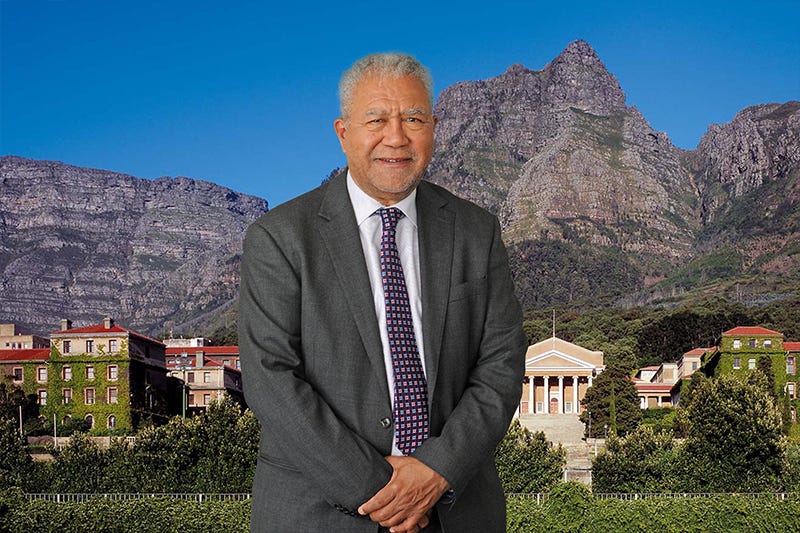
The University of Cape Town’s governance tensions moved into sharper focus this week as Council Chair Norman Arendse SC issued a detailed communication addressing the legal proceedings initiated by Vice‑Chancellor (VC) Professor Mosa Moshabela. The statement, sent to staff and students, seeks to steady the institution amid rising public speculation and concern.
Arendse emphasised that UCT’s founding values — integrity, fairness, accountability, academic freedom and respect for dignity — remain central as Council navigates what he described as “difficult and sensitive issues.” While employment matters and litigation are ordinarily confidential, he said recent public assertions risked creating an incomplete picture of Council’s actions.
Ombud’s independence at the centre of dispute
A significant portion of the statement focused on the Office of the Ombud, whose independence and confidentiality Arendse stressed are “fundamental to its proper functioning.” Staff and students must be able to approach the Ombud without fear that their identities or concerns will be disclosed.
When serious concerns involving the VC were brought to the Ombud, Arendse said he was alerted only to their existence and seriousness, not the identities of those involved. He then sought independent legal advice before informing Council and the VC. The subsequent process, he said, was designed to ensure fairness, confidentiality and independence.
Council’s role: protect the institution, not individuals
Arendse reiterated that Council’s responsibility is to act “in the best interests of the university,” neither shielding leaders from scrutiny nor assuming wrongdoing. He cautioned that responding to serious concerns should not be interpreted as Council having predetermined their truth.
The events of recent months involve difficult and sensitive issues. They concern individuals, but they also concern something larger: the ability of the university’s governance structures to discharge their responsibilities independently, fairly and without fear or favour.
“Council’s responsibility is neither to shield any individual office-bearer from legitimate scrutiny nor to assume wrongdoing merely because an allegation has been made.
Its responsibility is to act in the best interests of the university,” he wrote.
Next steps: special meeting on 15 August
With litigation now underway, Council will limit public comment and consider its next steps at a special meeting on 15 August 2026.
Arendse appealed to the UCT community to avoid speculation or circulating untested allegations, urging collective responsibility to protect the university’s people, processes and reputation.
“UCT’s reputation has been built over generations,” he wrote, “and depends upon the integrity of its governance institutions.”
©Higher Education Media Services